
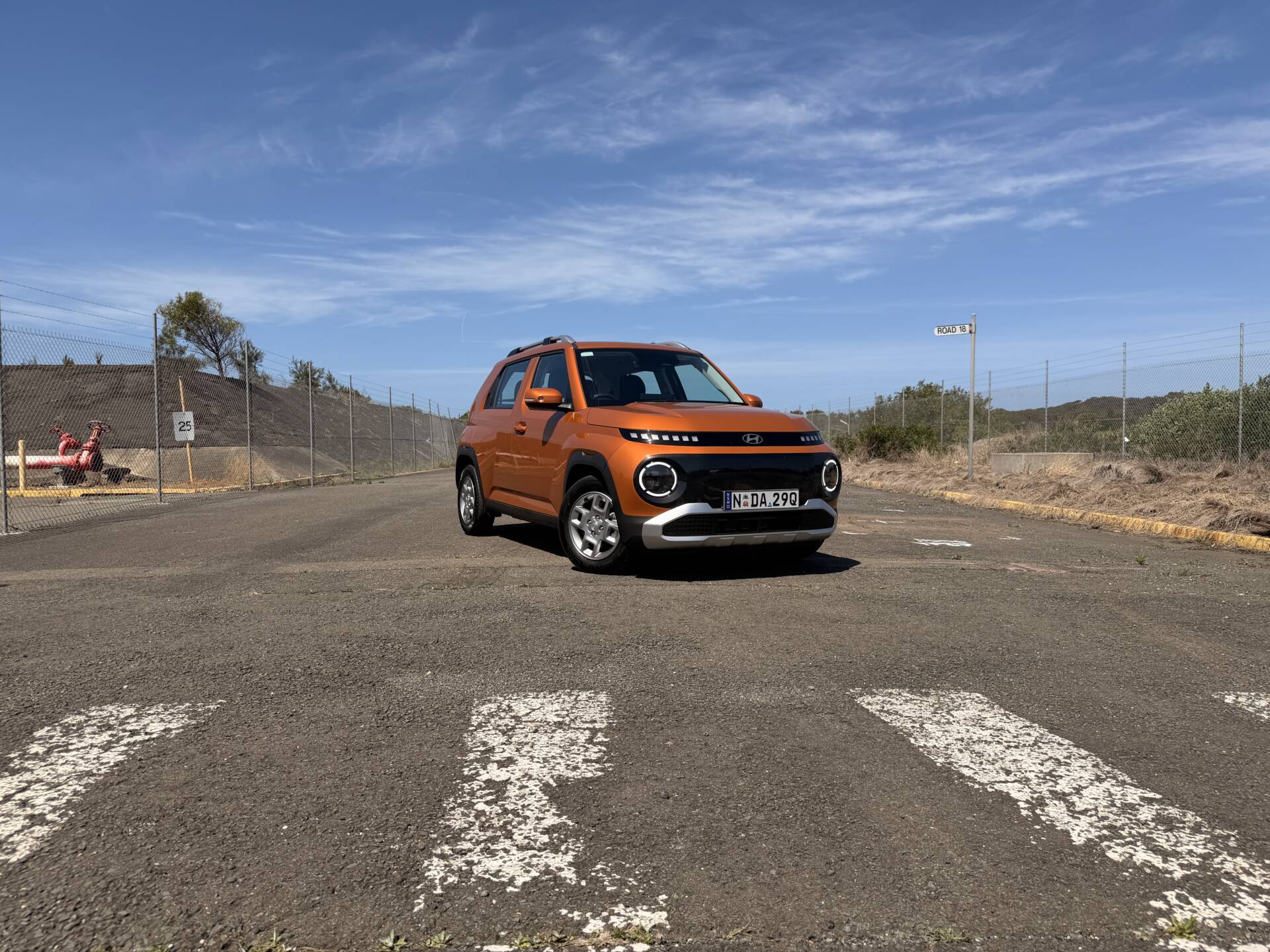
Hyundai’s smallest isn’t the cheapest EV on the market but it’s small, very, very clever and more fun than it has any right to be.
Hyundai does good electric. Every current Ioniq-branded car is excellent, whether it’s a standard range Ioniq 5, the unncecessarily pretty Ioniq 9 or the absolutely rip-snorting Ioniq 5 N. And they keep coming.
Plugging away at the entry level for Hyundai’s electric range is the aesthetic love-child of a Mini and Suzuki Ignis, and that is not derogatory. At the moment it’s very good value and, as you’ll see, it’s the one to have.
Words: Peter Anderson
Images: Peter Anderson
Co-pilot: Mark Dewar
How much is a Hyundai Inster and what do I get?
When I had the Inster – a scandalously long time ago – it was something like $45,000 on the road. Don’t quote me on the price, but I think you’ll agree it was a little on the high side. As I write this now, it’s $35,990 driveway and that is the business. Normally it’s $39,000 plus on-roads, so this is a decent discount.
It’s all very well observing that it goes into battle with the larger MG4 or is more expensive than the BYD Atto 1, but as with any purchase, the price is only part of the value proposition, which is going to be something of the theme of this review.
Anyway, whether you’re paying $36k driveaway or a bit more if Hyundai ever drops back to the $39k + ORCs, you want to know if this car is any good.
A basic Inster ships here with 15-inch alloys, six-speakers, two 10.25-inch screens (one for the dashboard and one for the media and entertainment screen), satellite navigation, Apple CarPlay and Android Auto (both wired), keyless entry and start, cloth interior, auto wipers, heat pump heating, auto LED headlights, roof rails, front and rear parking sensors, and a leather steering wheel.
There are two options – paint, like the Sienna Orange you see here is $595 if you don’t want white or khaki. If you want the bigger 49kWh battery pack (up from 42kWh), the price jumps to around $47,000 driveway, another $600 with the premium paint. You also get more power to drain the battery faster and a claimed range of 390km instead of the standard 327. So you’re paying (without promotions) about $5000 for a few trinkets and 60-odd kilometres of range.
Optional pre-paid servicing lands at $668 for the first three years for the one only 2 year/30,000km service and two services will set you back $1336. When you prepay, those prices are locked in and you need never have to think about servicing again.
Hyundai’s seven-year/unlimited kilometre warranty applies and the battery is covered for eight years/160,000km.
The Inster Cross is nearly $50k on the road and I can’t think of a good reason to buy it. Seriously, not a single one. Yes it comes with the bigger battery, rides higher and looks a bit tougher but I reckon it’s missing the point of the Inster. Honestly, go for a Kona instead.
Safety
ANCAP rating: 4 stars (2025)
Hyundai’s Smart Sense is along for the ride in all of the Insters. That includes forward AEB, lane keep assist, active cruise control, rear cross-traffic alert and reverse AEB, safe exit warning, intersection assist, auto high beam and a driver monitor.
The Inster has seven airbags, including a front centre airbag the deploys between the front occupants to help prevent head clashes. That’s pretty important in such a narrow car because you are quite a bit closer.
There are two ISOFIX and two top-tether anchors for kid seats.
ANCAP’s four star rating is down to a low-ish score on adult occupant safety (70) and safety assist (69).
Look and feel
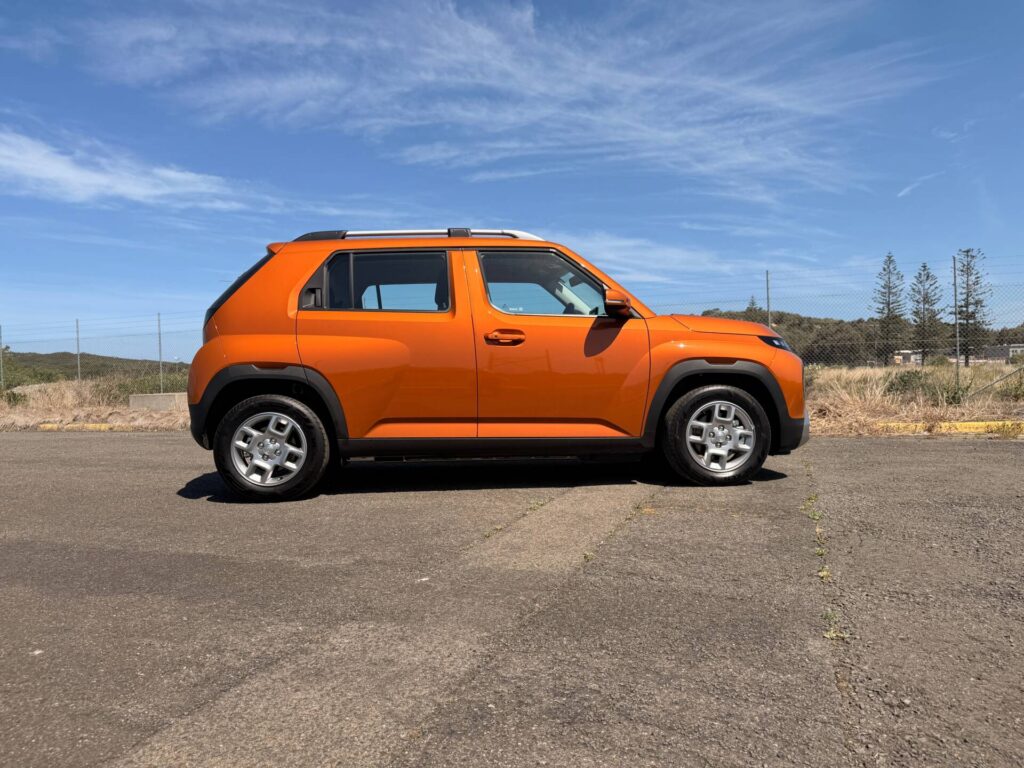
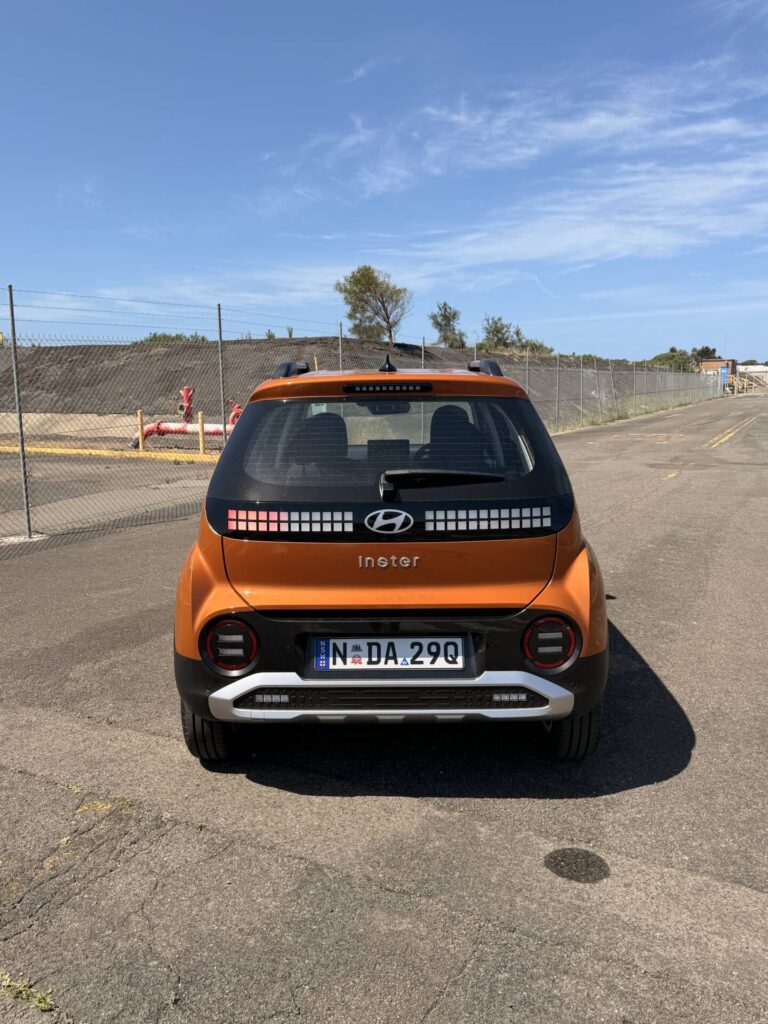
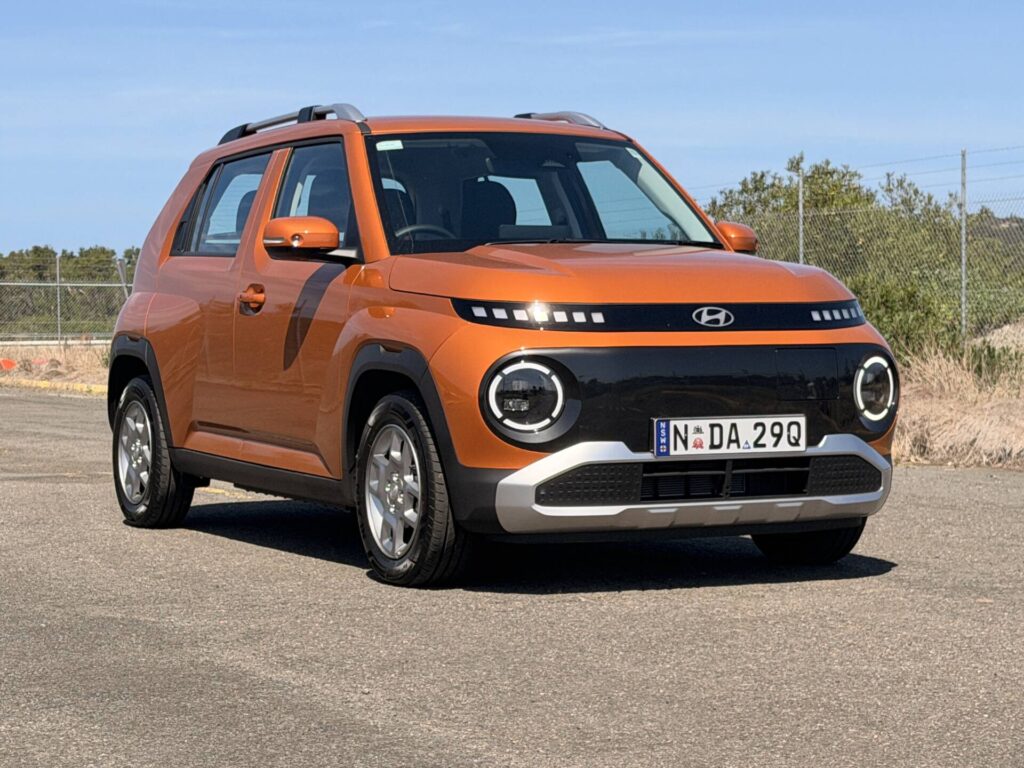
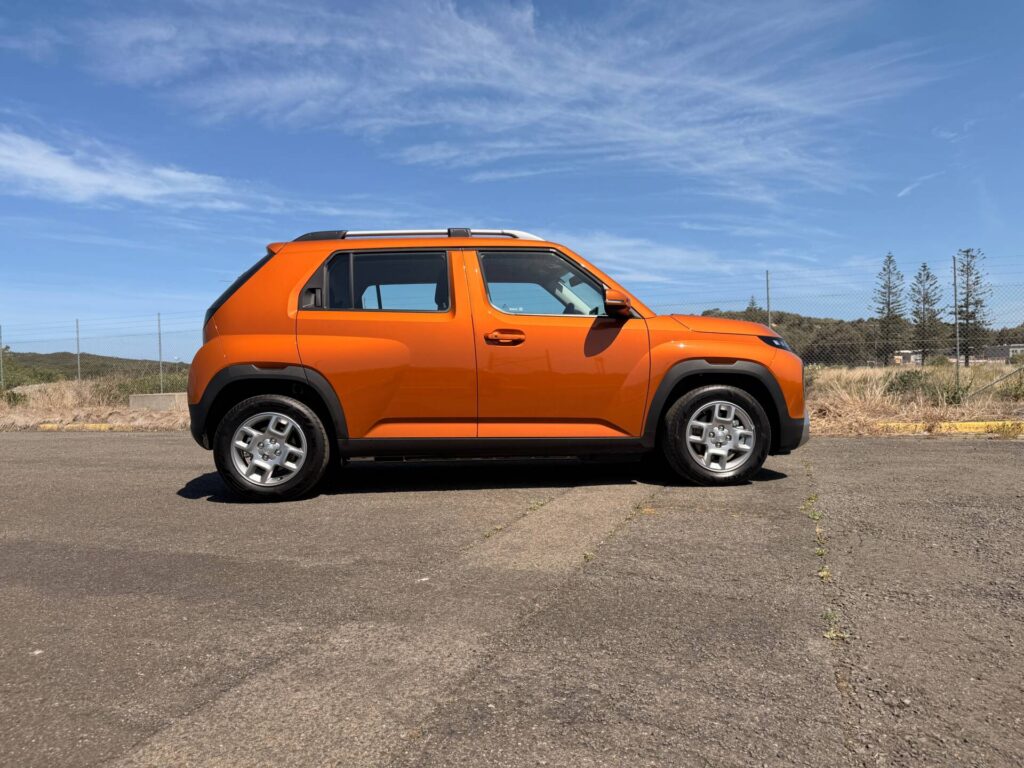
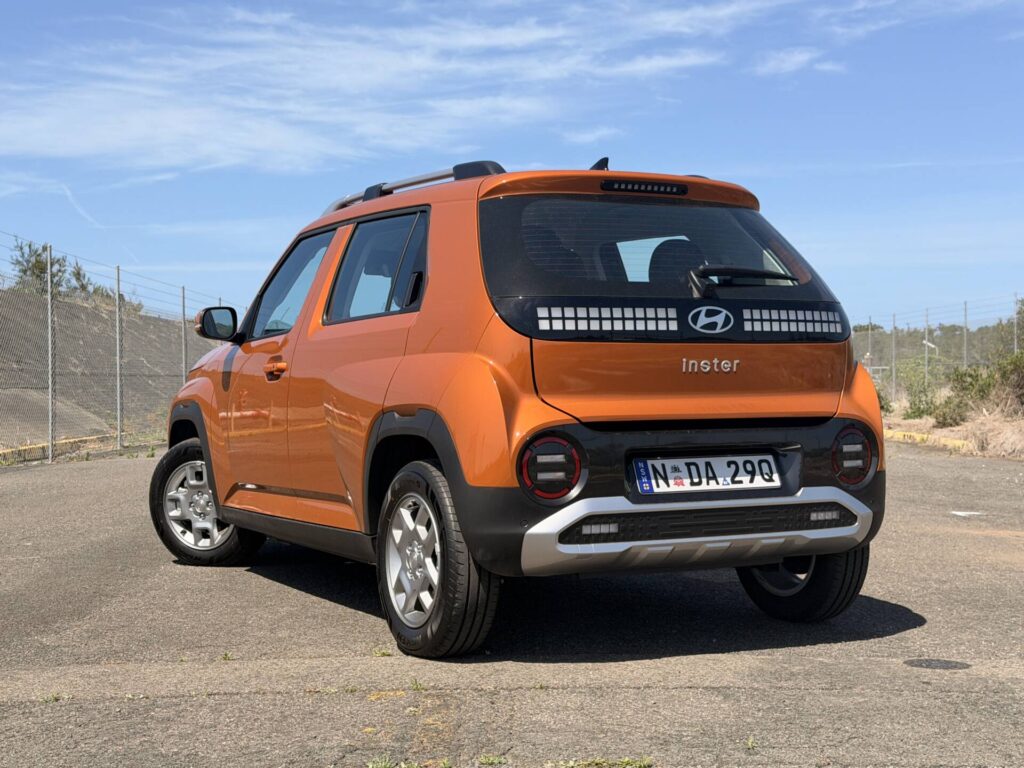
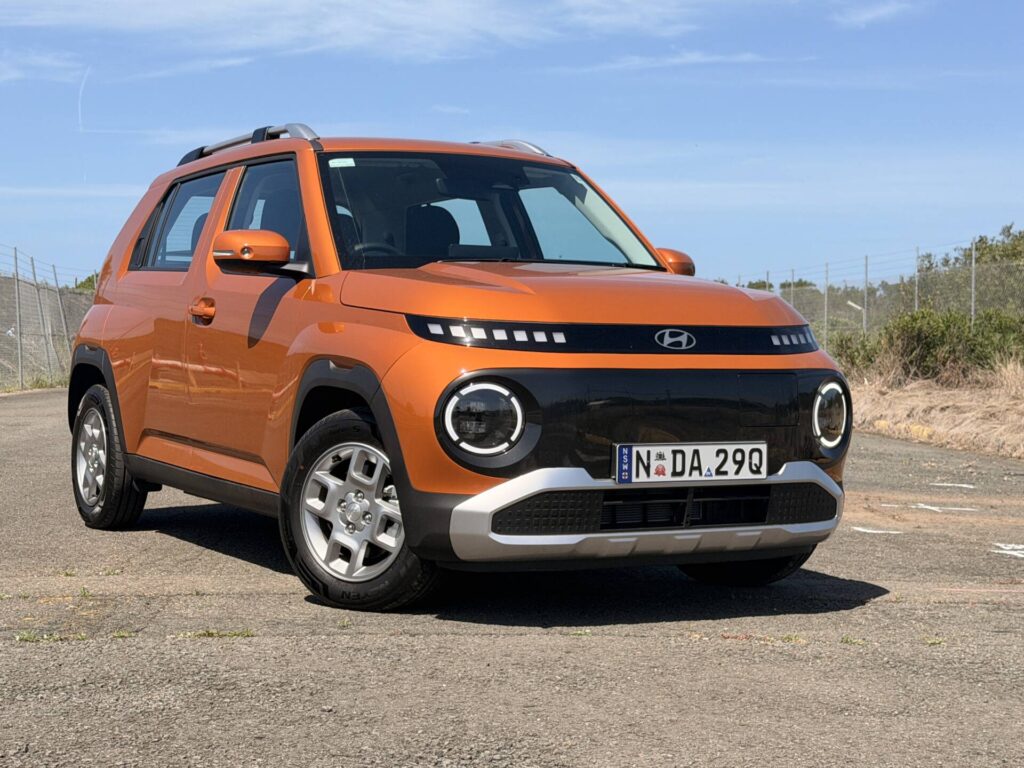
As I’ve already crudely said, this thing looks like a cross-breed of a Mini and and Ignis and I honestly think that’s a compliment. It’s so delightfully chunky and with that wheel-at-each corner vibe (courtesy of a whopping 2580mm wheelbase on a 3.8 metre car).
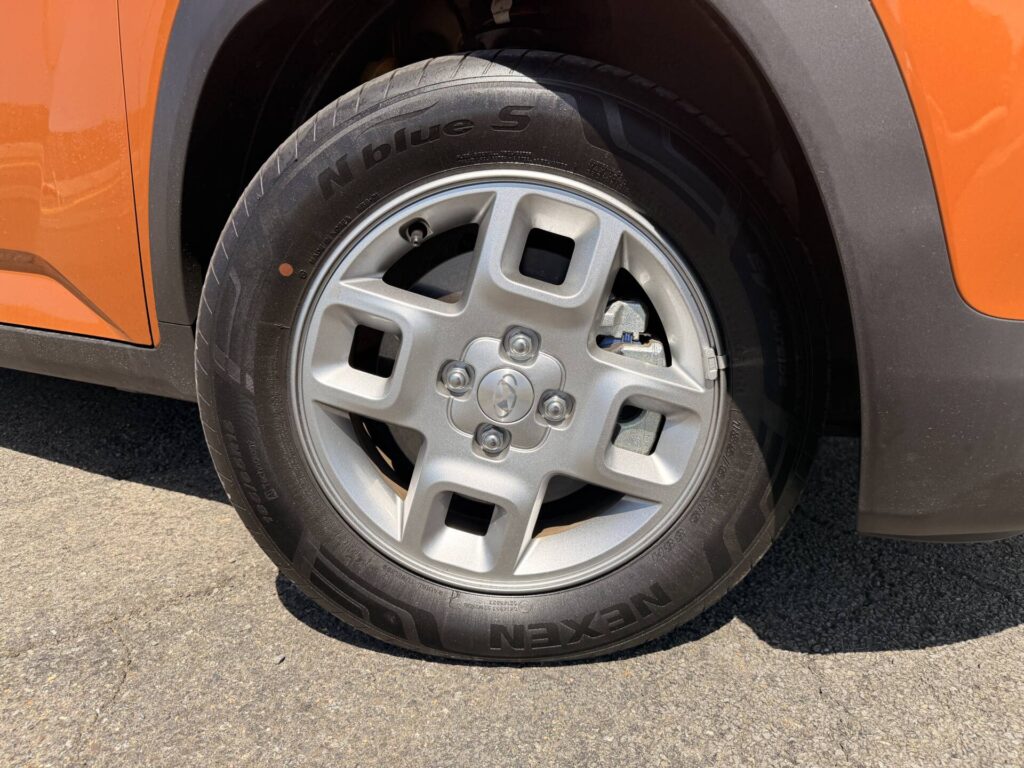
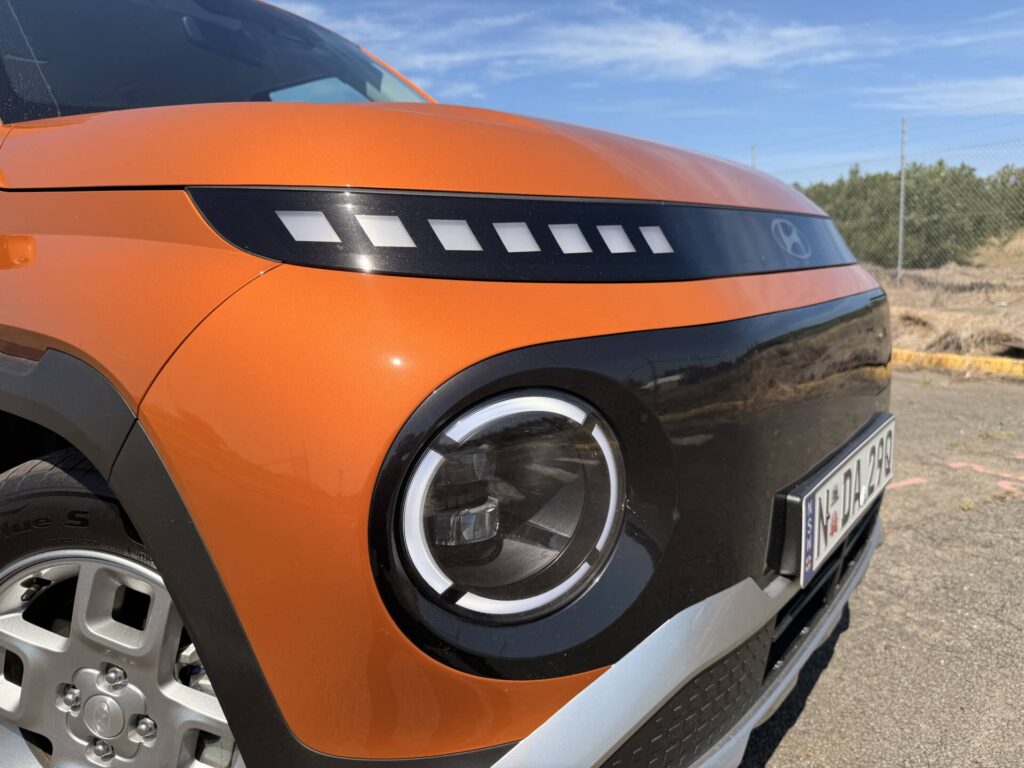
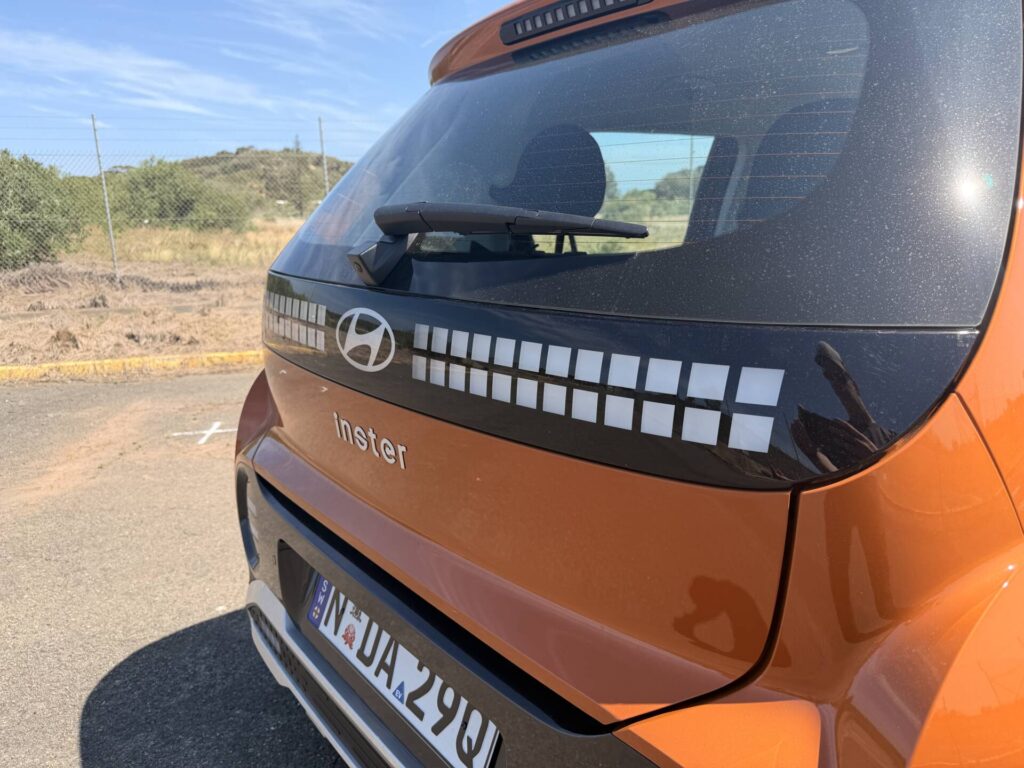
The 15-inch wheels do look a little dinky but if I had a few bucks to spare, I’d get a set of steelies, get the car in khaki and go mini-electric Defender. Maybe that’s just me. Hyundai’s signature pixellated light treatment goes over the front spotlight-style headlights and the rear tailgate for good measure. I think it looks amazing, let me know what you think in the comments.
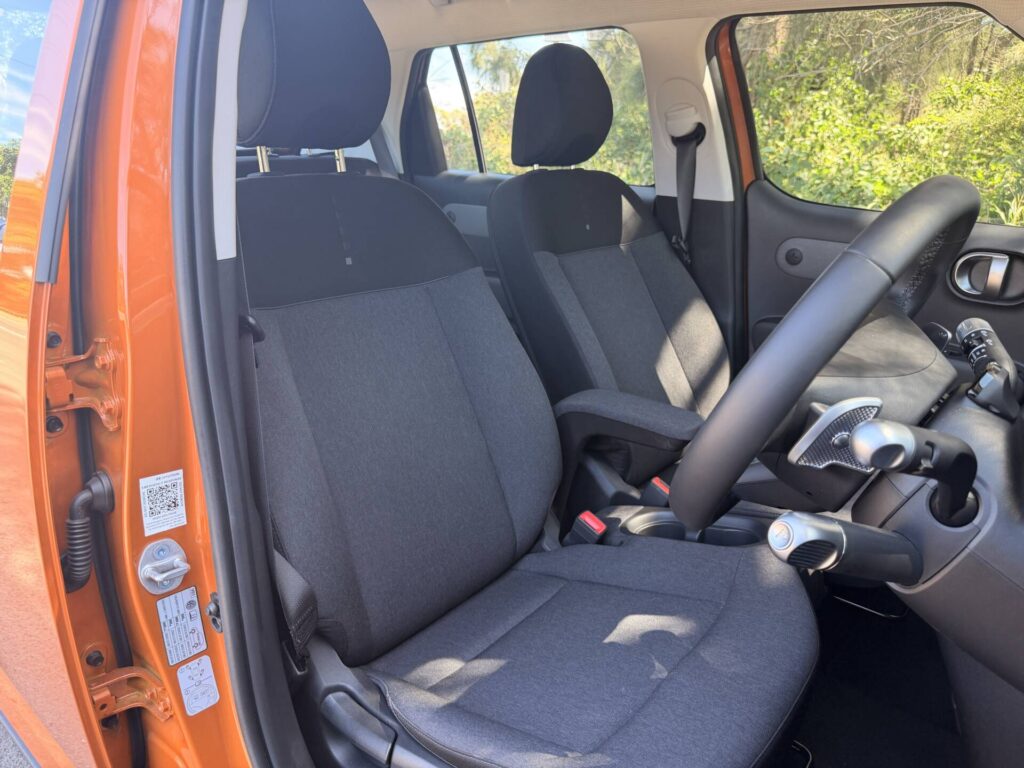
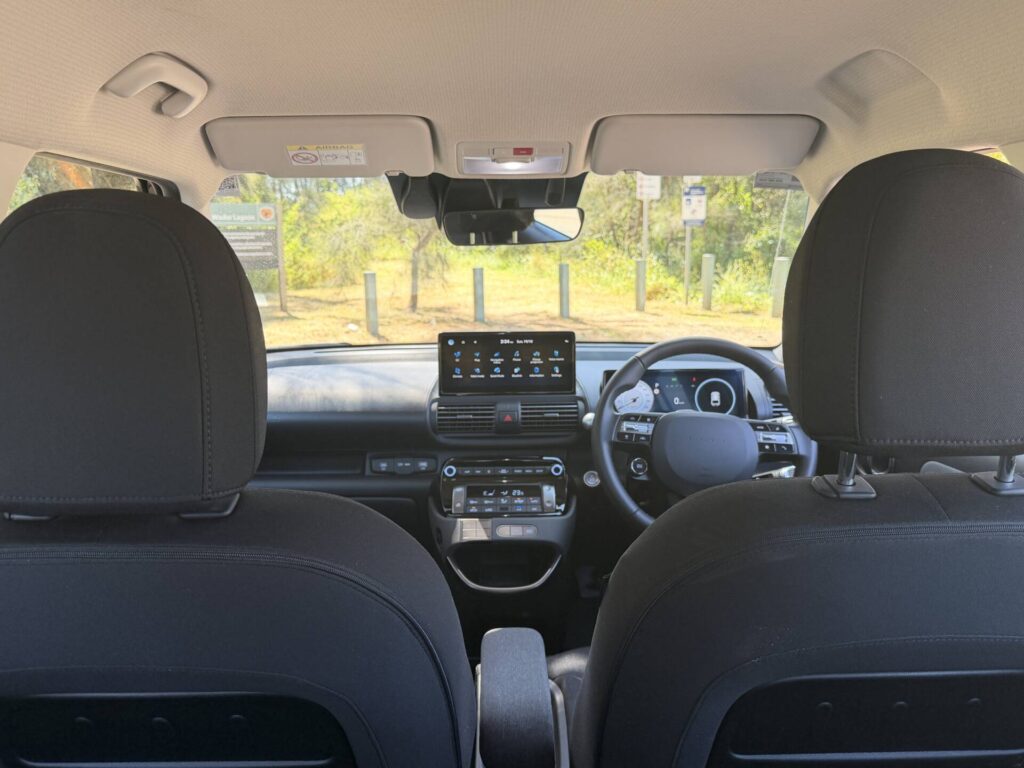
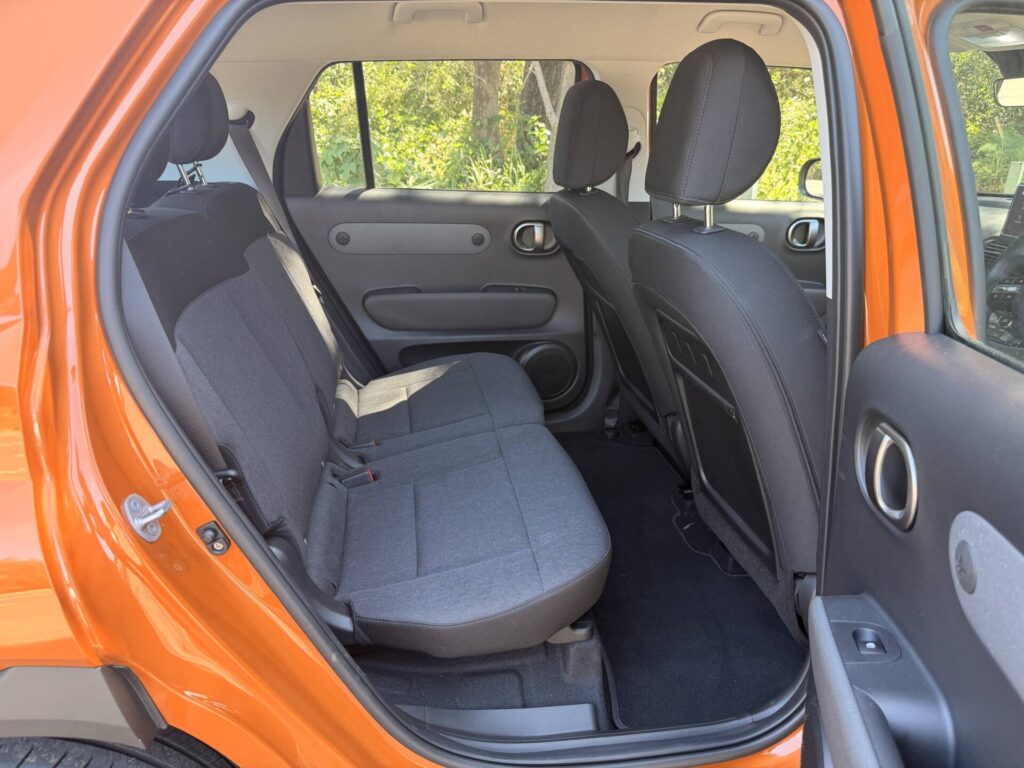
Inside it’s as you would expect for an EV down at the other end of the market. The cloth trim is great if you ask me but there is a fair bit of hard plastic. I really like the front seat design – instead of what would be a near-useless console, the seat is like a split bench with the cupholders set into the driver’s section and an armrest over the top.
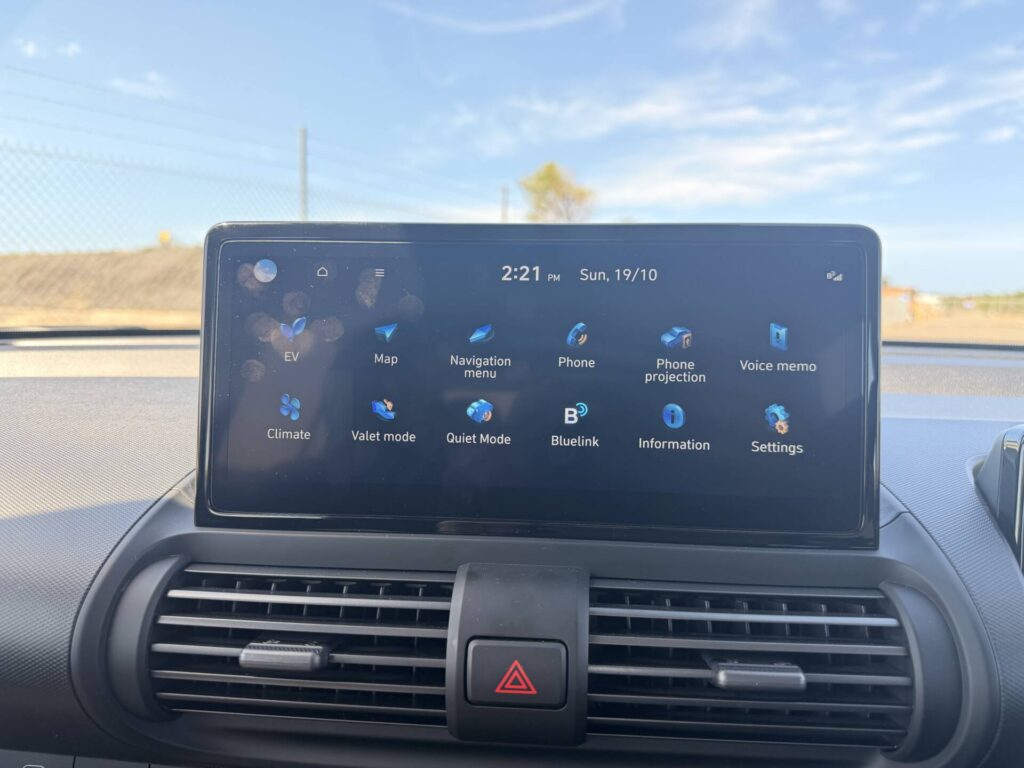
Physical climate controls make me happy and Hyundai’s excellent software powers the entertainment screen. It’s really very good and the only issue is a lack of both wireless charging and phone mirroring.
Despite its tiny size, you can get two adults in the back providing you don’t drive like Stirling Moss. It’s remarkably roomy for such a small car – you’re not luxuriating in limousine comfort but it’s not bad.
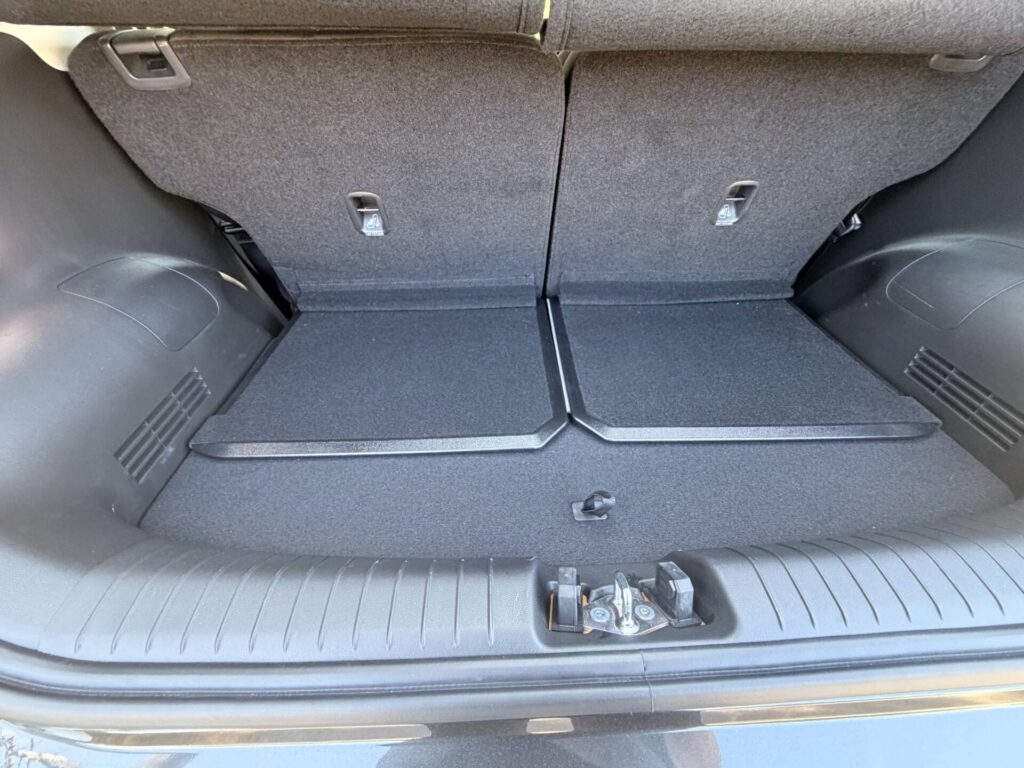
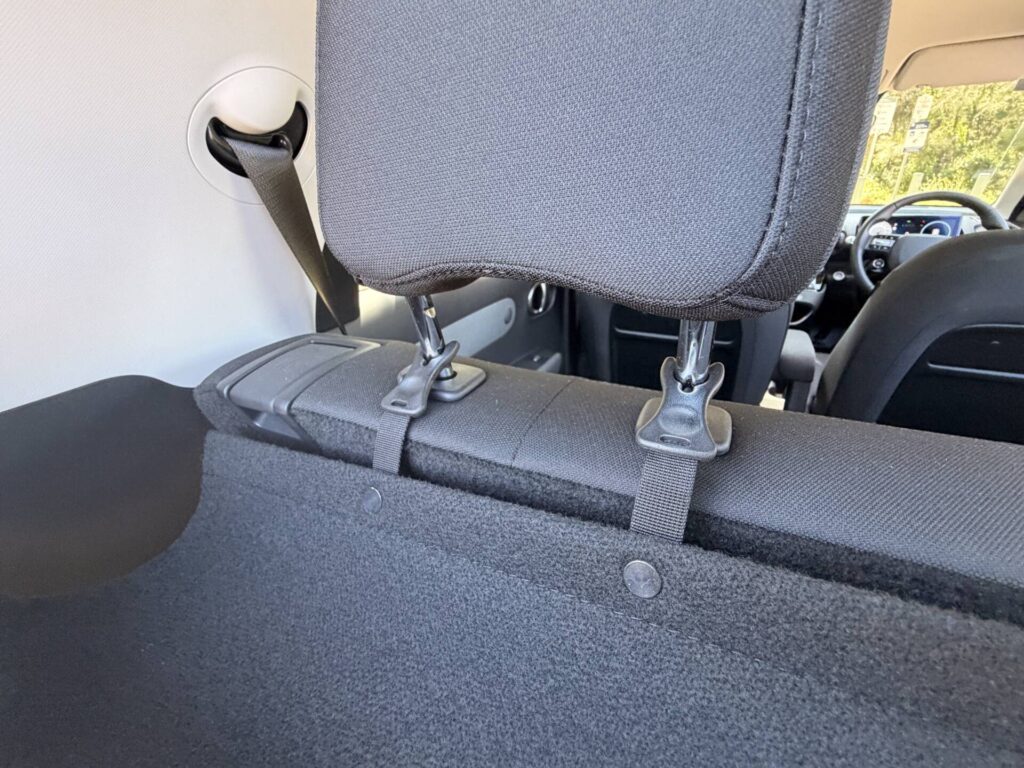
The trade-off is the boot – it’s absolutely tiny and has a sketchy parcel shelf attached to the rear headrests. Well, I say it’s tiny, it’s 280 litres which isn’t far off a Mazda2’s boot and the rear seats slide and fold 50/50, so if you need to carry some extra gear, you can with 351 litres with the seats all the way forward and about 900 litres with the seats down.
The boot floor is removable, too, and underneath is plenty of space for the charging cables or you can swap in muddy boots or sandy beach gear. The other downside to the boot is that the weird panels to accommodate the sliding are as flimsy as the non-attaching parcel shelf.
Battery and Charging
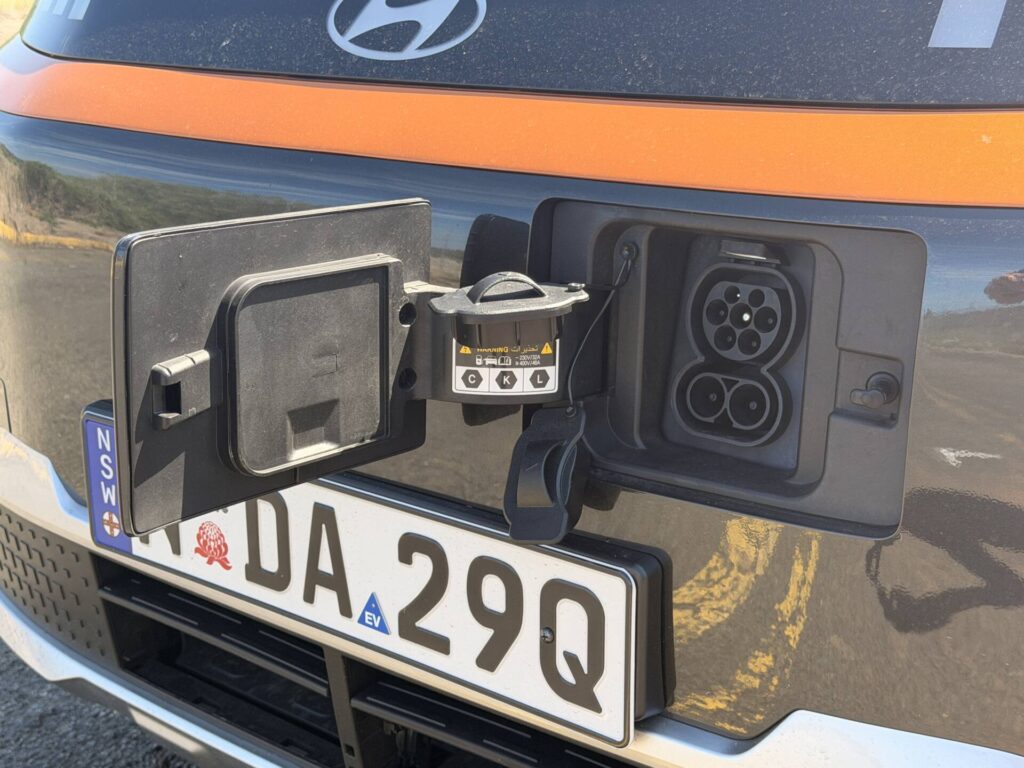
The Inster comes with two battery sizes, 42kWh and 49kWh. This car had the basic one which means a claimed range of 327km. Both packs are lithium-ion units and built on 266-volt architecture.
AC charging (with a wallbox) maxes out at 10.5kW and translate to a four hour charging time. If you use the supplied cable in a normal power point you’ll go from 10-100 percent in, er, about 18 hours. So don’t wait till you get down that low.
Step up to a 50kW charger and you’ll go from 10-80 percent in 58 minutes while the top speed available – 120kW – will do the same in 30 minutes.
The range is obviously a city car range but if you’re happy to stop reasonably frequently on long trips, 120kW charging speed is bearable.
You can also plug in to the V2L point in the back seat which offers 3.6kW of output at 16 amps, which is enough to run a hefty coffee machine or a couple of appliances in a blackout or at a camp site.
The charge port is a CCS2 and situated above the number plate on the front of the car.
Drivetrain
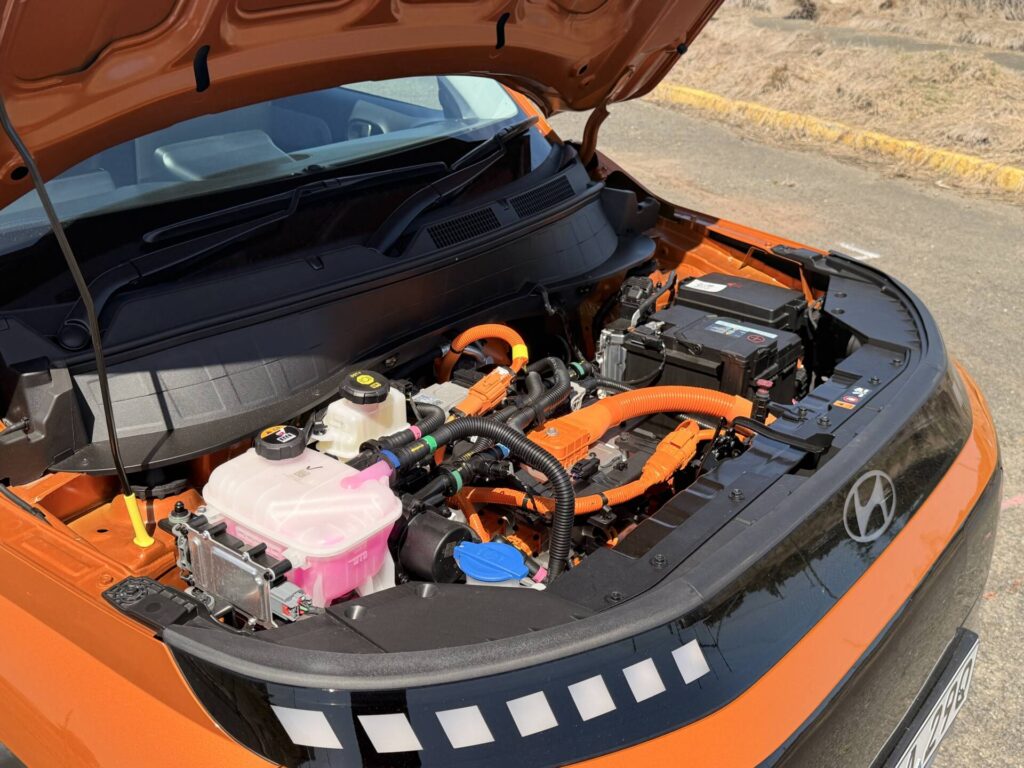
The 71.1kW motor drives the front wheels through a single-speed reduction gear. Torque is 147Nm. Neither sound amazing, but a) electric and b) the Inster weights just 1305kg. In today’s world, that’s nothing.
It’s a permanent magnet syncrhonous motor if you need to know. If you step up to the bigger battery pack you get a few more kilowatts (13.4 to be exact) but no more torque.
Chassis
There isn’t too much excitement here, with struts up front and torsion beams at the rear, which is perfectly normal in this small a car.
The steering is quick at 2.58 turns lock to lock and a 10.6 metre turning circle is very welcome.
Brakes are discs all round, with 280mm up front and 262mm at the rear. You don’t use them much if you use one pedal driving.
Can you tow with a Hyundai Inster? No you can’t.
Driving
Let’s get the usual out of the way – you won’t get 327km out of the Inster’s battery pack but you won’t get too far off. I drove like I normally do and got 280km, which is perfectly fine for a city car if you have access to a plug most days. For most Australians that’s an easy eight days motoring.
If you want to drive around Australia with a boat on the back, this is not the car for you. I have lost count of the number of people who complain about small-batteried cars not being able to tow. It’s an insane thing to criticise.
Anyway.
The Mini part of the description is quite apt. While Hyundai clearly hasn’t gone for go-kart, this is such a great city car. It has a lovely ride for getting around town and doing it in a relaxed way.
Sure, big potholes will upset the rear a bit, but this really is a very nicely set up car.
The steering is pretty light which is a bit boring, but you’re hardly on Michelin Pilot Sport 5 tyres or, let’s be honest, in a hot hatch.
It’s not slow, though. A big hello to the loser in the first-gen Ranger Raptor who got very upset when I ripped him off at the lights. Old mate Rolling Coal had to work quite hard to get in front of me while I still had my elbow out the window enjoying a rare not-humid day in Sydney.
As an EV, the Inster works really nicely. The throttle is well-judged, the brakes are fine but you don’t need them. You can either click the regenerative braking up and down as you see fit or you can stick it in one-pedal driving and let it do all the braking as you get off the throttle.
Turning into corners it’s quite happy up to where the tyres give up and they’re pretty much the first thing I’d fling. They’re Nexen N Blue S, which means reasonably cheap (but not LingLong cheap) and low rolling resistance. I’d give up 20km of range for more grip.
Redline Recommendation
I really enjoyed having this for the week and instantly fell in love with it the second I got it out of Hyundai’s driveway and on to the motorway. It whistled along very happily, the active cruise worked well and in the whole week I had it, it gave me no cause to frown.
It was that good I considered whether this would replace the Best City Car of All Time In My Head, the original BMW i3. It’s really that good. Not in all the same ways, but just a great car to get around in.
This base model is the one to have, the jump to the extended range probably isn’t worth it and the Cross’s range is blunted most of the changes and with the optional roof basket, this base model will hose it. It’s also almost 90kg lighter.

Leave a Reply