
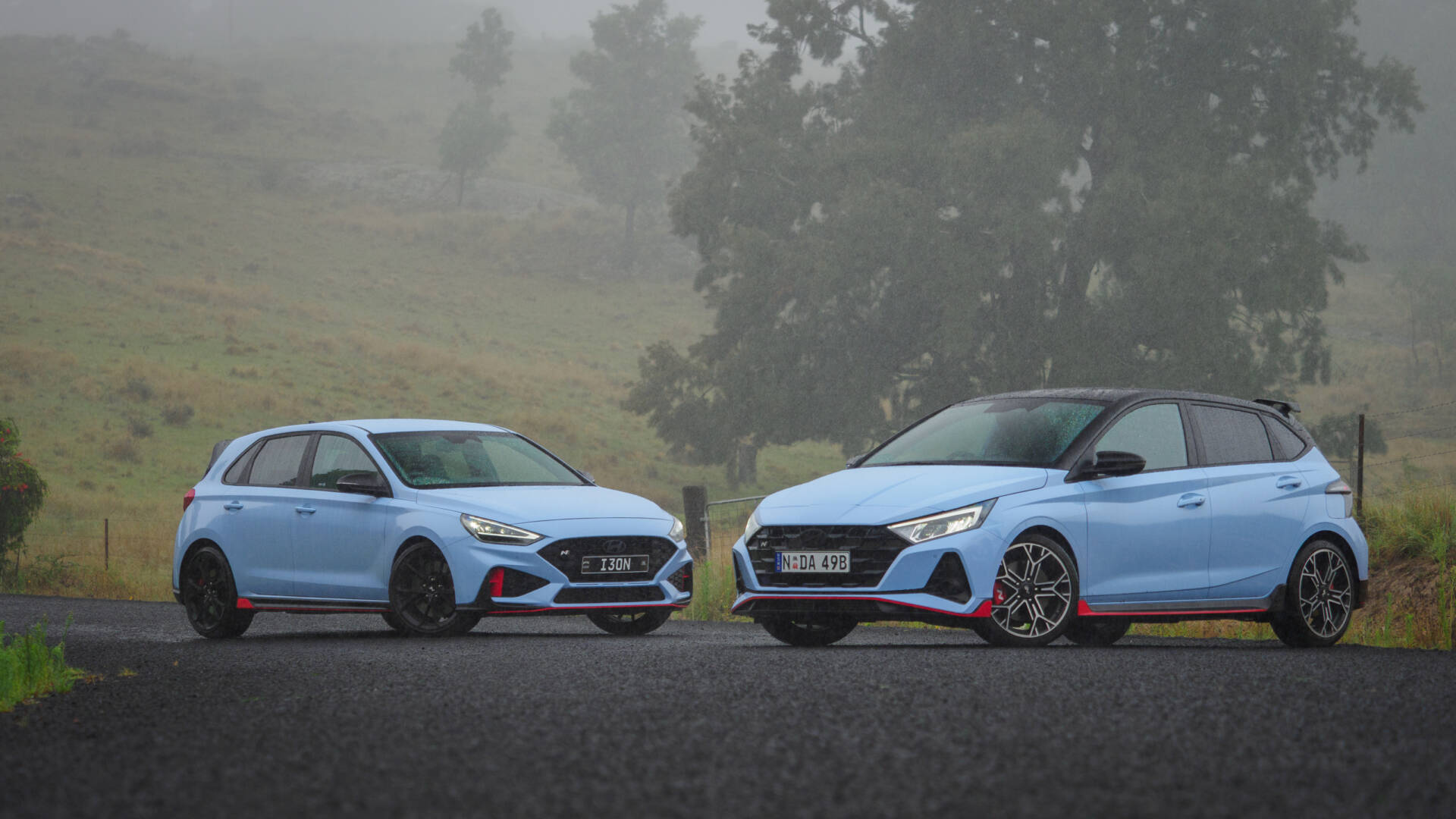
Hyundai’s two petrol-powered hot hatches have been with us for a while, but they still deliver the thrills.
I don’t think either of these cars needs an introduction, but I’ll do it anyway because the AI and SEO gods expect it. Google, fundamentally, thinks you’re an idiot.
The i30 N was – and remains – a landmark car in Hyundai’s history. Hyundai had tried a few times to do Sporty Things, starting with the Coupe (or Tiburon, depending on where you live) in 1996. The suspension was supposedly sorted by Porsche.
It was fine, I guess. I owned one and it was really a Lantra with a very cool body on it. The second-gen Tiburon scored a V6 but failed to make much of an impact here in Australia and then Hyundai fell into its wilderness years where it made endlessly dull cars in pursuit of Toyota-ness.
Then a few Germans turned up and helped steer the undeniable talent at Hyundai in the right direction. Styling improved, fundamentals improved and then the third-generation i30 landed fully cooked.
One of the Germans Hyundai poached was Albert Biermann of BMW M fame. In 2015 he was given a mandate to build a whole new performance arm for the company. Biermann didn’t mess about, building a facility at the Nurburgring and before long we had the i30 N.
Biermann declared that the N stood for both Namyang – Hyundai’s development facility – and Nurburgring where the i30, i20 and Ioniq 5 N spent many hours in development.
I declared the i30 N the king of hot hatches when I first drove it because it was as focussed as a Renaultsport Megane but without all the (largely unfair) baggage. I said it was better than the Golf GTI at the time and I stand by that despite the abuse in the comments because the Mark VII GTI was a bit bland.
After a couple of years, the N range doubled with the arrival of the i20 N light hatch. In Australia, that’s the only i20 we get, harking back to Renault’s fatal error in only selling the second generation (to us) Renaultsport Clio. Well, a fatal error as far as depreciation goes.
So I finally have them together after far too long. As ever, this is a side-by-side, a way for you to decide which of these two might be for you.
Words: Peter Anderson
Images: Matt Garrard
Co-pilots: Mark Dewar and Blake Currall
How much is a Hyundai i30 N and what do I get?
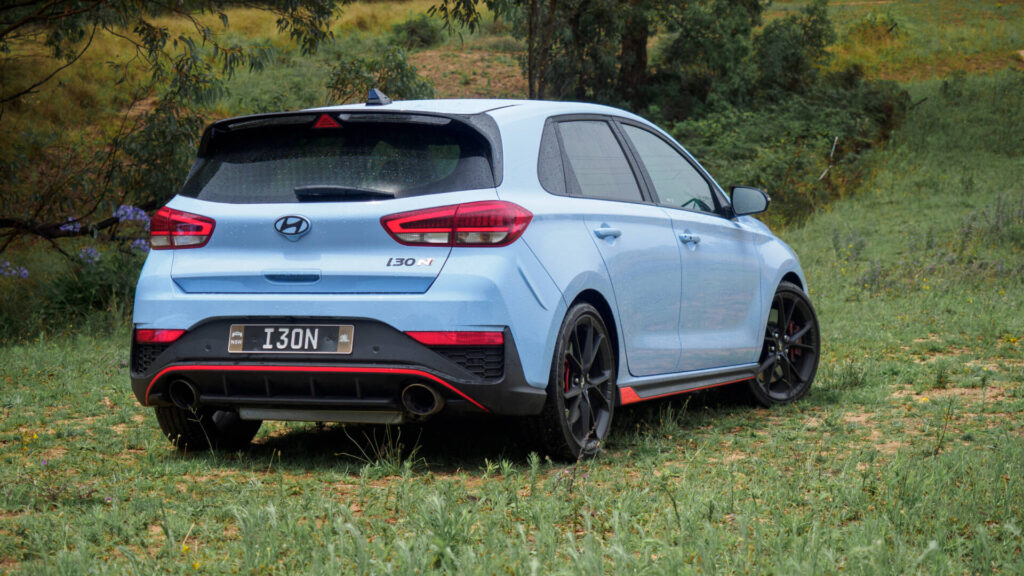
i30 N 6-speed: $52,000 + ORC
i30 N 8-speed: $52,000 + ORC
i30 Sedan N Premium 6-speed: $52,000 + ORC
i30 Sedan N Premium 8-speed: $53,000 + ORC
i30 N Premium 6-speed: $55,500 + ORC
i30 N Premium 8-speed: $55,500 +ORC
(You can get a version of each Premium version with a sunroof but I don’t care about that and it just costs more. The sedan is on a different platform so if you want to see the i30 hatch next to the sedan, let me know)
We won’t go into too much detail as to what you get because this is a fairly well-worn path for most folks. You do get a lovely set of grabby front seats, dual-zone climate control, a pair of 10.25-inch screens, Alcantara and leather seats, heated front seats and steering wheel, keyless entry and start, power everything, auto wipers, auto LED headlights, wireless phone charger, satellite navigation, reversing camera, front and rear parking sensors and various other bits and bobs.
Safety spec is good, with plenty of airbags, front and rear AEB, auto high beam, lane keep (easily switchable) and auto high beam. The i30 is getting on a bit and the ANCAP rating has expired.
Rather generously, the hero colour, Performance Blue, is free and the colour to have. You can choose six other colours, five of which are a reasonably modest $595.
How much is a Hyundai i20 N and what do I get?
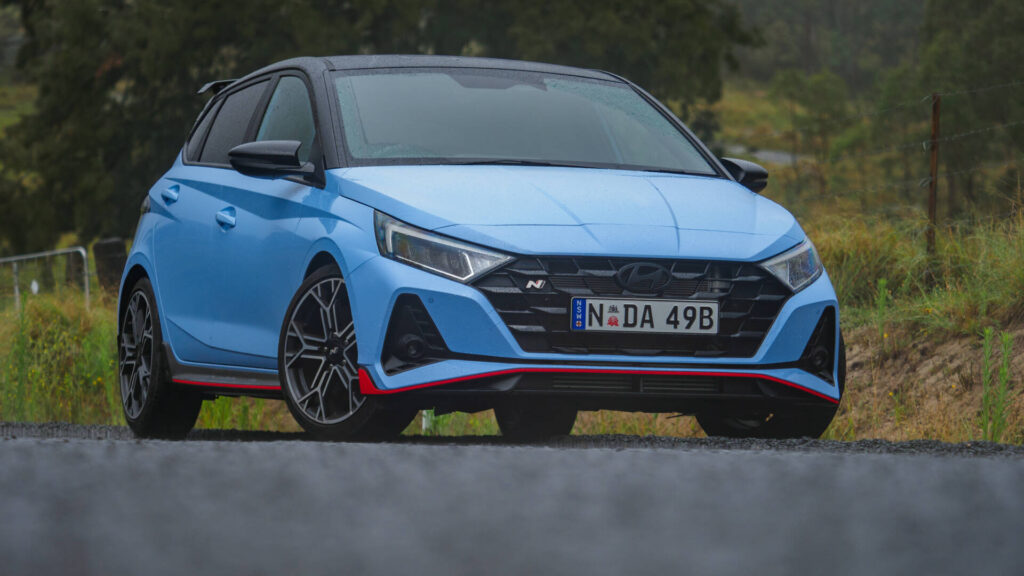
Hyundai i20 N 6-speed: $37,500 + ORC
Straight up this is a bargain. The i20 N has not had to share the limelight with much apart from the more expensive VW Polo GTI which doesn’t have a manual gearbox. This is resolutely manual-only, with a six-speed and the only direct competition it had when it arrived, the much-adored Ford Fiesta ST is long gone.
Again, just going to whip through what you get. The tiddler has the same pair of 10.25-inch screens as the i30, wireless phone charger, front and rear parking sensors, reversing camera, sat nav, Bose-branded audio, keyless entry and start, auto LED headlights, auto wipers, grabby seats and dual-zone climate.
It’s actually reasonably close in spec to the i30, which is something to consider if you’re looking for stuff.
Like the i30, Performance Blue is one of two free colours, while the other three are also $595.
Safety spec is similar to the i30, but even has reverse cross-traffic alert. Given its tiny volumes, there’s no ANCAP rating.
Look and feel
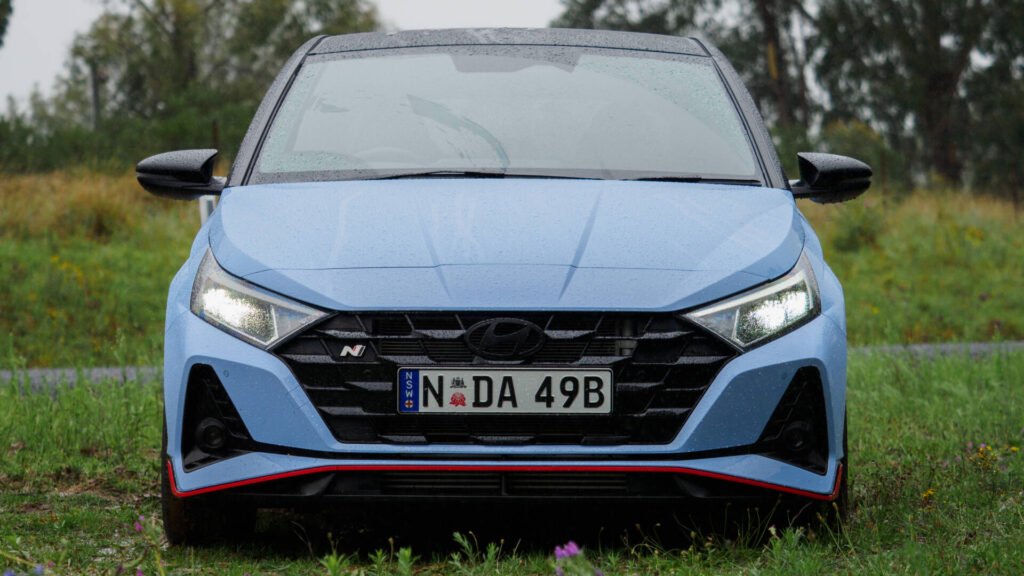
The i20 is a sharp-looking machine, much more closely related to the i30 Sedan N. Sharp edges, plenty of aggro and you can have a black roof if you want it.
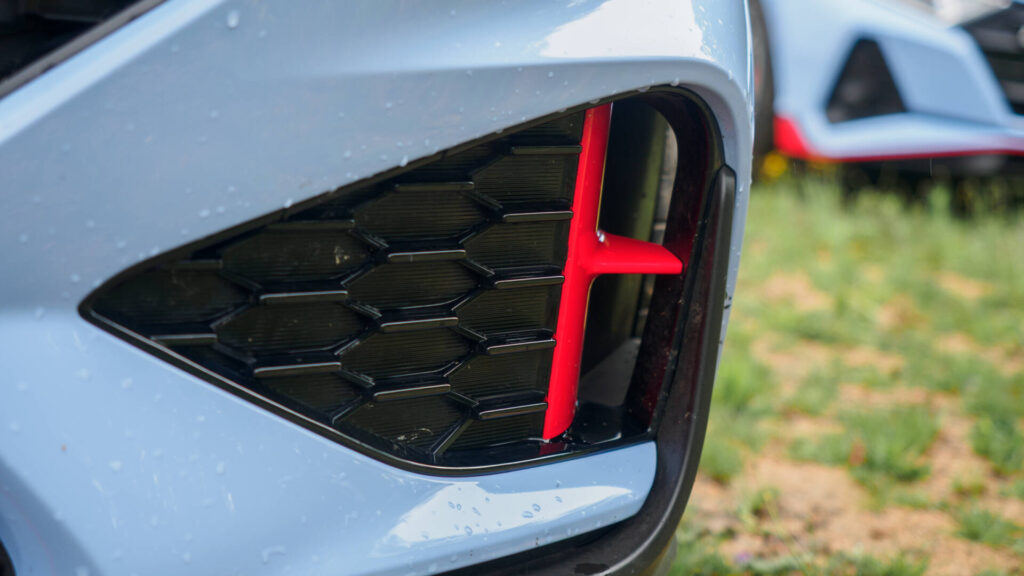
It looks chunky with all the N styling gear attached and it’s clear a lot of work has gone into it.
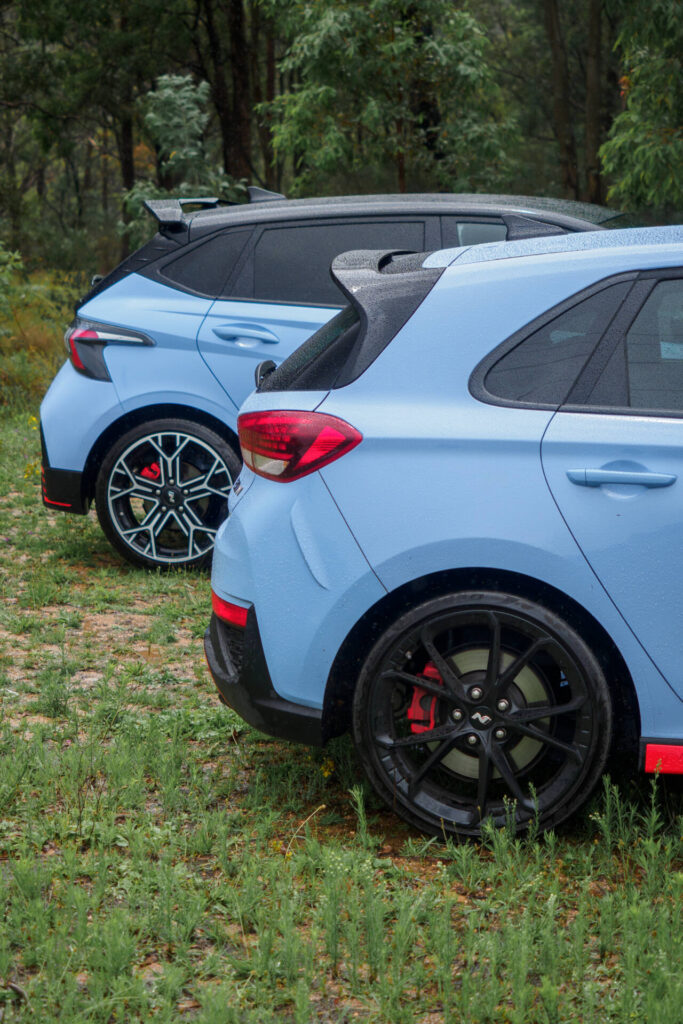
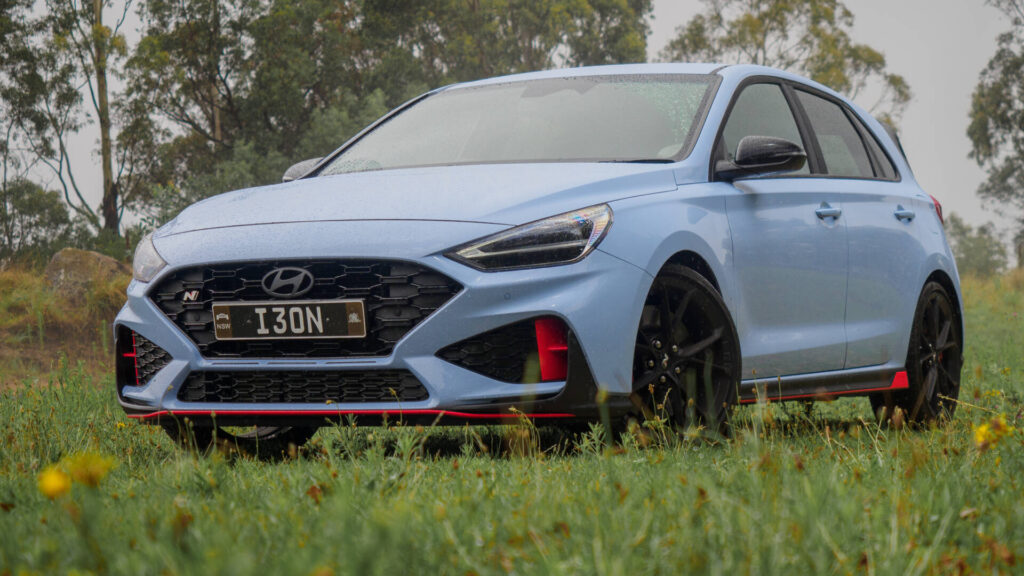
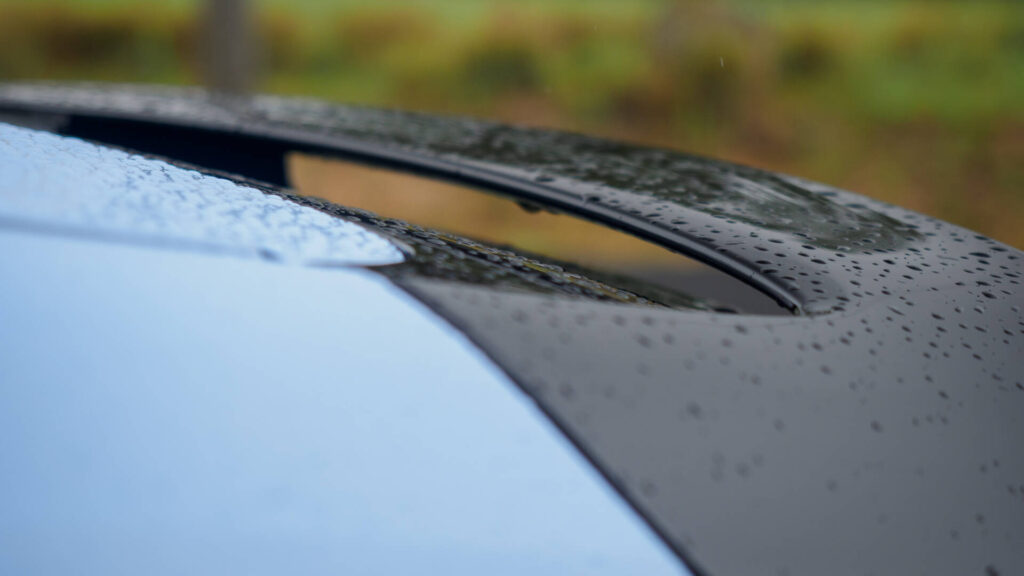
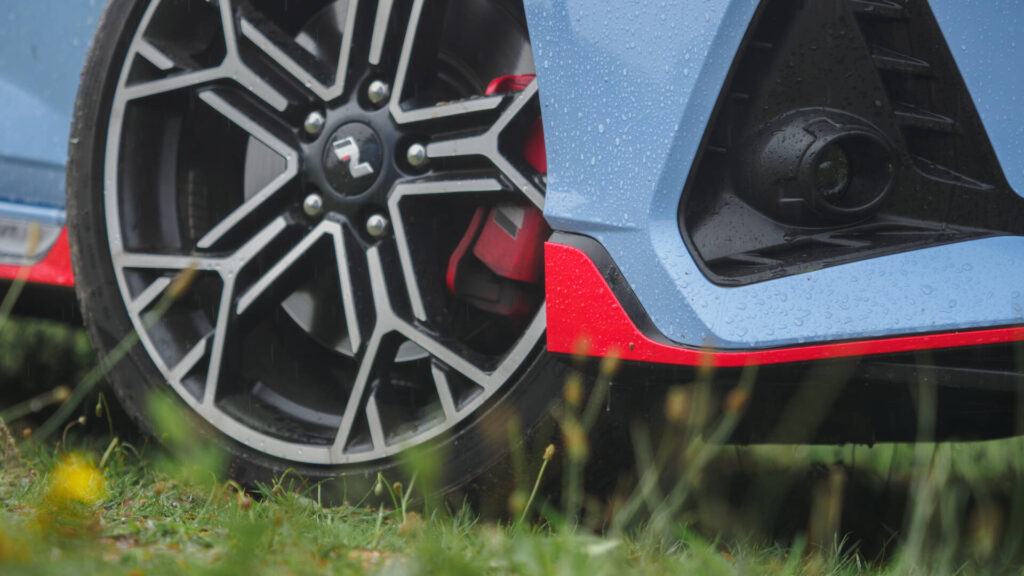
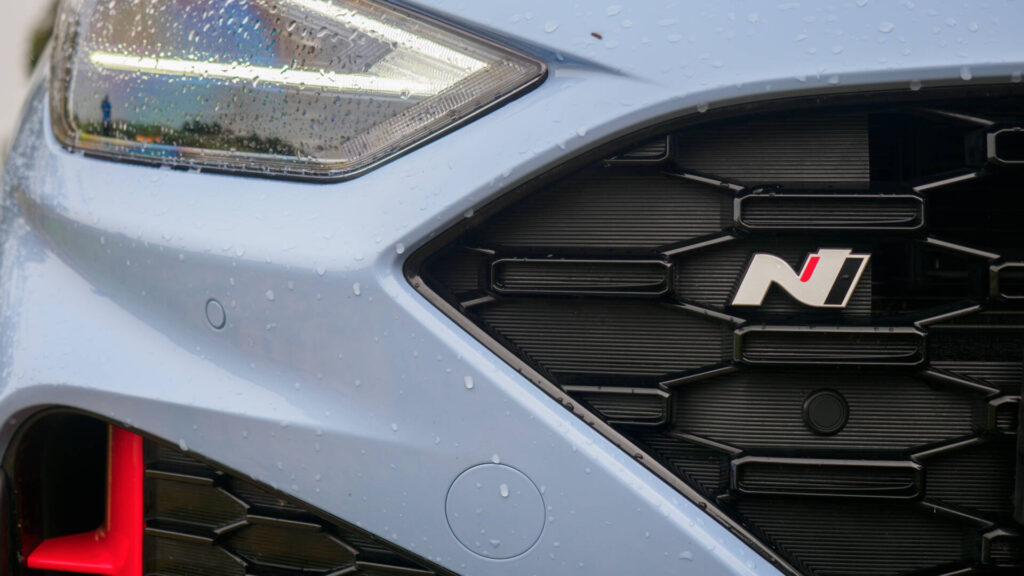
The i30 looks less interesting. I don’t know why but it seems like it wasn’t designed with the N in mind from day one. The facelift certainly improved the front end with its more aggressive, swept-back headlights but, in a way, hot hatches were often meant to look (mostly) like their less powerful options.
I prefer the look of the i120 but there’s nothing wrong with the i30, at least as not as far as I’m concerned. Both look awesome on their lower springs and big wheels, though.
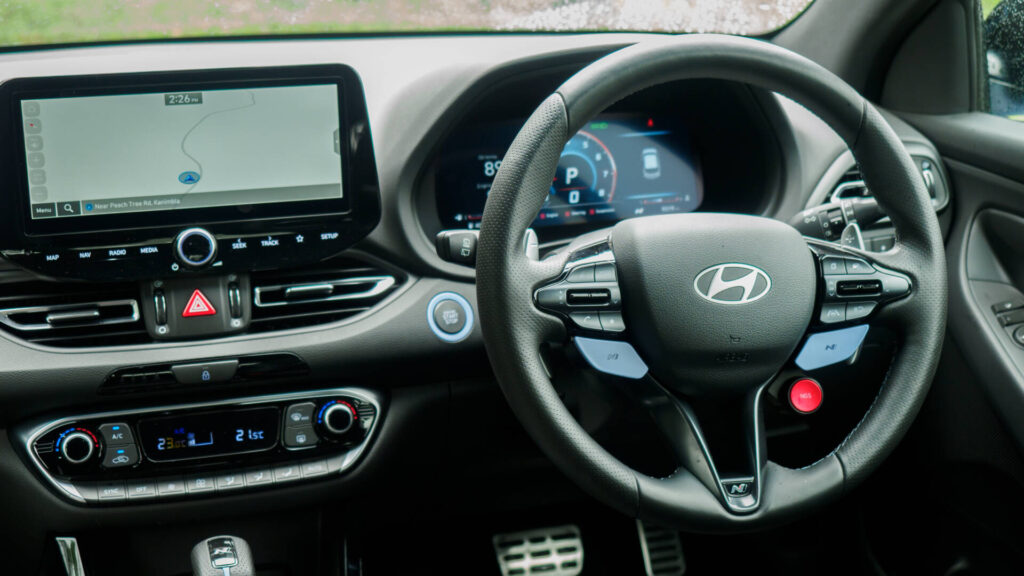
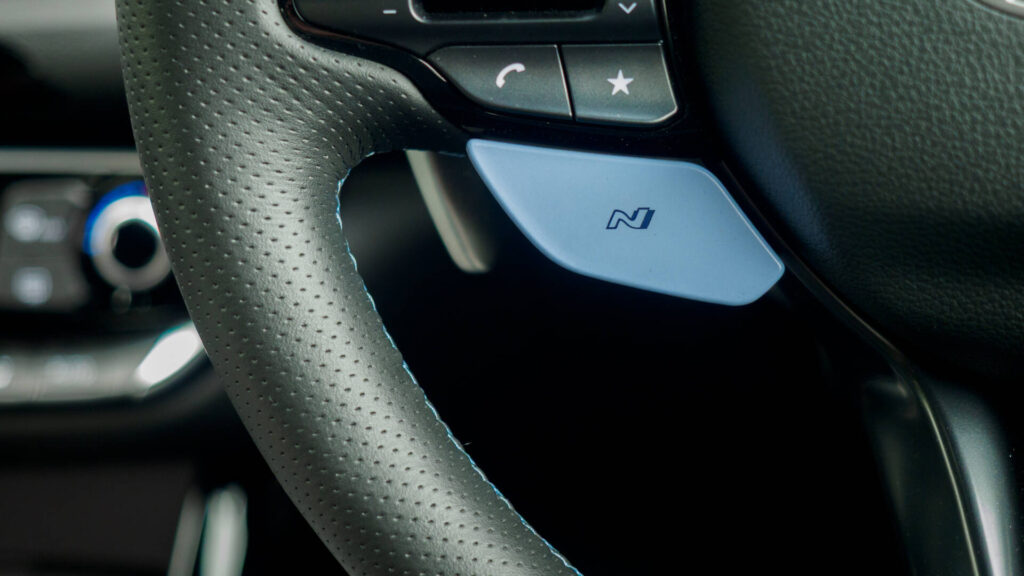
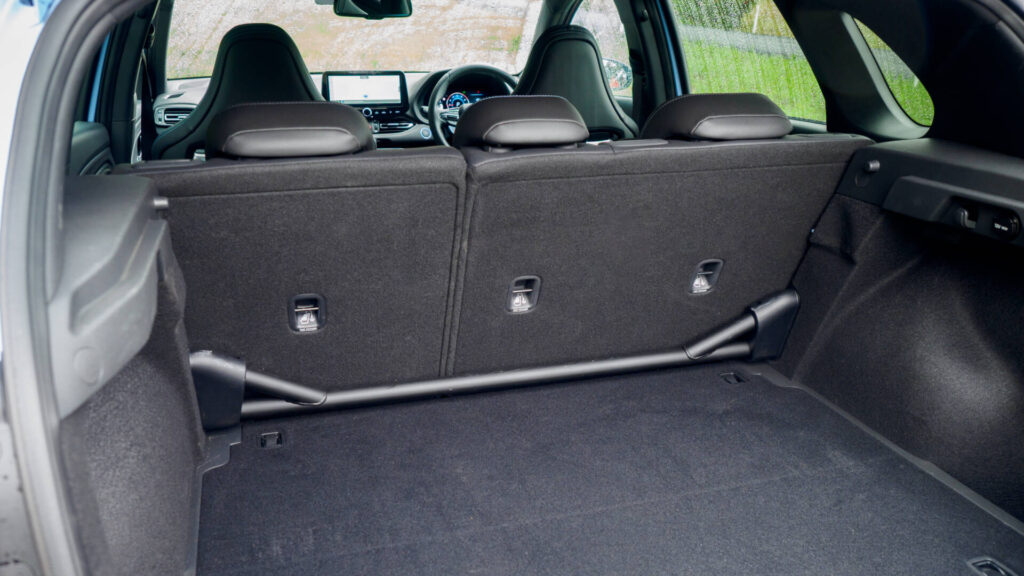
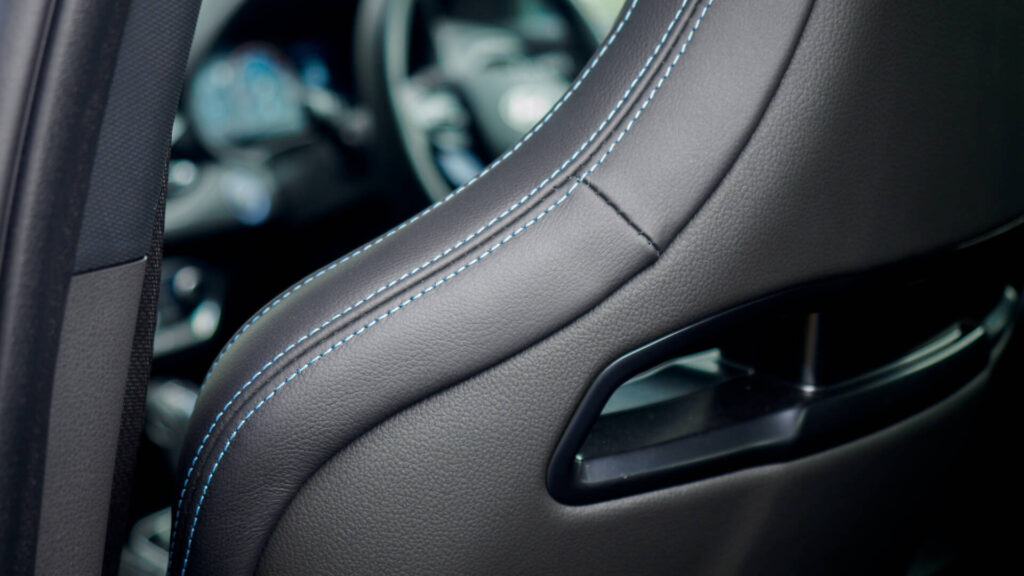
Similarly, I felt the i20’s interior felt a lot more modern but both share some pretty ordinary plastics. The i30’s front seats will eat you right up, though, and so that’s enough for me to want it.
The bigger car is looking its age inside which, in the end, is hardly a deal-breaker and absolutely not why you’d buy either of these cars. Bottom line is, they’re well-made, will go on and on and if anything breaks, will be cheap to fix.
Drivelines
| Power | Torque | 0-100km/h | |
| i20 N | 150kW @ 5500-6000rpm | 275Nm @ 1,750 and 4,500 | 6.2 (claimed) |
| i30 N | 206kW @ 6000rpm | 392Nm @ 2100-4700 rpm | 5.5-ish |
I don’t think you’d accuse either engine of being particularly tuneful or characterful. Starting with the 1.6 turbo in the i20, that was a feature that made me particularly nervous.
It’s not a sharp-edged engine in other Hyundais (and Kias) and, to be fair to it, often gets lumbered with the pretty ordinary six-speed dry twin-clutch transmission that I’ve never really liked. Here, though, you get a nice six-speed manual.
Here in the i20 N, you get 150kW and a whopping 275Nm from 2100 to 4700rpm to shift its modest weight of just over 1200kg, almost unheard of lightness in 2026. Hyundai says it will crack the ton in 6.2 seconds, which is pretty quick.
The i30’s 2.0-litre is bit more noisy to go with the extra punch. It pops and bangs on its way to its peak power of 206kW at 6000rpm. More interesting is the massive 392Nm available from 2100 to 4700rpm.
We had the eight-speed automatic which is Hyundai-Kia’s spectacularly good (wet) twin clutch. It’s hard to believe this is the same company that produced the dry six-speed that has never come anywhere near an N, thank goodness.
Both are front-wheel drive of course, the early rumours of an all-wheel drive i30 N disappearing as quickly as they surfaced.
Chassis
The i20 ships with 18-inch alloys, Pirelli P Zero tyres measuring 215/40R18 and is obviously fitted with far different springs and dampers to the standard car we don’t get here. It also has bigger brakes.
A mechanical LSD with the groan-inducing N Corner Carving branding sorts out the front end and the i30 has the same. Both also feature launch control, which I never use but at least its there.
The i30 N rides on forged alloy 19-inch wheels, also with P Zeros, but heftier at 235/35R19. Front brakes are 360mm, which are substantially bigger than the 1.6-litre auto hatch’s.
Both are quite different to the base car’s, the but i30’s spec is a lot more “special” in that there is clearly a lot of detail spec items that you didn’t even find in a price class up, such as the Audi S3, until recently.
Driving
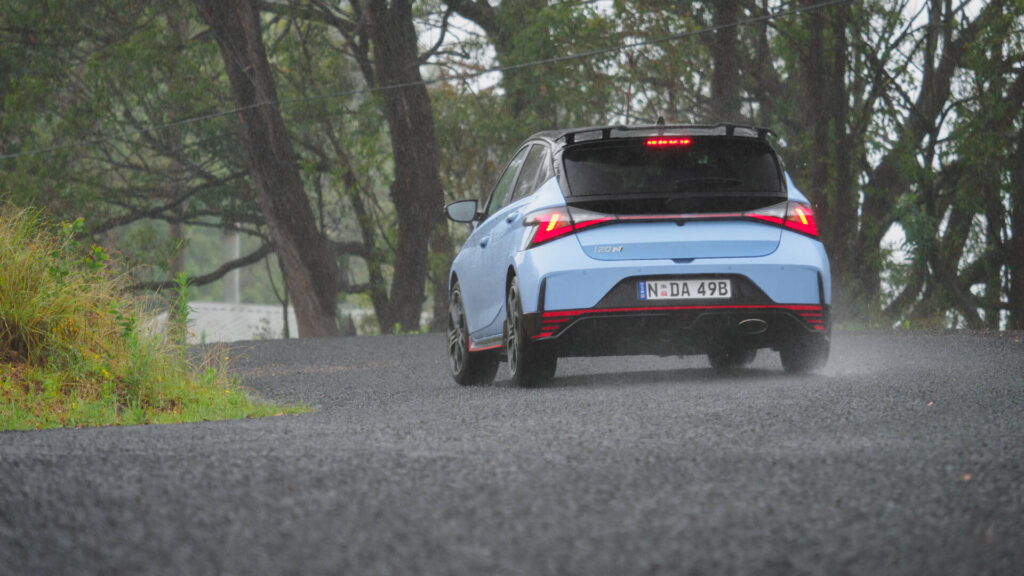
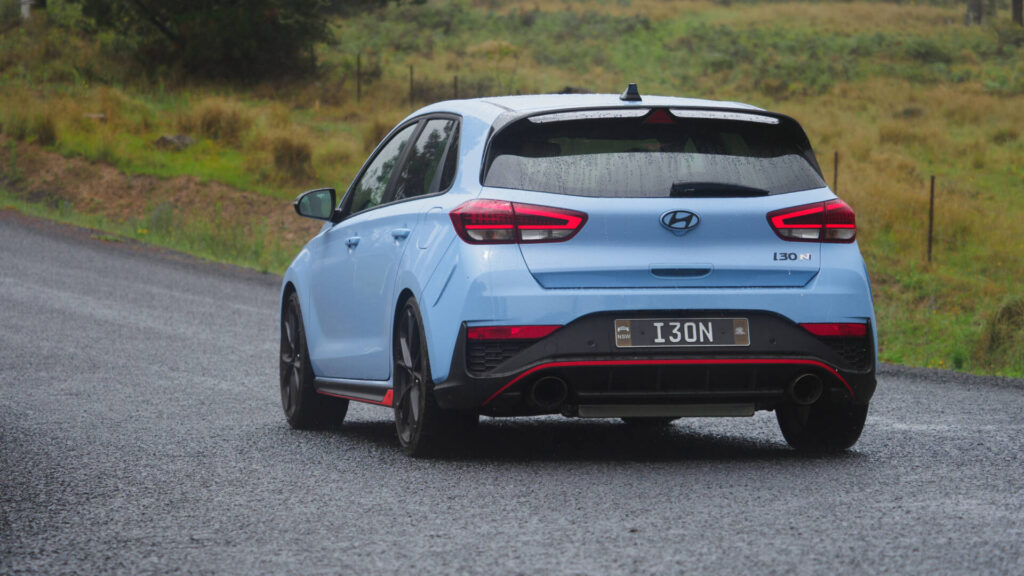
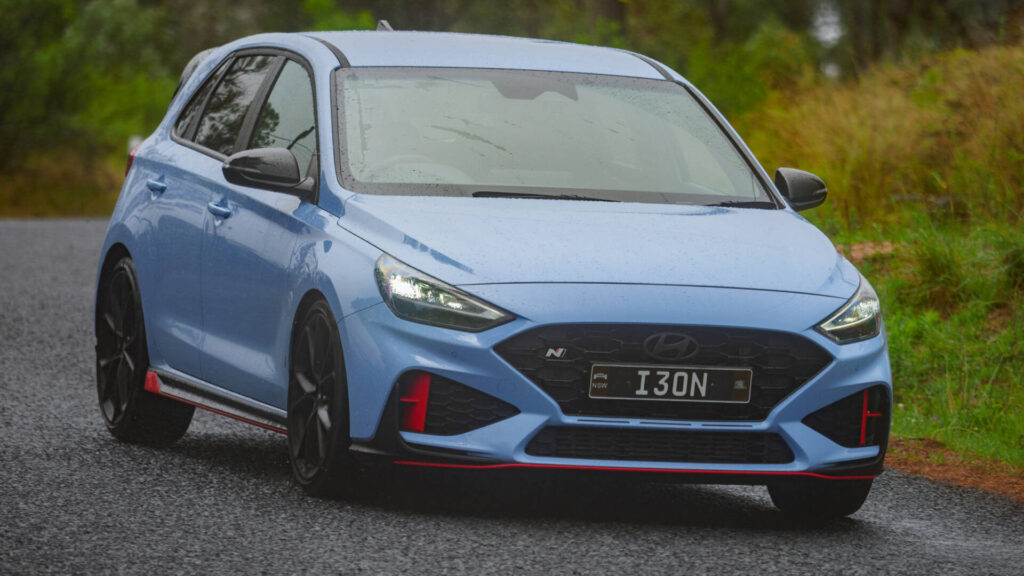
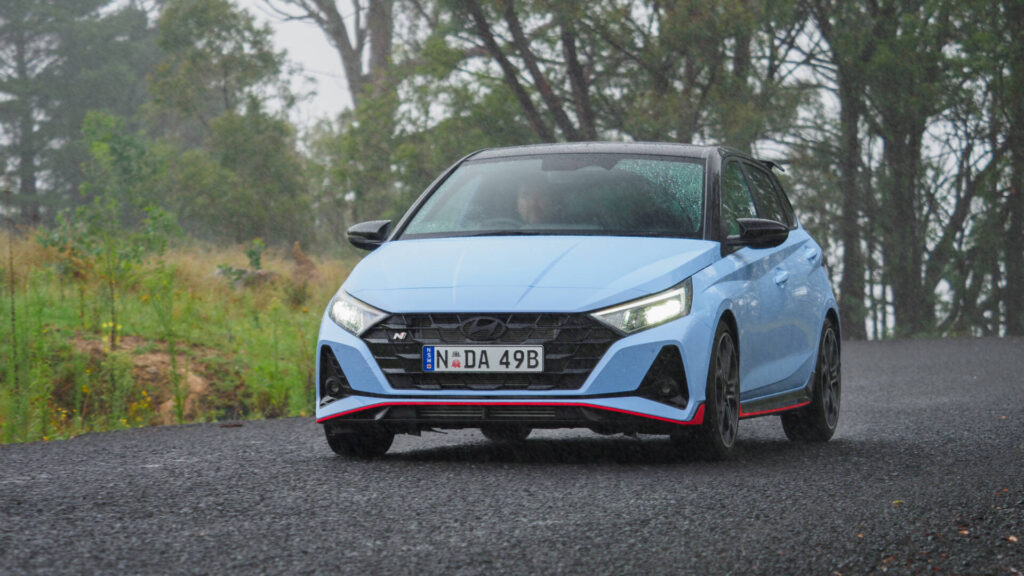
Let’s start with the car that’s new to me, the i20. This could have been a really harsh, bucking bronco because that’s what the i30 N could have been had it not been for Hyundai’s renowned chassis team sorting out the ride before it went on sale here.
The i20 is everything a small hot hatch should be. Not too fast because of its very sensible-shoes parts-bin 1.6, it all hangs together because you can use all the power most of the time.
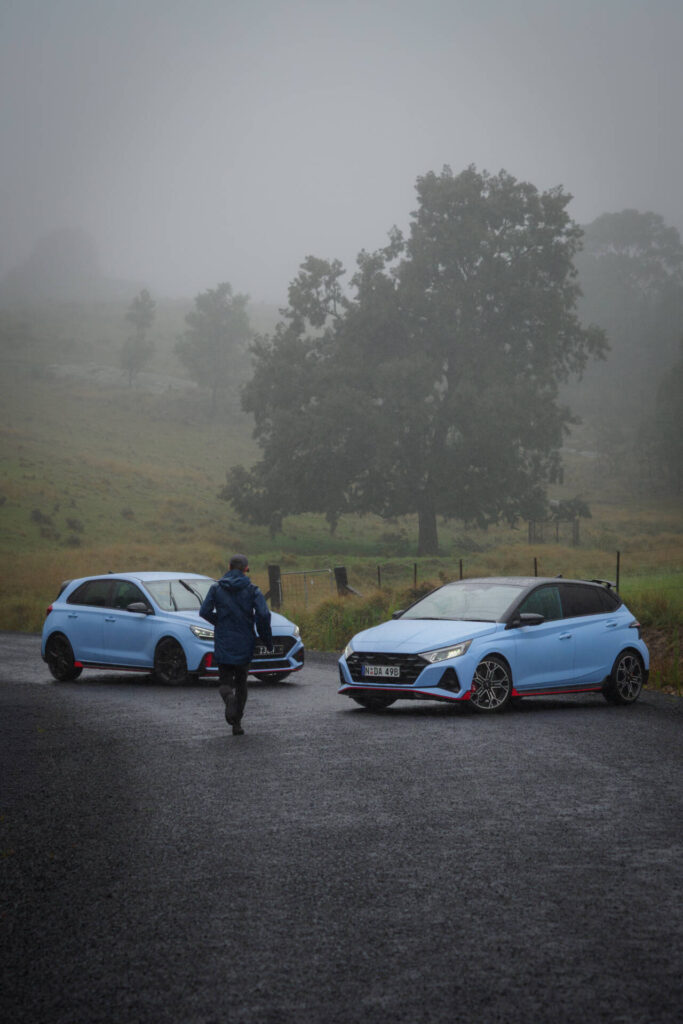
It’s a joy to really push, even in the dreadfully shoddy weather of our Blue Mountains back-to-back test with co-pilots Mark and Blake (and a very wet photographer Matt who took these sensational shots).
The driving position is excellent and the controls are all very straightforward, including the proper handbrake. I really liked the steering wheel, not too fat but not too thin and the clarity of the dash – a quality shared with the i30 – means it’s all very easy on the eye.
I’m not sure the gearshift is quite as slick as the i30’s carbon-ringed six-speed, but it does have rev matching should you choose to accept it. I was happy with it on or off which is to say the rev matching is good.
While Mark and I are reasonably similar frames, Blake is a bigger, footballing unit. Despite this, all three of us were quite happy in the i20 as we were the i30, so there’s no massive loss in comfort or space, although the i30 Premium’s grippy seats may not have been as comfortable for Blake. We did all complain of numb bums, however, the i30’s buckets lacking a bit of posterior support.
The i20 has a lovely turn-in and I built confidence in it really quickly. Being the manual of the two, the workload was higher but the drop in weight compared to the i30 meant it wasn’t so easy to shake.
Given it goes without adaptive damping, it is the harsher of the two as a daily but when you’re chucking it down a twisting back road, you won’t notice much of a difference in the ride. It manages big bumps and potholes perfectly happily, with just enough compliance to prevent you feeling like you’re going to be thrown off the road.
The engine, like so many in this class (past tense, lets face it) doesn’t rev out as satisfactorily as an old-school Renaultsport Clio 172 or 182, but you gain so much in everyday flexibility with wide availability of torque and a linear power curve.
It’s pretty terrible when you’re not in N mode, however. It really bogged down a lot and needed a lot of encouragement, as though the clutch was slipping. N mode fixed it and there it stayed, with a much happier engine boosting you off the line without the chugging.
It also has a limited-slip diff like the i30, which in a car this small rarely appeared in the past. I remember driving a Peugeot 208 GTI and then a Peugeot 208 GTI with an LSD and my mind was blown – I knew LSDs were good things in powerful rear-wheel drive sedans, but the difference in the 208 was something else. You can’t get an i20 N without one and I don’t want to live in a world where you can.
It’s so delightfully chuckable. It won my heart very quickly indeed and it’s a car in which I think I could be very happy. It’s more raw in the driving, more like the classic hot hatches of old apart from the engine, of course. Ripping around in this thing was a delight.
And so to the i30. I’ve been privileged to have driven several different versions of the i30, both hatch and sedan. This is the first hatch I’ve driven with the eight-speed twin clutch and it meant I had to learn to love the i30 N in whole new ways.
While I adore the manual, the eight-speed is terrific too. It is really along for the party, especially when you’re in N mode. Shifts are fast and sharp but not brutal, it obeys your requests for a gear without hesitation (unless it’s going to blow up) and is even well calibrated in auto mode when you just want to cane it without having to think too much.
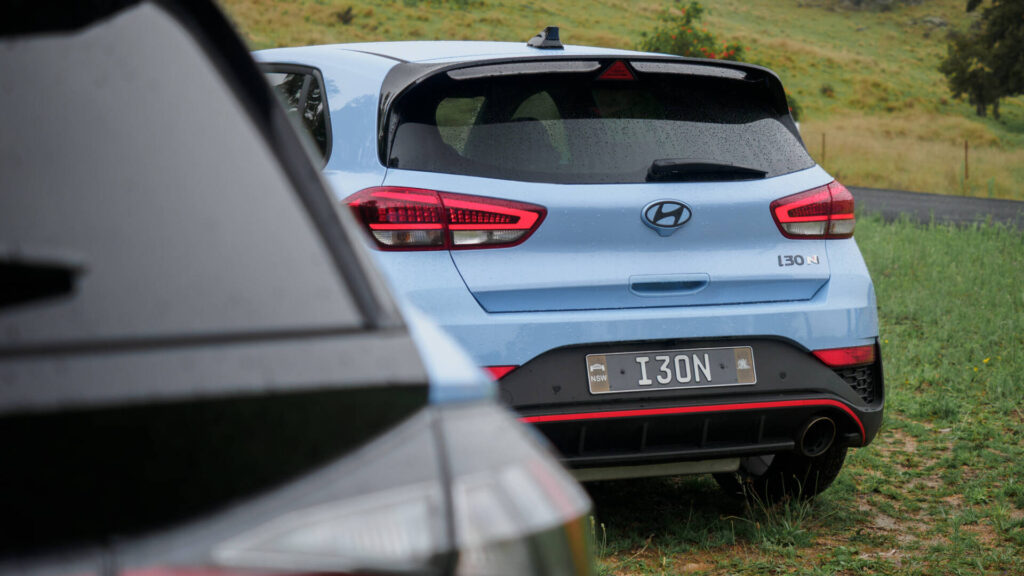
The 2.0-litre is a strong and flexible as ever and I’d forgotten how much fun the lightly obnoxious poppy bangs were.
But after a couple of years away, I was reminded just how colossally good is this chassis and how Hyundai’s N team are a world away from the company’s cars of even a decade ago.
Firing down a bumpy, twisting road with water streaming across the surface, I should have been terrified. But everything just works in the i30 – it holds the line, the brakes remain super strong but the ABS isn’t tripped up by the variable grip and the steering retains its heavy-but-chatty feel.
The weather threw everything at us the day we wrung these cars necks and both of them kept up with it. While the i30’s Pirellis should be flung at the first opportunity for Michelins or (possibly) the new Potenza Adrenalins. they hung on very gamely on the deliberately chosen rough tarmac.
They still axle tramp like a bastard on a hard start (behaviour apparently eliminated by Michelin Pilot Sport 4s) and are pretty noisy, but you forgive them for both things when you’re hooting through a corner at speeds hot hatches of old could only dream of.
Both cars are way more fun than the more recent hyper hatches from Mercedes, retaining that lightweight, balanced feel of a two-wheel drive car rather than raw clout of an A45 or Golf R. And at half the price, I’ll drop a second or whatever it is off the 0-100km/h to have more fun.
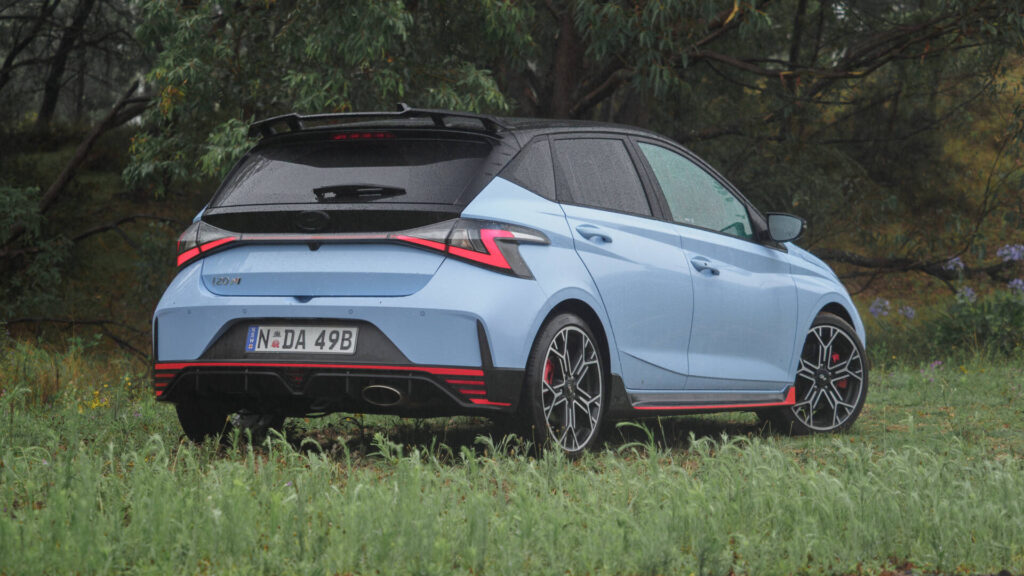
You can tell, though, that the i30 is the more intense car out of the two. The i20 is overall more friendly but the i30 wants to dance. It would surely be better on track (and both remain covered by warranty in non-competitive track use) and having driven the i30 at Sydney Motorsport Park, the gap between the two would widen.
The i30 turns in more aggressively, powers out of corners more forcefully and even brakes more convincingly. None of these are criticisms of the i20 because it’s a more delicate car that asks more of the driver to go quickly on a back road blast.
Co-pilot Blake
Objectively, the i30 is the better, more well rounded car but I’d be lying if I said the i20 wasn’t a helluva lot more fun. More raw and old school. You’d buy it with your heart and the i30 with your head.
Co-pilot Mark
“I preferred the i20N as it was like a four-wheeled motorbike, so much fun at legal speeds. High-geared, so it would bog down unless in N mode, so best to drive in that all the time. No need to change into second when going through roundabouts. First was fine.
And, like a motorbike it rewarded tidy gear changes and cornering lines.
The i30N is next level and so capable that it was easy to keep pace with the i20N at legal speeds. The i30 was more of a beast of a hot hatch.”
Redline Recommendation
As ever when you’re comparing to ripper cars in the one place, there’s no winner as such, that’s not what these reviews are about. Others have their opinions and it’s all down to what you want.
And these two cars are different enough where cross-shopping them produces a genuine difference. The i20 is not just a mini-i30. It’s fast and fun, a bit more modern-looking and substantially cheaper. It will be cheaper to run and insure, as well.
The i30 in manual or twin-clutch remains an absolute belter of a car, with its original launch well and truly in the rear-vision mirror. This is the car I’d tackle Spa or the Nurburgring in because it’ll go well on the straights but be hilarious in the corners.
I wouldn’t say no to an i20, obviously, but the i30 is the road and track car out of the two.
On the road, it’s closer. As Mark said, the i30 easily stayed with the i20, but more fun was being had in the smaller car on our soggy test route. Had they both been manual, perhaps it wouldn’t be so clear cut.
Not so long ago, the idea that either of these cars would take on and essentially vanquish the old guard was unthinkable. Now, it’s routine to think of Hyundai N cars as best-in-class.
And these two did it.
If you want a more classic hot hatch, one that bridges the gap between the aforementioned Clio and Fiesta, it’s the i20.
The i30 is the all-rounder, the fast hatch with a depth and breadth of capability vanishing from this class as SUVs continue their inexorable onslaught. It remains in my five-car garage but the i20 nearly made it in…

Leave a Reply