
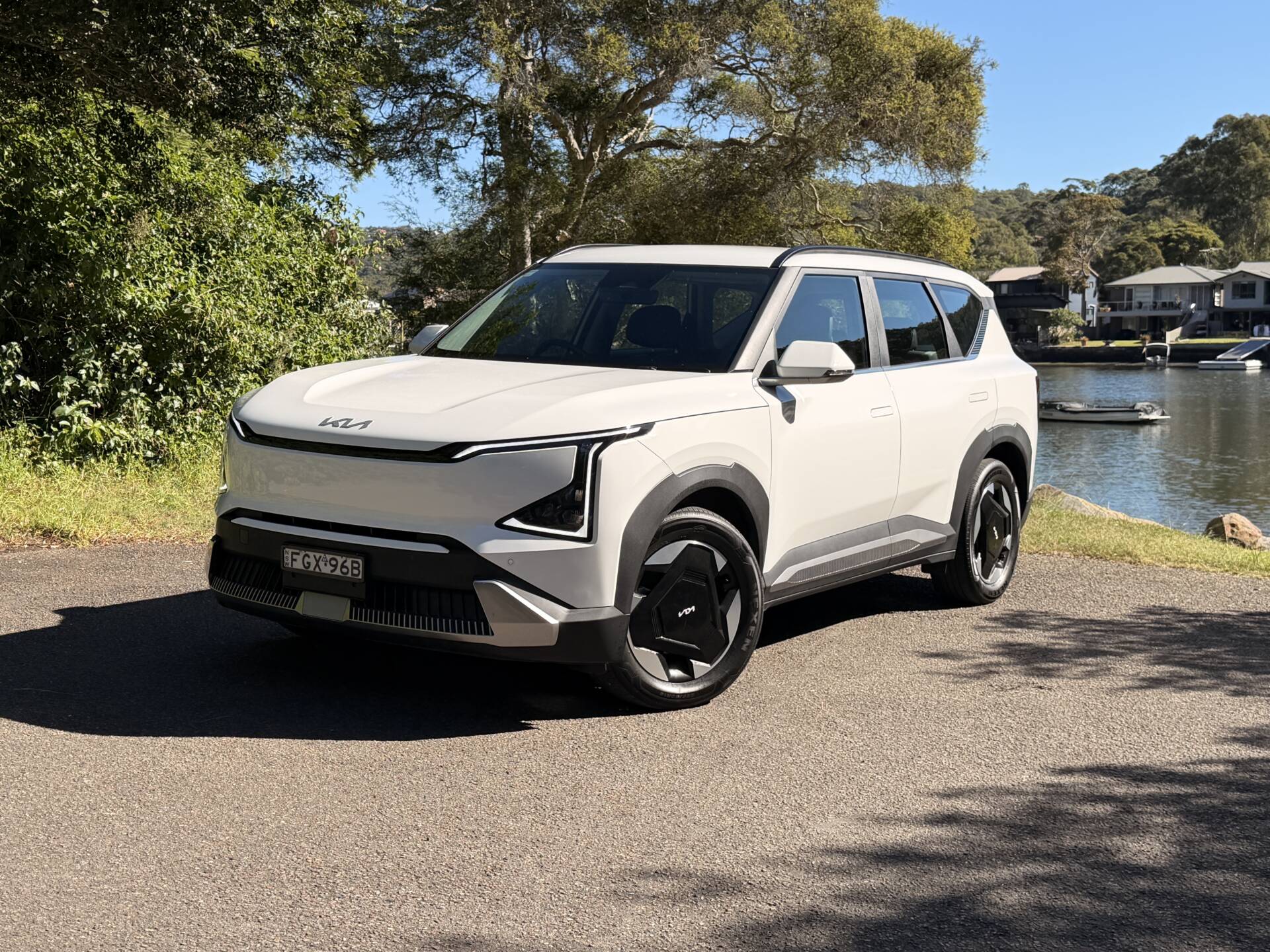
Kia’s mid-size electric EV5 SUV is the most conventional of its electric line-up and built in China to keep the price down. The reception hasn’t been especially warm so curiosity got the better of me.
Well, not really. I’m really enjoying driving a lot of EVs to weed out the ones that are all-rounders, ones that people who actually like cars and driving can choose. A couple of colleagues in the broader industry screwed up their noses at this car but they also like Teslas, so I couldn’t possibly take their word for it.
The EV5 is an interesting proposition – it’s not much more than the EV3 because it’s not built in Korea but rather across the way in China. That brings the cost closer to the EV3, which is a brave choice. But Kia Australia is happy to try things and I like that they’ve offered something with a bit more space for those who need it.
So let’s have a look and see if the colleagues who don’t like it were just being too hard on it or if it is just an also-ran. The reason I’m interested is because I haven’t driven a dud Kia in a long, long time. Could this be the first?
Words and images: Peter Anderson
How much is a Kia EV5 and what do I get?
Kia EV5 Air Standard Range – $56,770.00 + ORC ($49,990 DA*)
Kia EV5 Air Long Range – $61,170 + ORC ($59,990 DA*)
Kia EV5 Earth – $64,770 + ORC ($69,990 DA*)
Kia EV5 GT-Line – $71,770 + ORC ($75,990 DA*)
Kia EV5 GT-Line Two-Tone – $71,770 + ORC ($75,990 DA*)
The EV5 Air Standard I had for the week is just a tenner short of fifty grand, a full ten grand short of the Long Range which actually doesn’t have anything other than a bigger battery. That’s it. Ten thousand dollars for another 24kWh and not a sausage extra. I’ve gone into the detail of that lower down to help you decide if you need the extra battery.
That price is the driveaway special in September 2026 but hoo boy, I reckon that’s extremely solid value.
The Air ships with 18-inch wheels, LED headlights with auto high-beam, LED tail lights, acoustic windscreen, power windows and mirrors, cloth and artificial leather trim, an 8-way power driver’s seat (including 4-way lumbar and massage as well as heating), a 4-way manual front passenger seat, 12.3-inch digital dashboard, 12.3-inch media screen and a tyre repair kit.
Tech highlights include over-the-air (OTA) updates, satellite navigation (with 10 years of traffic info and updates), wireless Apple CarPlay and Android Auto, a 6-speaker sound system, AM/FM/DAB radio and V2L interior socket.
It’s a good spec and it’s pretty competitive without any silly nonsense like cat wallpaper in the screen.
Safety
ANCAP rating:
The EV5 ships with seven airbags (including a front-centre airbag),forward autonomous emergency braking (with car, pedestrian, and cyclist detection), junction turning and crossing assist, direct and oncoming lane change detection, blind-spot assist, driver attention monitoring, lane centring, lane-keep assist, lead vehicle departure alert, rear cross-traffic assist, rear occupant alert, a reversing camera, front and rear parking sensors and safe exit warning.
Annoyingly the absolutely superb blind spot monitor which flashes up a camera view down the side of the car depending on which indicator you’ve got on is only available in the GT-Line, as are around-view cameras and parking collision avoidance assist.
Warranty and Servicing
Warranty: 7 years/unlimited kilometres
Battery warranty: 7 years/150,000km
Kia’s pioneering seven year/unlimited kilometre vehicle warranty applies to the EV5 while the battery warranty is limited to 150,000km, well above an average kilometre car in Australia.
You also get roadside assist and as long as you keep going back to Kia for servicing, extends for up to eight years.
Servicing is by pre-paid plans if you don’t want to chance your arm on pay as you go, running from $980 for three years, through $1535 for five years and $2431 for seven years. So just over $300 per year (or every 15,000km).
Look and feel
Exterior
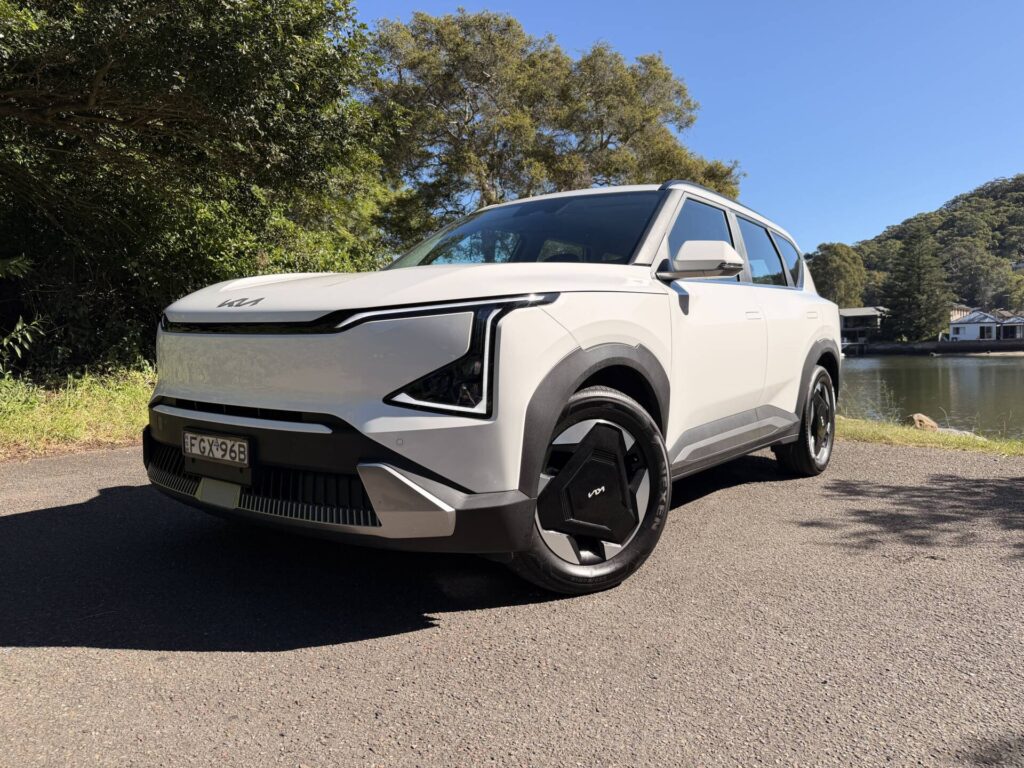
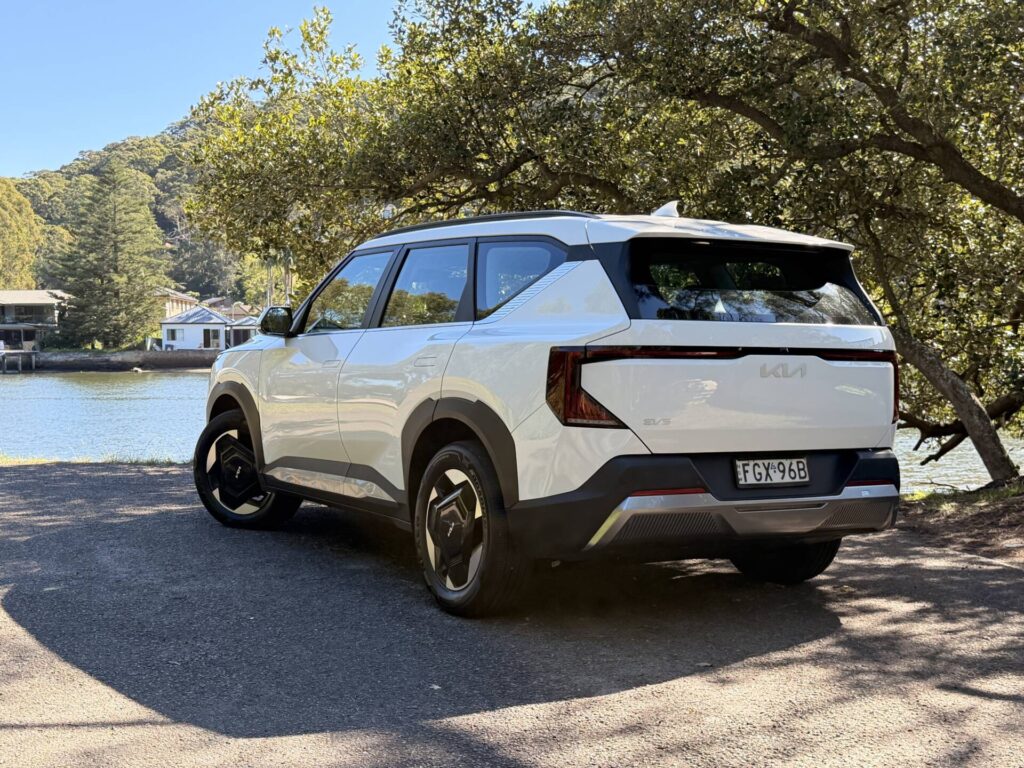
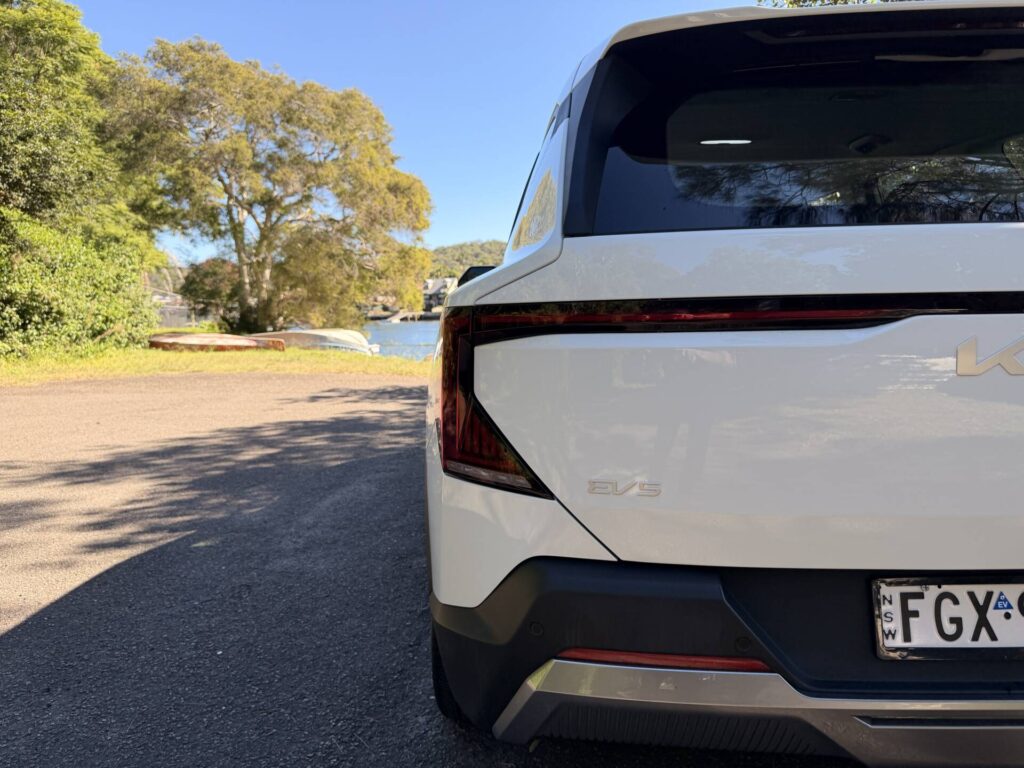
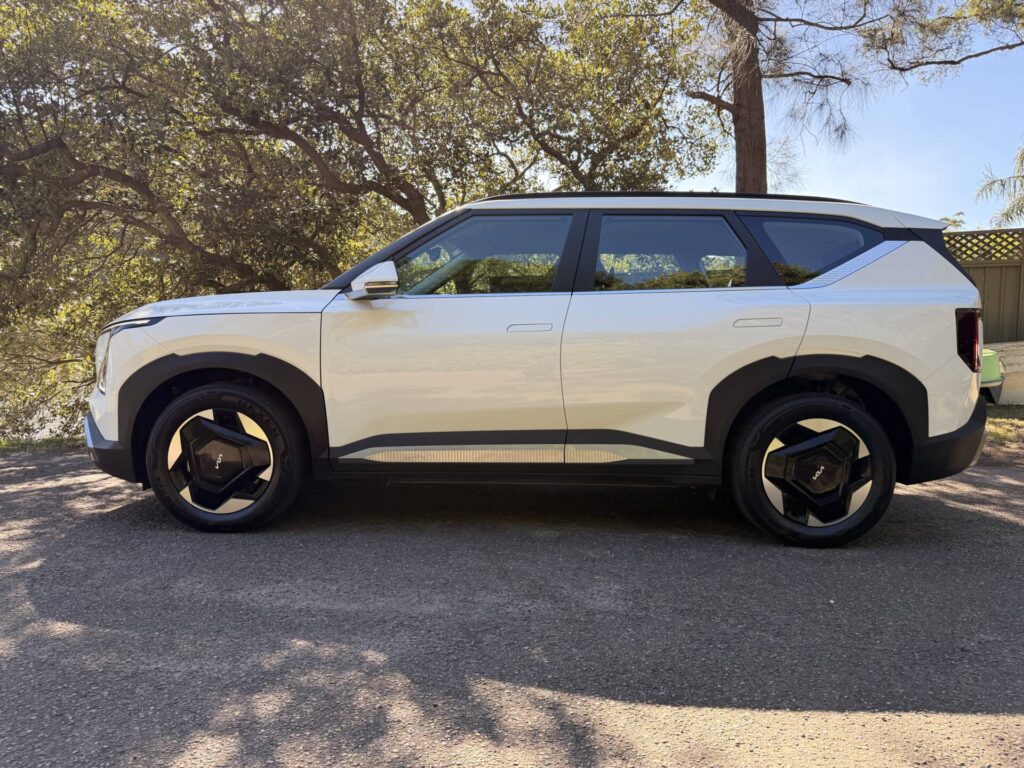
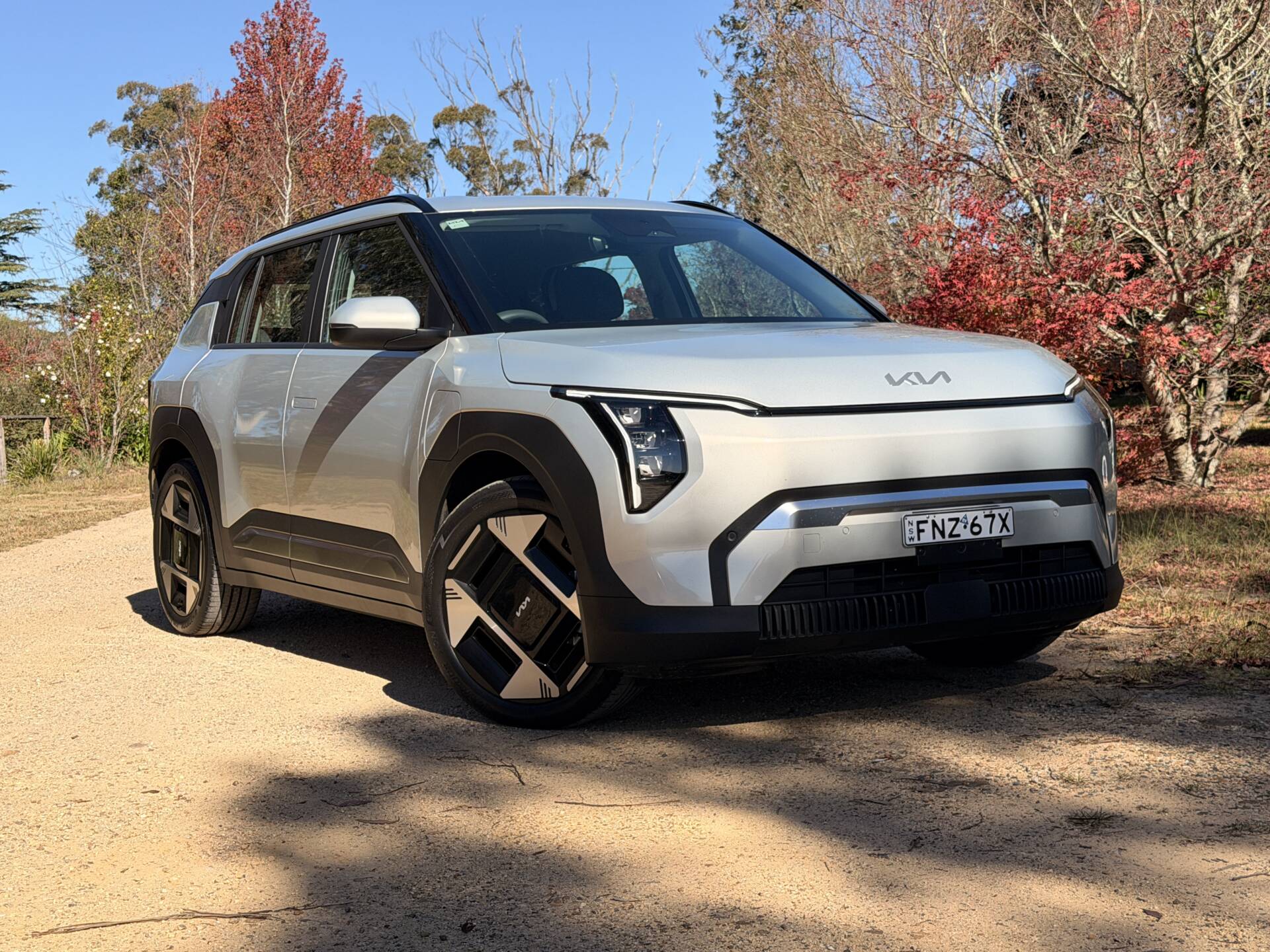
The EV5 is a typically restrained mid-size SUV. Where it stands out for me is that instead of the gentle curves of most Chinese rivals, it really goes hard on the boxy format.
I’m not the greatest fan of the wheels but they serve an aero purpose and in white, I think it’s quite distinctive, which you can’t really say about white cars very often. I quite like the cargo spaceship aesthetic of the EVinteger range but the EV5 is, as I say, the least outlandish.
Interior
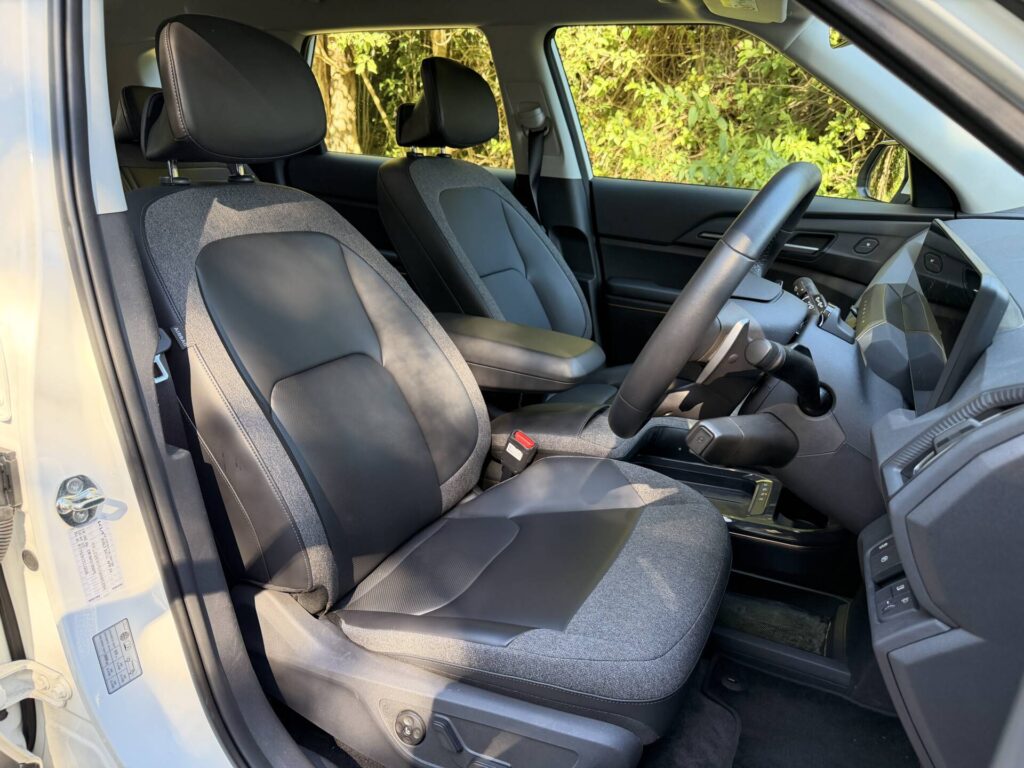
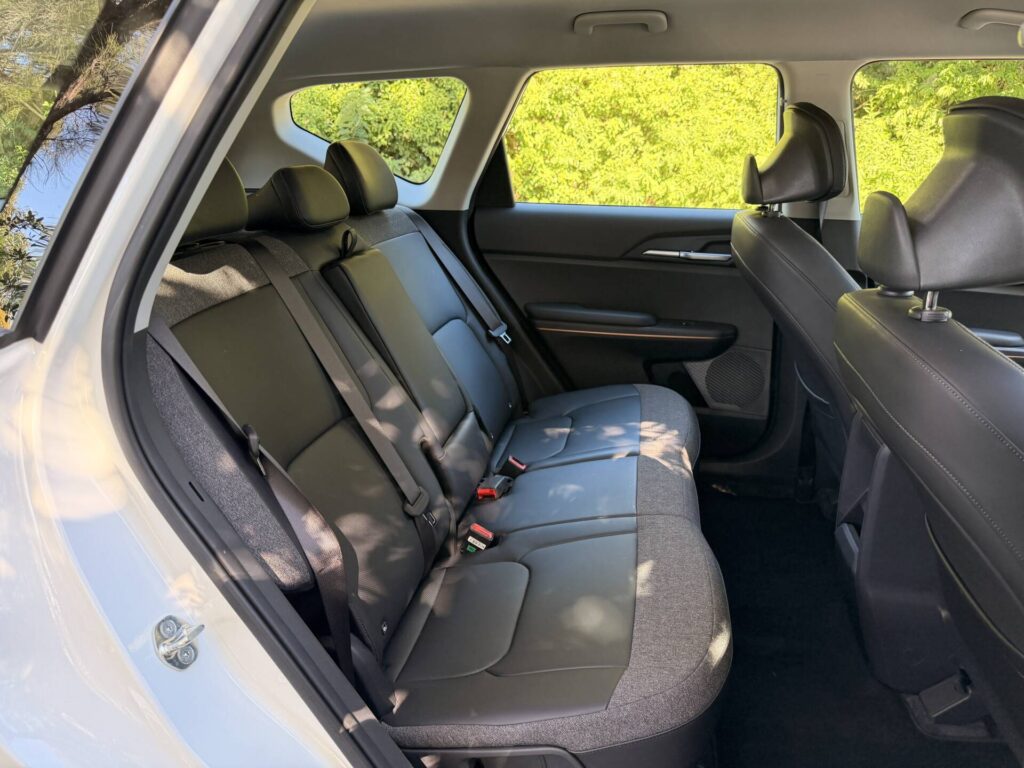
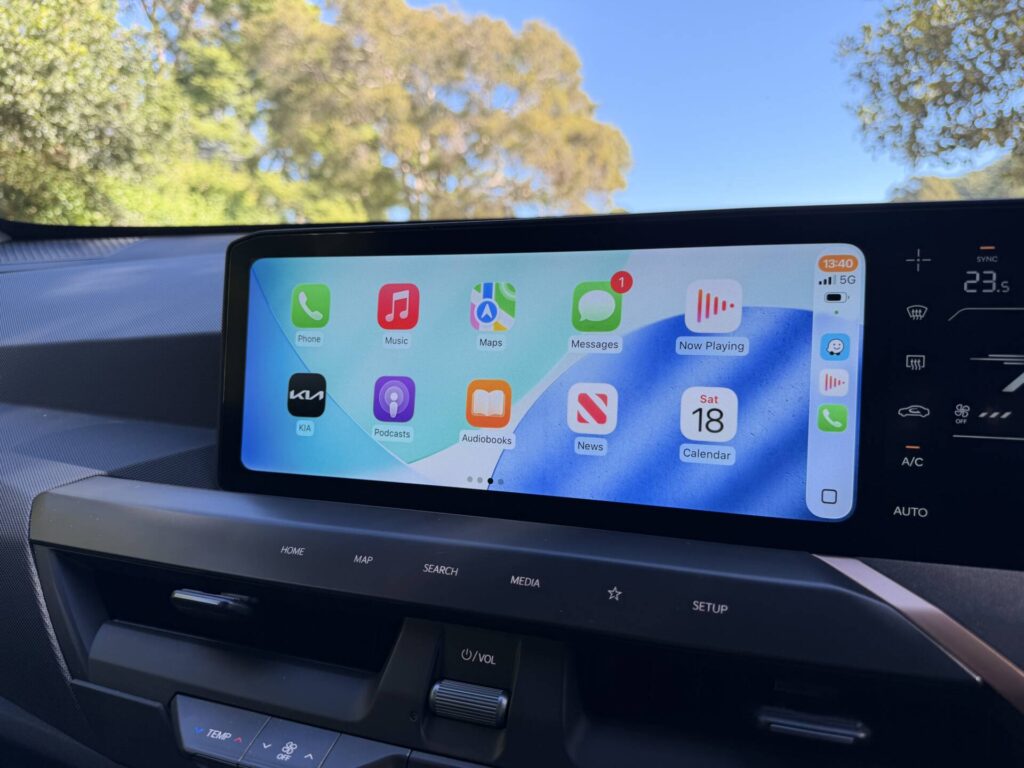
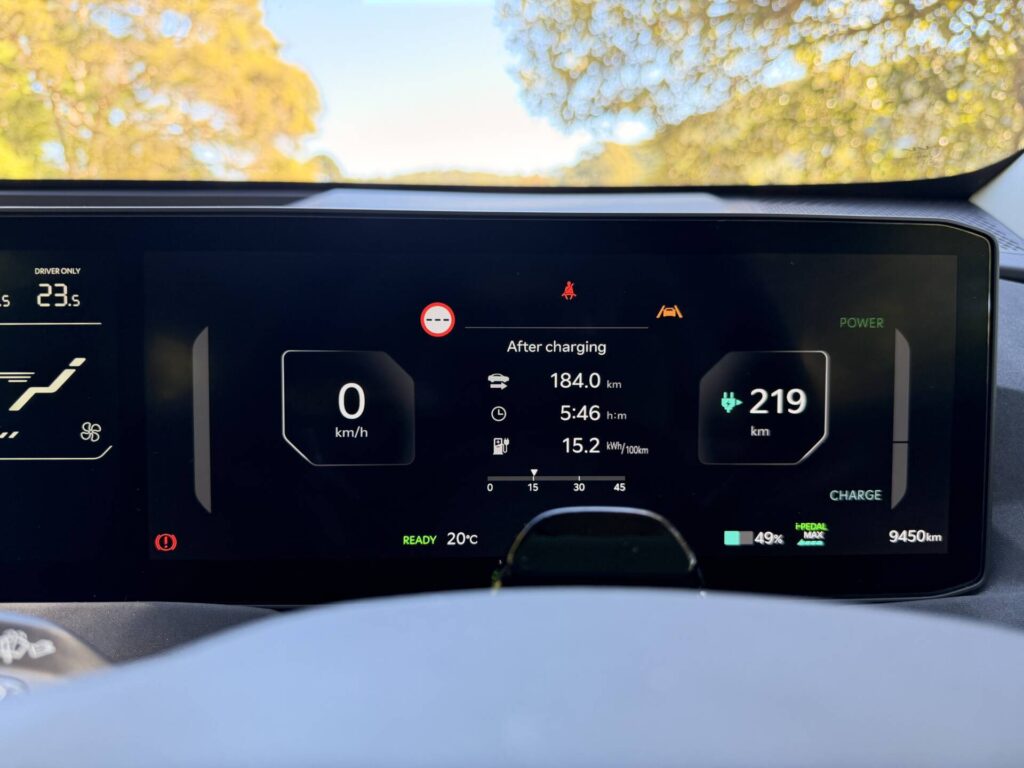
Inside is pretty much what you’ll find in a huge swathe of Kias whether powered by electrons or a tank full of hydrocarbons. For the driver, two screens sweep from door pillar to stand over the centre console, with two 12.3-inch screens. The climate controls are helpfully always one between the two bigger screens, but some filks complain they’re obscured by the steering wheel depending on where you’re sitting.
The software is really easy to use and navigate but I’d prefer more physical buttons. The always on climate controls are, however, better than menu-diving.
I like the mix of fake leather and textile on the seats, I think it’s nicer than the full leather of the Earth and GT-Line. The Inster-style not-actually-a-middle front seat is also cool, with a little pouch for securing…um…stuff…under the armrest.
Rear seat passengers score a ton of leg and headroom, better than almost any ICE car in this class except perhaps the Halal H6 (which is a monster) and the Mitsubishi Outlander, which just barely squeezes in to the mid-size segment.
Neither of those two have a flat floor, though, nor the really big glasshouse.
You also get face-level air vents in the B-pillar along with the usual armrest-with-cupholders, door pockets with bottle holders and USB-C ports.
Cargo
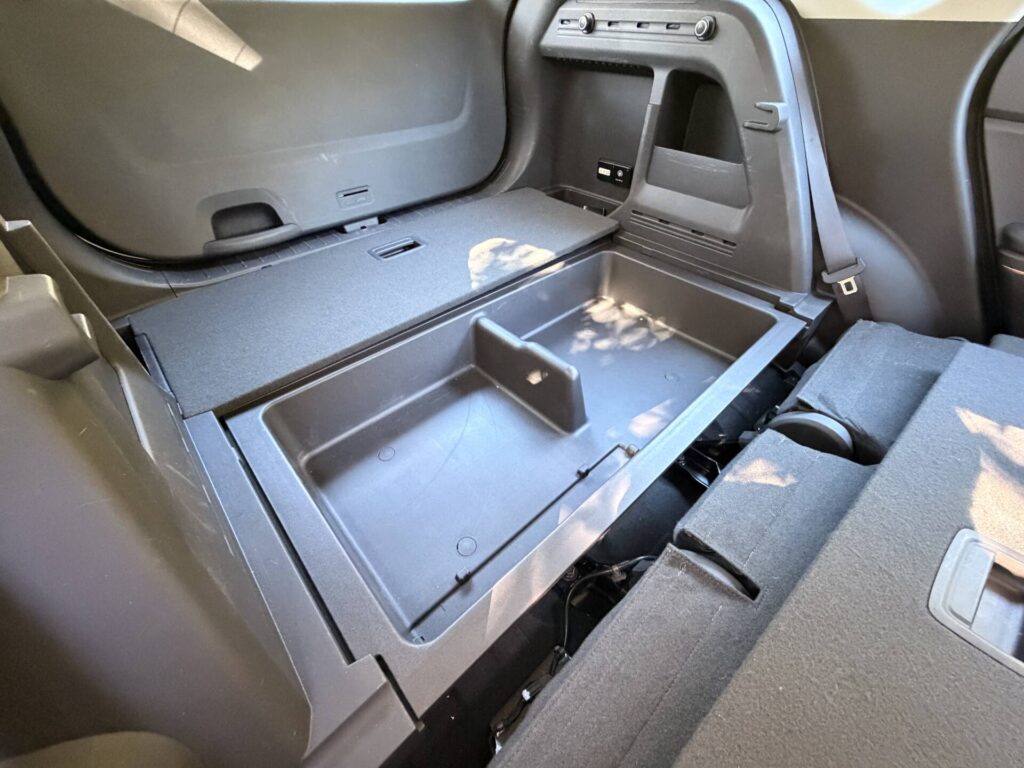
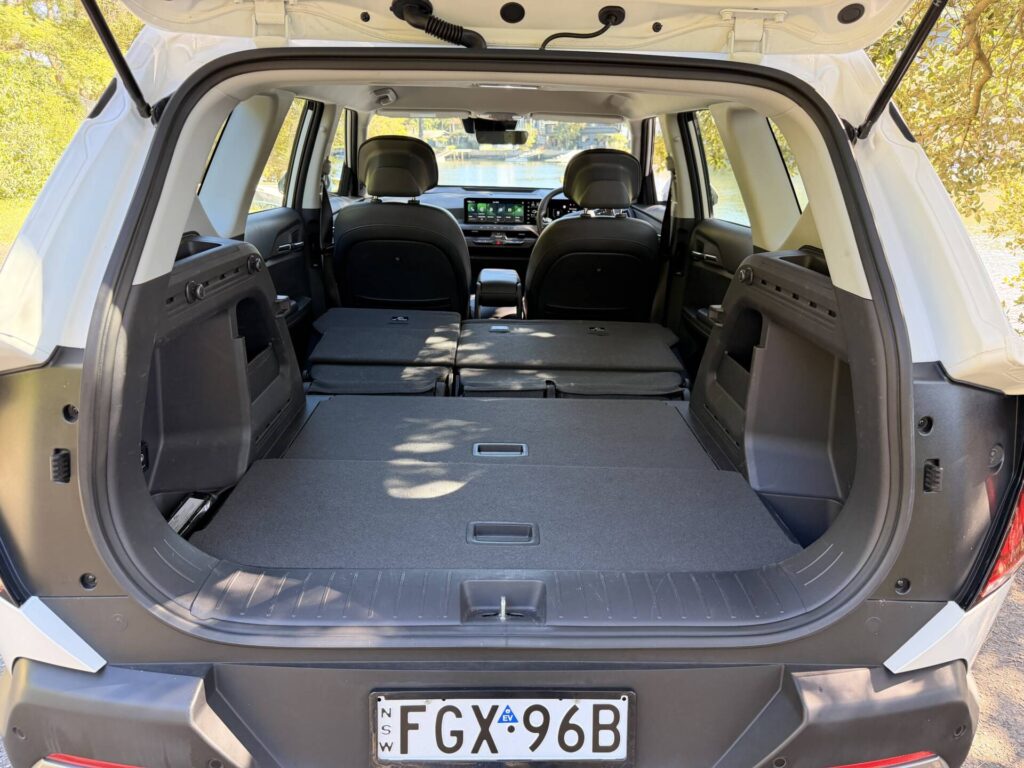
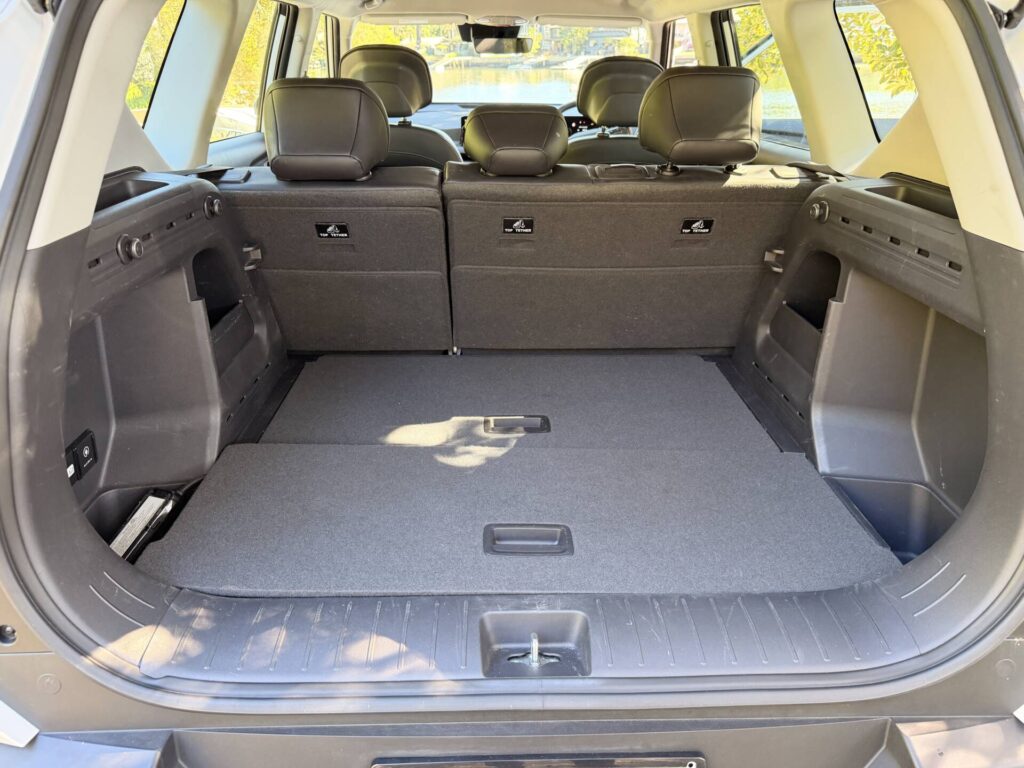
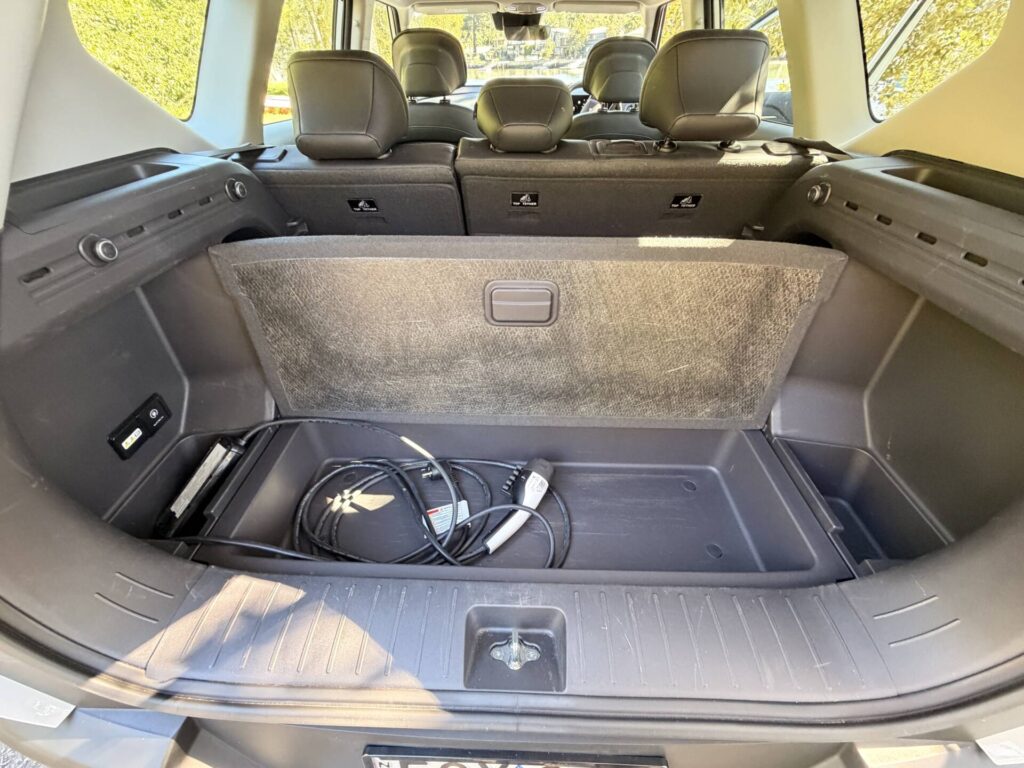
513 litres – rear seats up
1714 litres – rear seats down
67 litres – front boot
There is a lot of cargo space in this car, starting at an impressive 513 litres. Well, impressive for an EV SUV that’s well under five metres, anyway. The generous and well-shaped boot has two underfloor storage trays, so you can mix match as you like. Folding the 60/40 rear seats flat gives you an almost flat space as well.
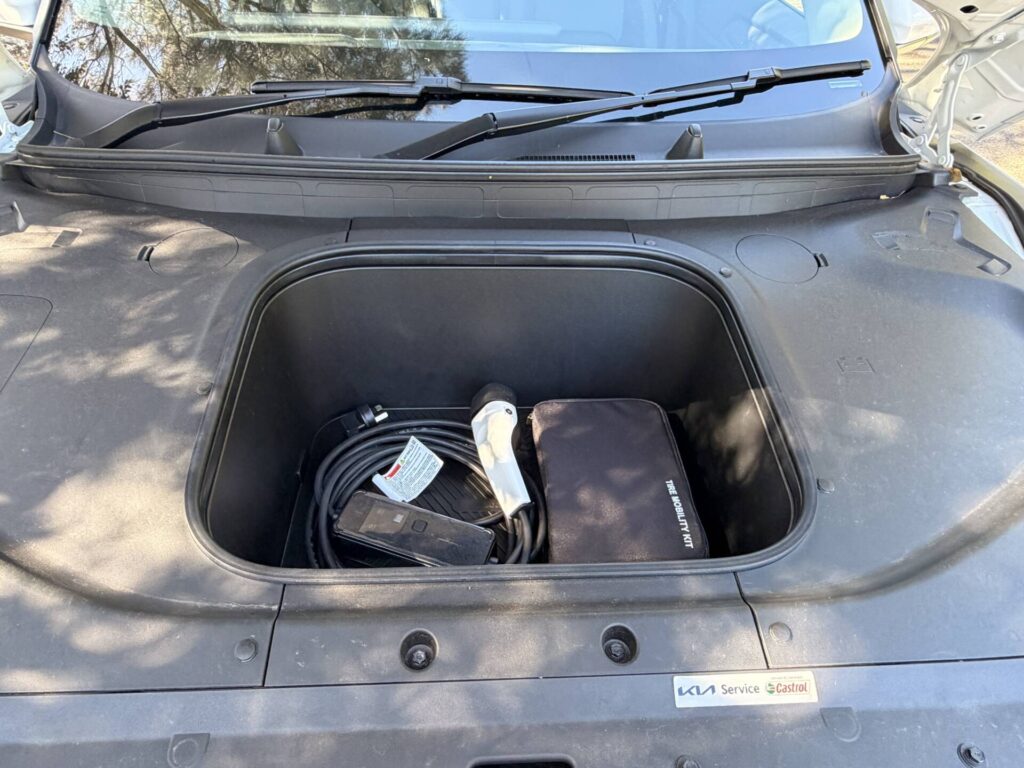
Under the bonnet is a front boot that, as you can see above, happily takes the charge cables and tyre repair kit.
Battery and charging
Battery: 64kWh LFP
Architecture: 800V
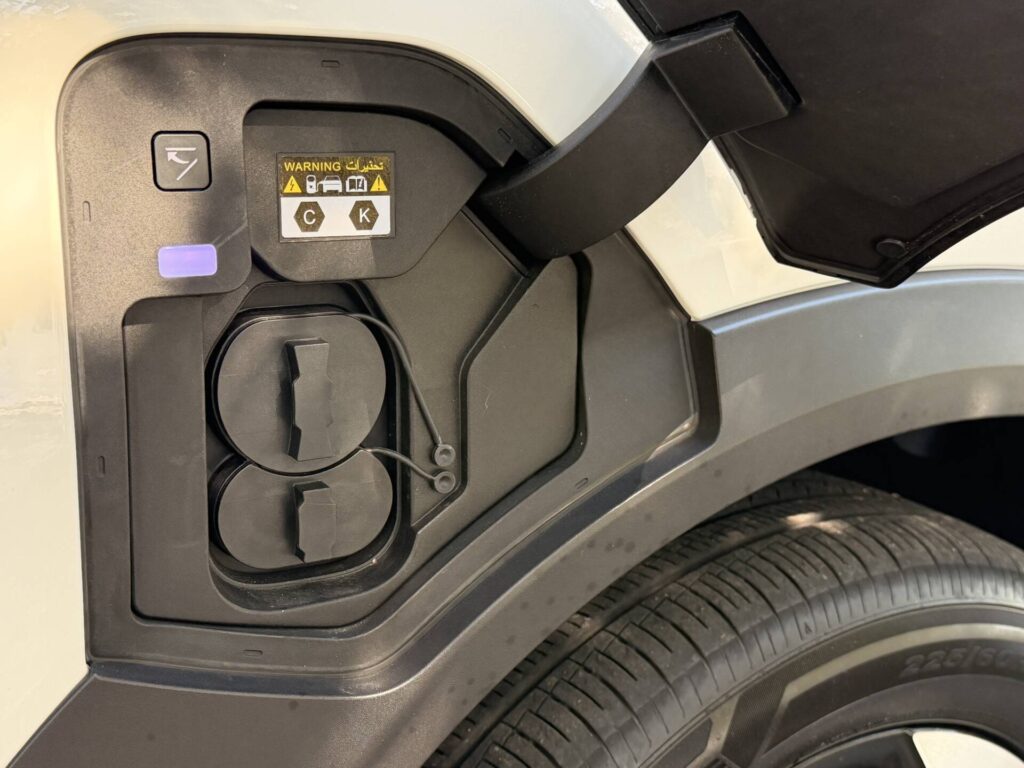
Maximum DC charge speed: 350kW
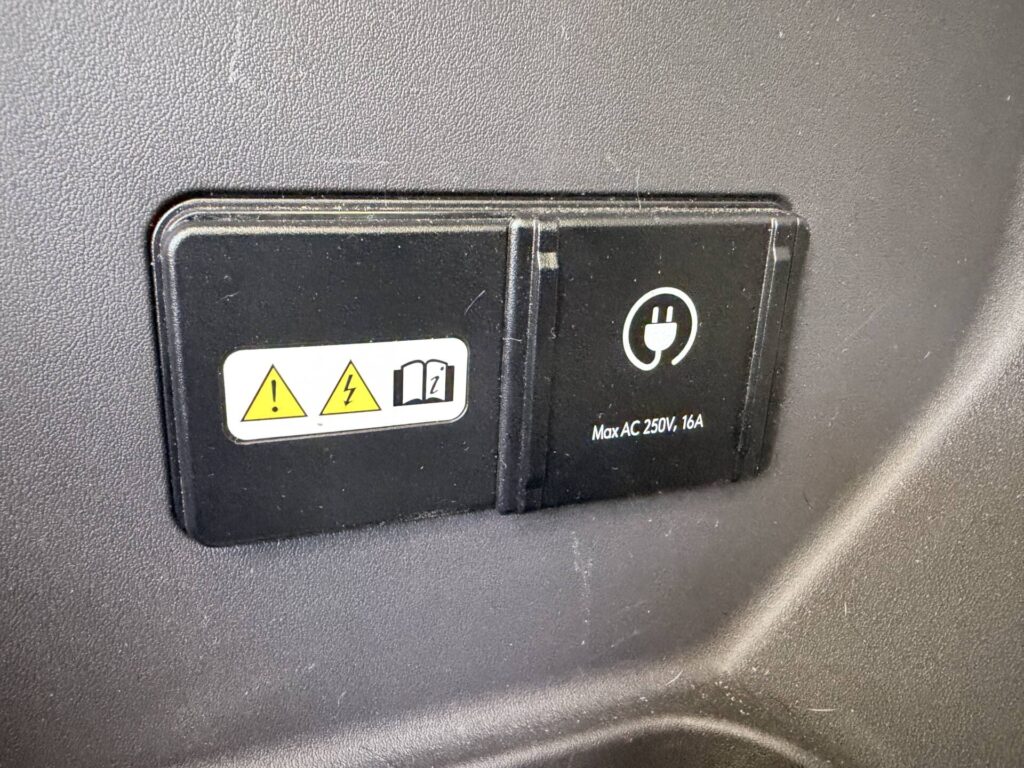
Maximum AC charged speed: 6.6kW
Claimed range: 400km
The Standard Range features a 64kWh LFP battery from BYD, so it’s probably pretty good if a bit on the chubby side at 428kg. A 800-volt architecture, speed maxes out at a very impressive 350kW, which will net you 10-80 percent charge in thirty-six minutes. You don’t often see 800V charging in a $50k EV. You also don’t often see a 350kW charger…
The claimed range is 400km with a consumption rate of 18.2kWh/100km, which reads a bit high and turned out to be a bit high in the real world – I averaged a rather better 16.2kWh in a week of punting around the suburbs and some fast freeway work.
That would work out to roughly 395km which is mightily close to the 400km claimed range, so I’ll mark that as a pass.
The extra ten grand for the Long Range nets you another 155km in claimed range with a 88.1kWh battery. That car weighs more and is slower to 100km and has no extra goodies. So the Standard Range may well be the EV5 to have on a value-for-money reckoning if you have easy access to a power point at home and don’t go on regular long journeys.
Chassis and Driveline
Power: 160kW
Torque: 310Nm
Single motor front-wheel drive permanent synchronous motor
Weight: 1910kg (tare)
0-100km/h: 8.5s
Claimed range: 400km
Claimed consumption: 18.2kWh/100km
Consumption on test: 16.2kWh/100km
The EV5 is built with a combination of Kia’s electrified N3 chassis which carries the Sportage and Sorento and the shared E-GMP gear from Hyundai for the electric gubbins.
It’s not light but given its size, not that heavy, running roughly the same weight as the smaller Volvo EX30 and, er, the Kia EV3.
Rolling on 18-inch alloys, Kia has fitted 225/60 R18 Nexen Roadan GTX tyres.
Frustratingly, it’s front-wheel drive (we’ll get into why it’s a. frustrating and b. no a problem in the next section), using a permanent synchronous motor with 160kW and 310Nm, both of which make this a reasonably swift machine to 60km/h but it drops off noticeably as it heads toward the ton, reaching that benchmark in 8.5 seconds, four-tenths quicker than the long range EV5.
Driving
Dead set sometimes I wonder why some of my colleagues are on about when they drive certain cars. And I’m certain they think the same of me, so this is no secret when I tell you that the EV5 is not a dud and it’s quite good actually.
Especially for this price for this brand.
As with all Kia EVs, it’s all very nicely calibrated. The motor pulls strongly off the mark and ensures you more than keep up with traffic. In fact, I’m going to venture that the 8.5 second 0-100km/h is a tad on the conservative side.
No, it won’t tear your head off, but it’s handy.
The steering is pretty light and remote, but that’s not going to come as a shock to you. Adding weight in Sport mode does improve it somewhat but it’s not really that kind of car, as evidenced by the 60-aspect tyres.
Those balloons ensure a pretty cushy ride but without the sacrifice of grip (okay, let’s be reasonable here…) in wet or dry conditions. It’s a pretty serene kind of experience, really, and for someone stepping out of a turbo Sportage, will be something of a revelation in all departments.
Not to chuck rocks at the Sportage, of course, it’s a great car, but the EV5 is a nice smooth transition.
I wish it was rear-wheel drive, though. That might give the engineers a bit more latitude with the steering calibration and being able to wind back the traction controls a bit too.
What could really do with being wound back are the speed warnings. A common and well-known Kia affliction, the speed limit warnings are often wrong and always far too frantic.
The lane-keep is annoyingly intrusive, too, and you have to turn it off. Every. Damn. Time.
Redline Recommendation
I quite liked bowling around in the EV5. It’s no Polestar 2, granted, but for a city-bound and occasional longer-trip EV, you can’t do much better for the price. It’s a bit vanilla, sure, but everything works and apart from the over-insistent safety gear and maddening speed warnings, there’s not much to complain about.

Leave a Reply