
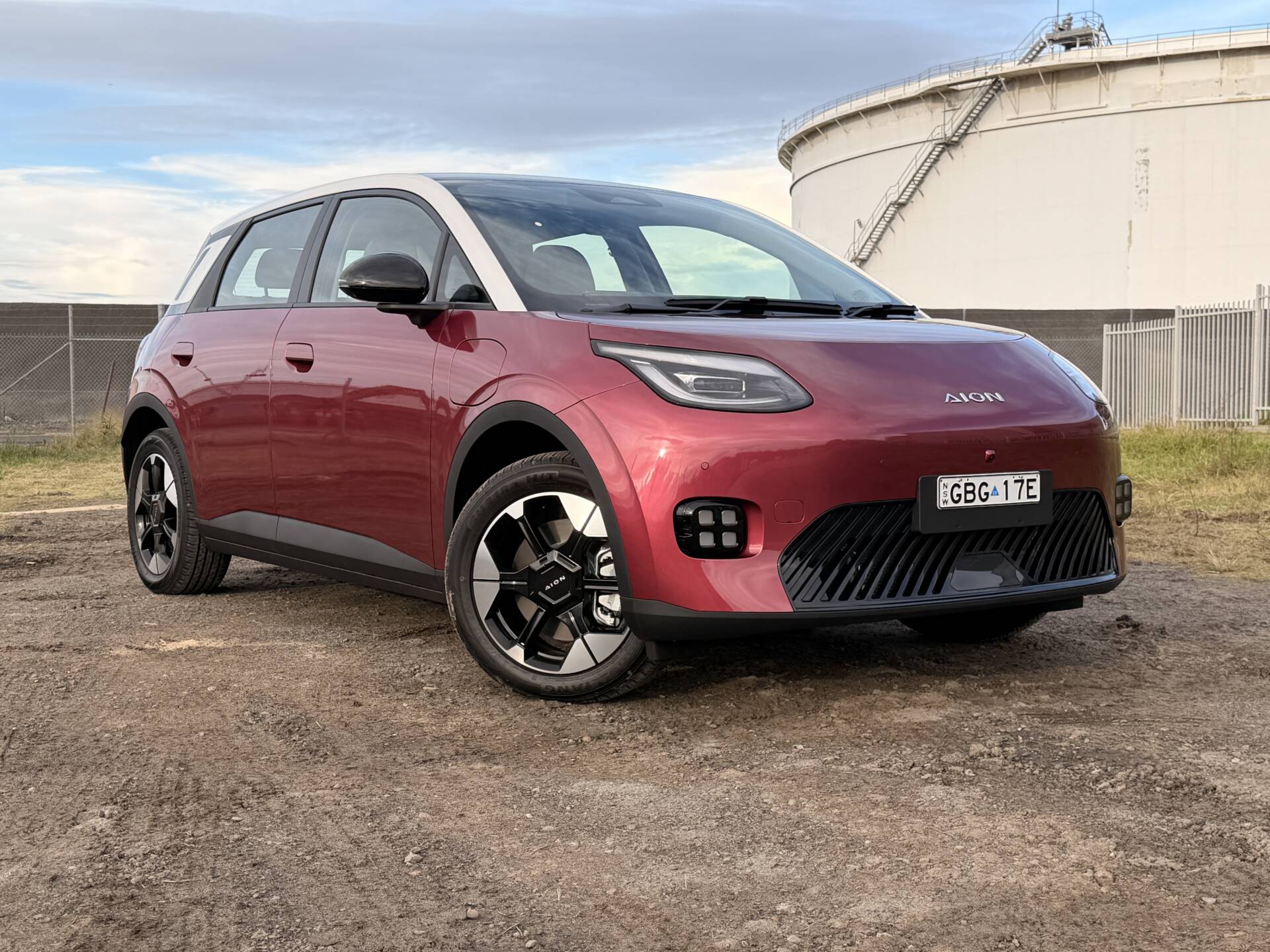
GAC’s upmarket Aion brand delivers a well-equipped electric hatchback for so little money it’s going to test your loyalty to the idea that a hybrid hatch is the way to go.
For the uninitiated, Aion is a sort of sub-brand for GAC, sort of the way Chery has Jaecoo and Omoda sub-brands. GAC is famous for its very sharply-priced Emzoom petrol compact SUV but it’s ramping up for a whole lot more over the next couple of years, with ten models on the way.
GAC isn’t there yet, so for the moment the brand seems content to chuck a few models at us to see what sticks, including the cutesy UT hatchback.
Words and images: Peter Anderson
How much is a GAC Aion UT and what do I get?
GAC Aion UT Premium: $31,990 driveaway
GAC Aion UT Luxury: $35,990 driveaway
The Aion UT range features two 60kWh battery-equipped versions, named Premium and Luxury which isn’t very helpful.
The Premium ships with 17-inch alloy wheels, LED headlights with auto high-beam, rain-sensing wipers, 8.8-inch digital dashboard, massive 14.6-inch media system, wireless Apple CarPlay and Android Auto, DAB+ digital radio, wireless hotspot, six-speaker sound system, heated, fake leather steering wheel, PVC seat upholstery, 6-way power-adjustable driver’s seat with heating, heat pump heating, rear air vents and a tyre-repair kit.
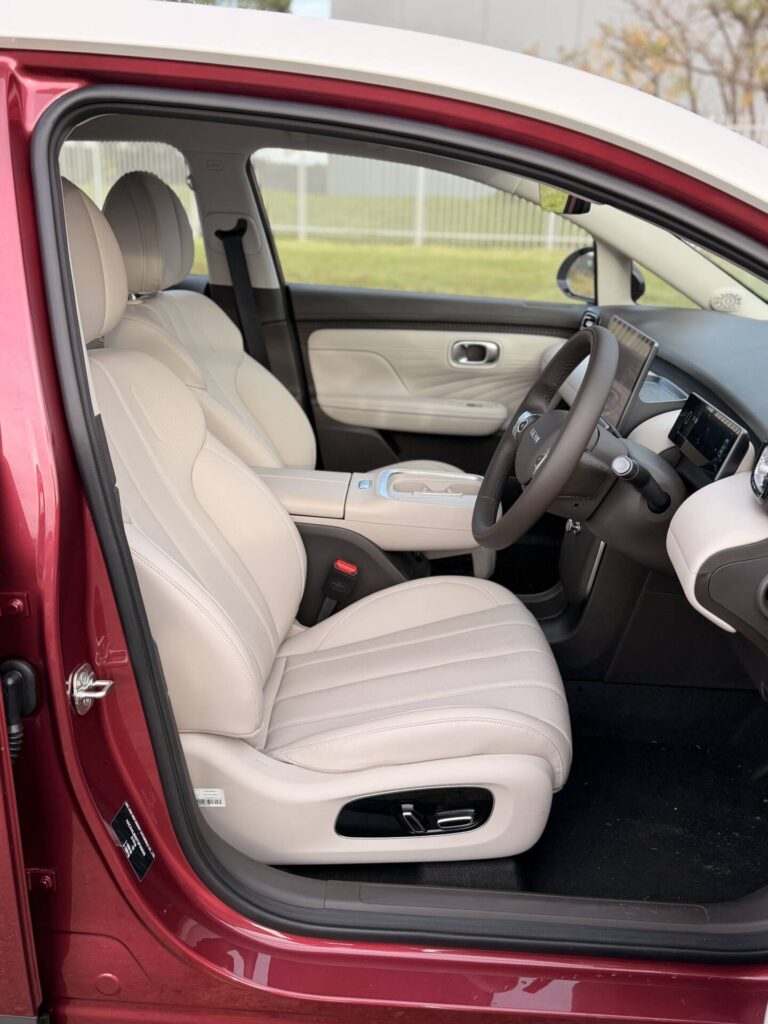
That’s a pretty decent spec for the $31,990 which makes me wonder why you’d want more. But, people do want more, so the Luxury – the car tested here – adds a power tailgate, power-folding exterior mirrors, panoramic sunroof with powered cover, a wireless phone charger on the centre console and driver’s seat ventilation.
As ever, I think the sunroof is a stupid waste of money and makes the climate control work harder, especially in summer, but some of you seem to like these abominations, so have at it.
The test car was in this very fetching Classic Crimson ($600) with the Rococo white roof ($1000).
The wifi is powered by an onboard SIM with 2gb of data per month for the first two years gratis, which seems a bit strange to me. What happens after that?
A couple of weeks ago GAC announced a smaller batteried entry-level car with 44kWh and 320km of range, but no real spec details or price. Extrapolating the current prices, that could undercut the BYD Dolphin and Atto 2 and will easily come in under the new GWM Ora.
When the UT launched, the price was $1000 cheaper and included a 22kW wall charger. The wall charger was being offered at the time of writing (August 2026) as part of Q3 deal.
Safety
ANCAP safety rating: NA
The Premium and Luxury UTs both feature adaptive cruise control, autonomous emergency braking, blind-spot monitoring, child presence detection, driver monitoring system, front and rear cross-traffic assist, safe exit warning, front and rear parking sensors and a surround-view camera.
Look and feel
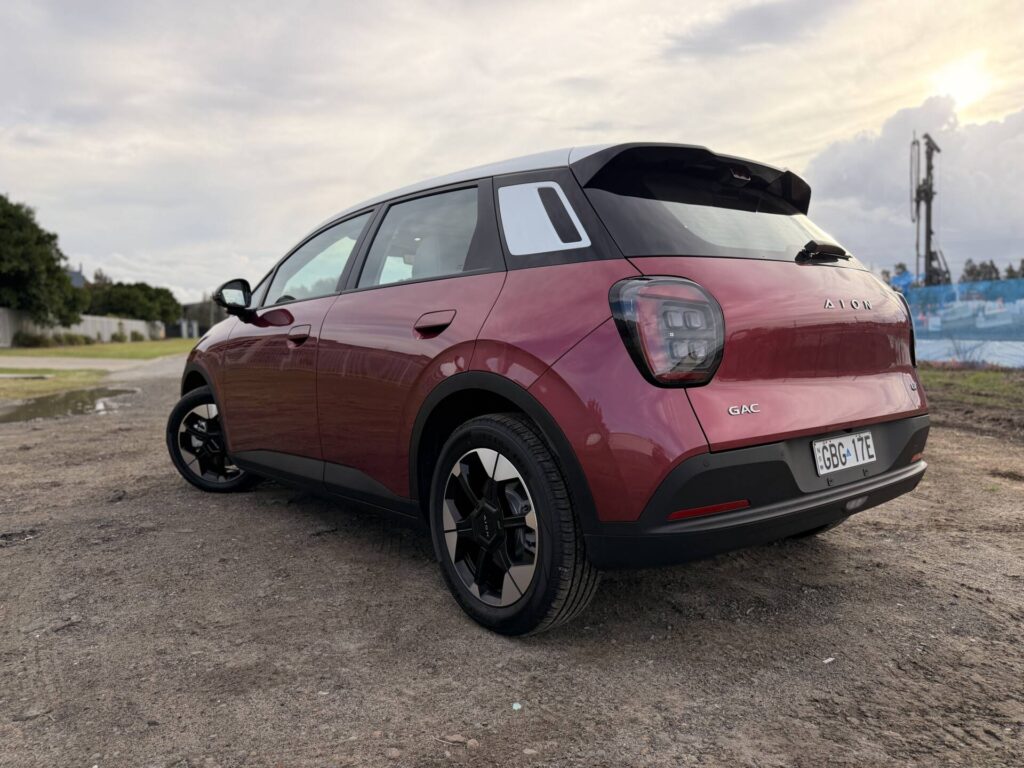
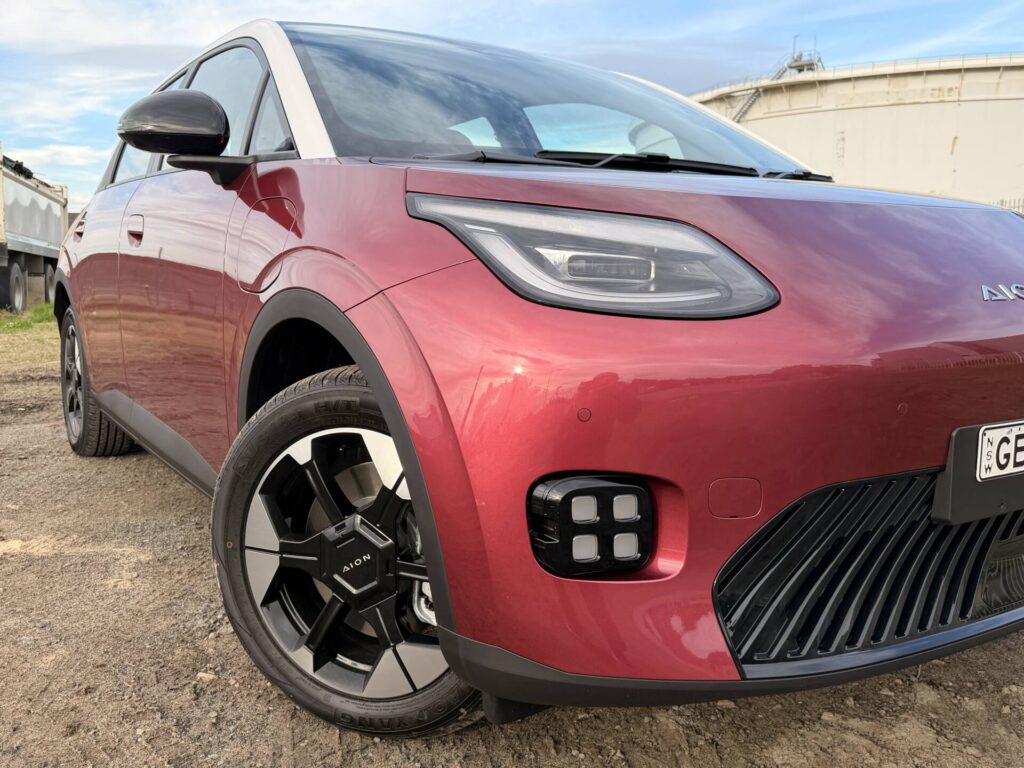
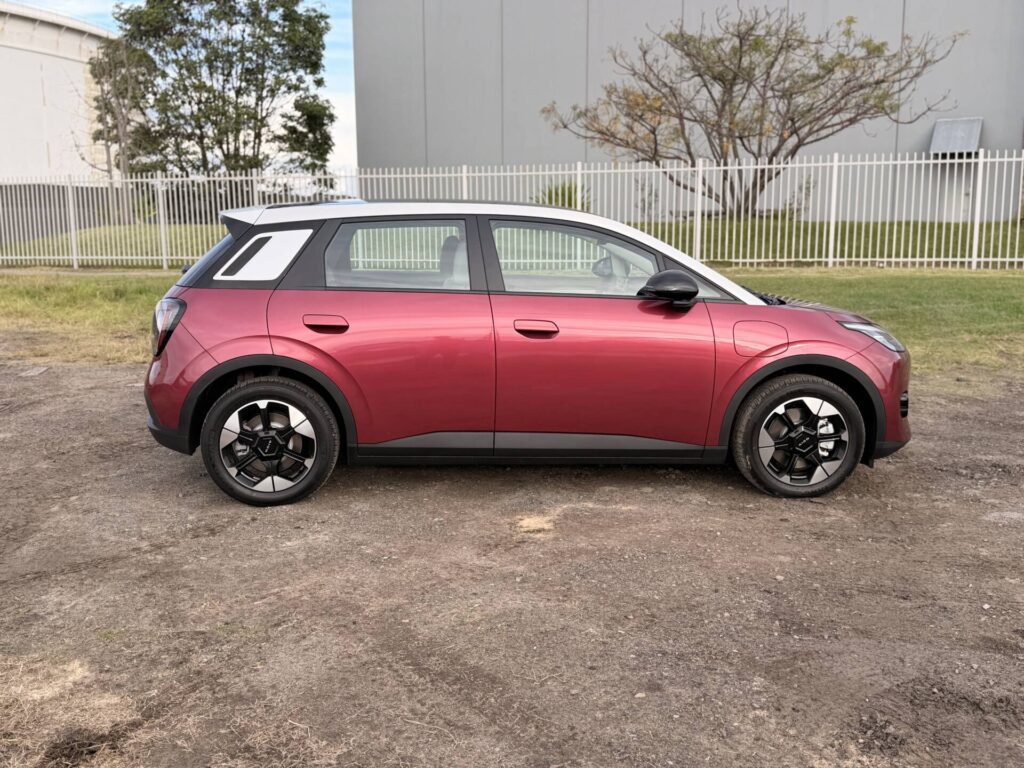
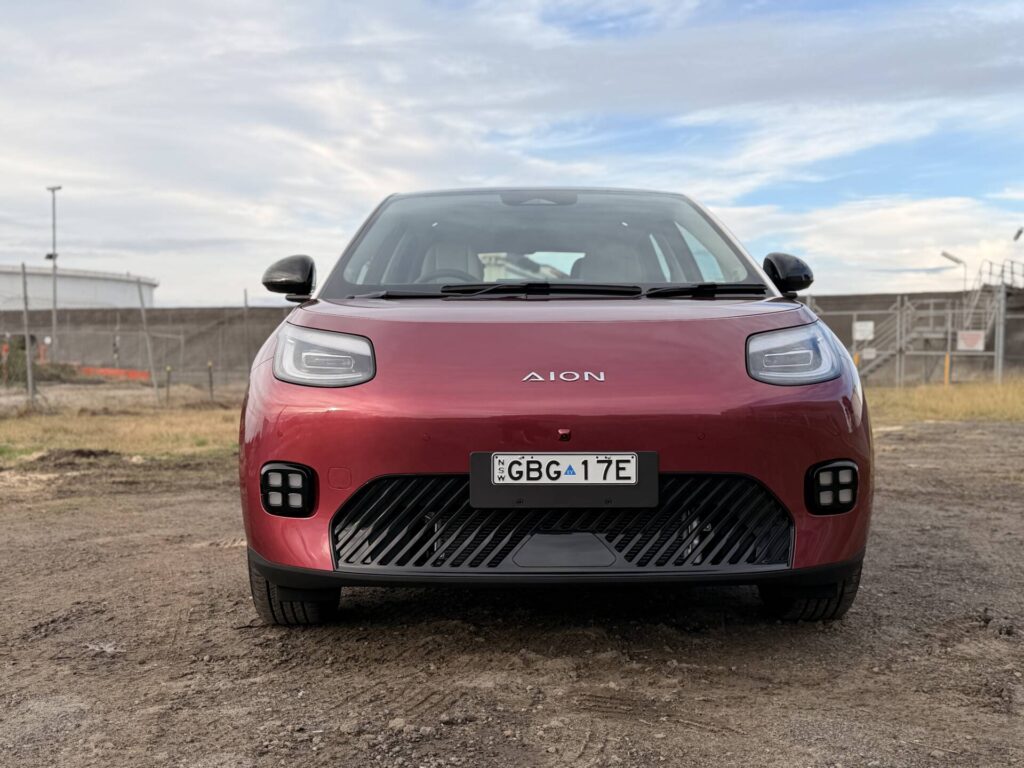
At first I thought the UT was a bit goofy looking, but a few days on the driveway meant it grew on me. It’s not exactly a looker and, like so many Chinese cars, is full of what look like homages to other cars, particularly that Citroen-esque rear. But given a. that brand’s departure and b. that’s no bad thing, I don’t mind so much.
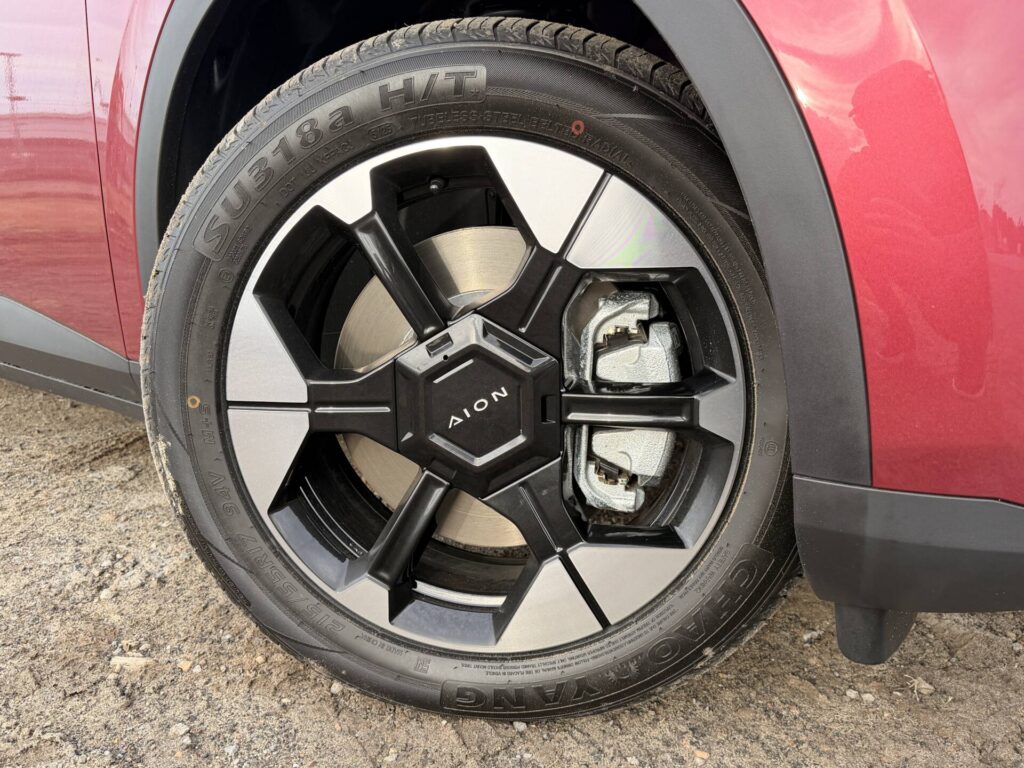
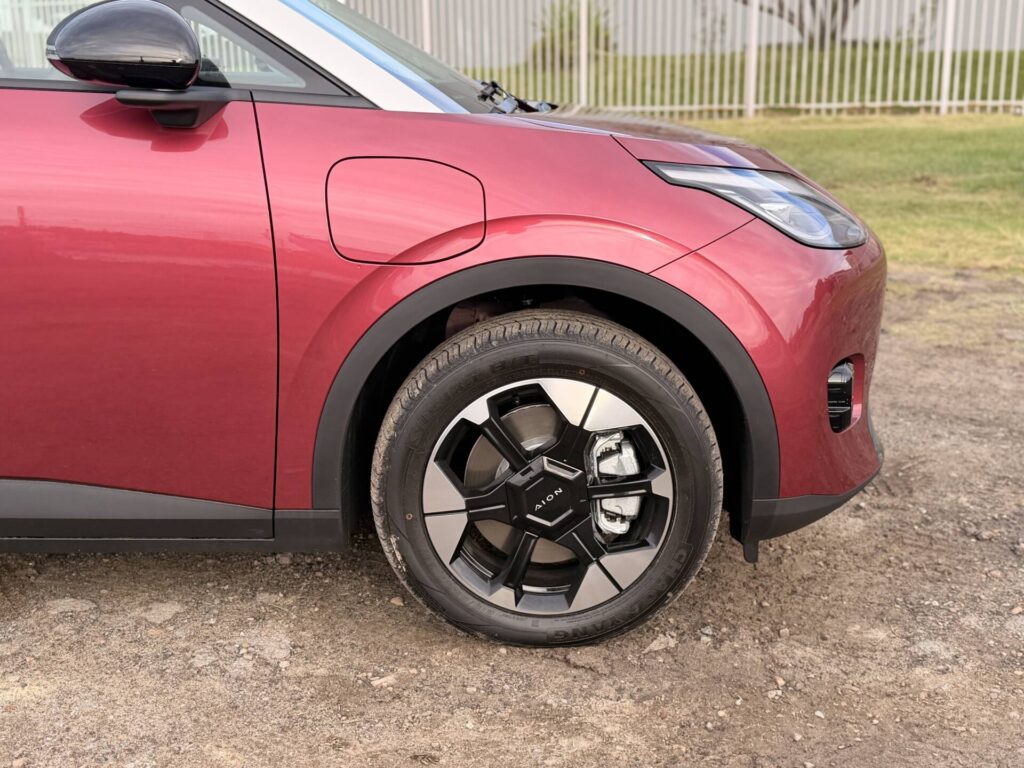
The 17s look a little dinky on that long wheelbase, although it’s worth noting it’s over 10cm shorter than a Corolla. It looks even smaller than that.
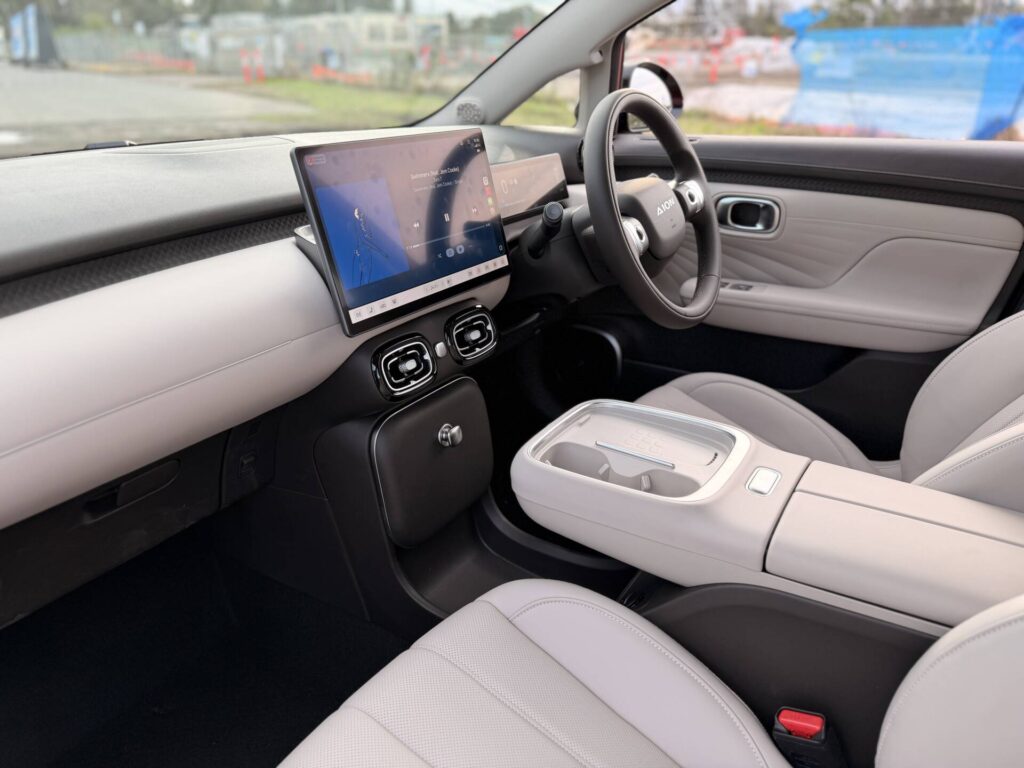
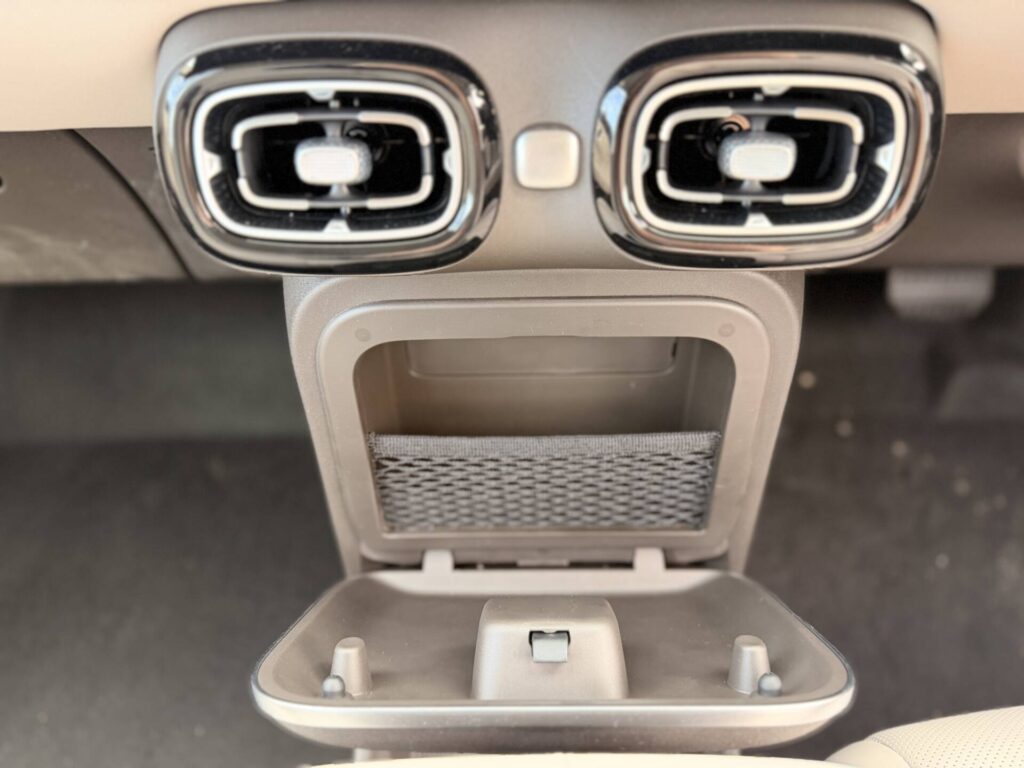
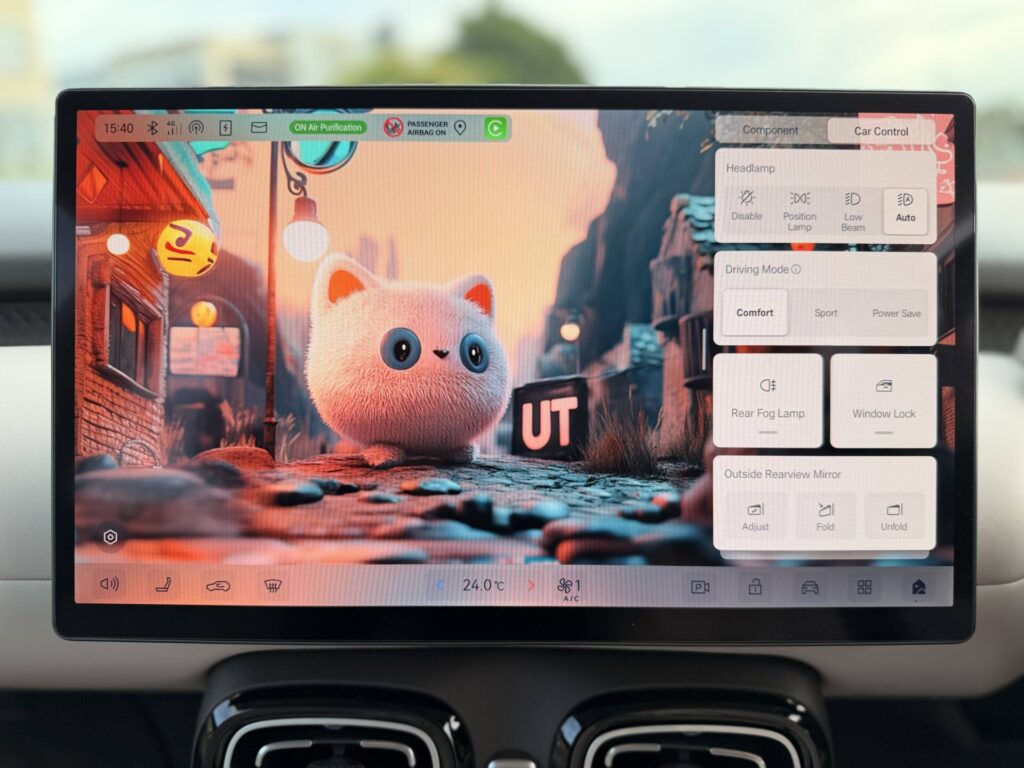
The Citroen homages continue inside with the air vents being particularly evocative of a 1970s or 1980s machine. It’s quite thoughtfully laid out, with the cooled wireless charger right where you can see it so you’re less likely to forget your phone.
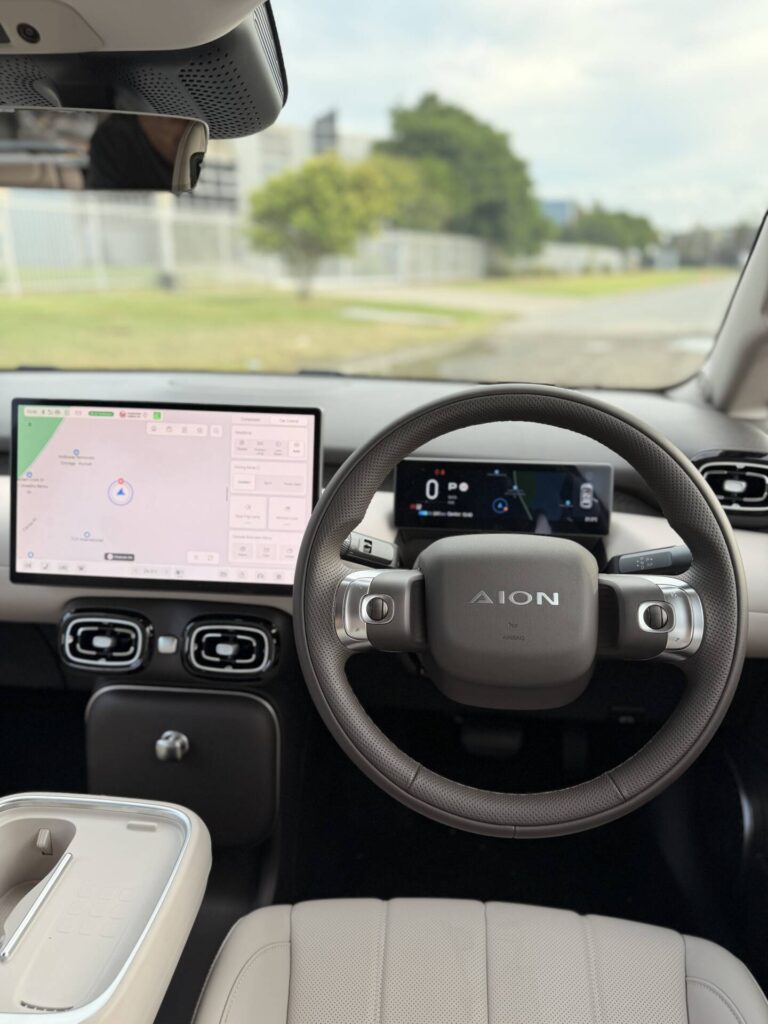
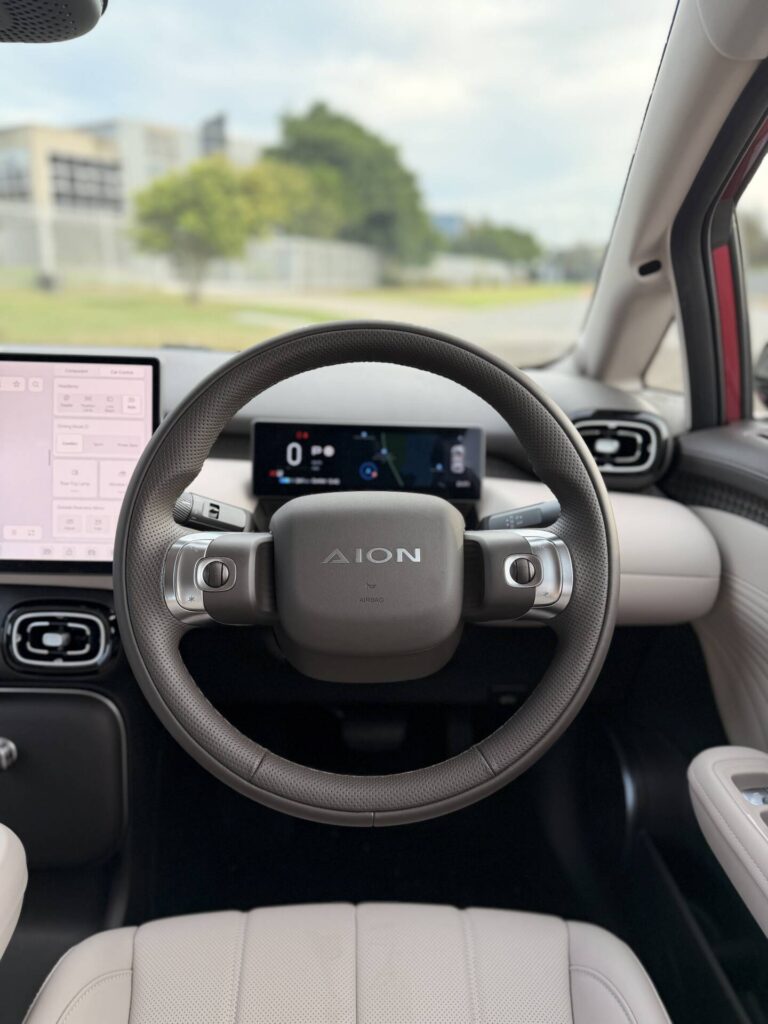
The huge 14.4-screen does somewhat dominate the interior and could be a little smaller, also dwarfing the 8.8-inch dashboard. Both are easy to look at, however, which is nice.
For some strange reason, there’s a large cat motif on the screen’s wallpaper if you’re not in CarPlay or Auto. It was a tiny bit baffling and made worse by the idea it was probably AI-generated, a pet hate of mine.
There are almost no physical controls which is annoying. The HVAC controls are in a strip across the base of the screen but the targets are a bit small – especially considering the size of the thing. And the one-spoke steering wheel sent me – what is it about carmakers that they’ve decided on single spoke steering wheels for EVs? Reminds me of the hideous VN Commodore wheel that was ugly then. And they all look off-centre.
Storage is good, with a closable locker style thing with a netted pocket in the dash, a tray on the floor between the front seats, dual cupholders next to the charging pad and a split top armrest and storage bin too.
The door pockets are useful if not especially deep or wide.
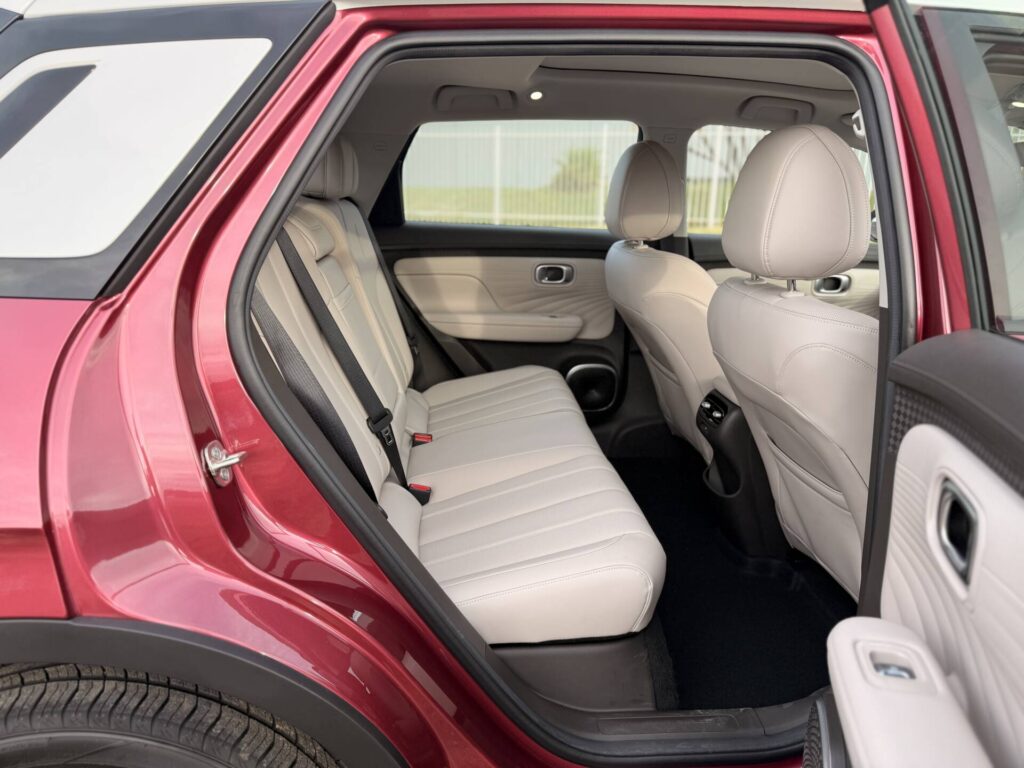
Rear seat passengers score vents, door pockets and a fold down armrest with cupholders, something you can’t always count on in this segment. There’s plenty of leg and headroom, the former courtesy of the long wheelbase. I found it quite comfortable.
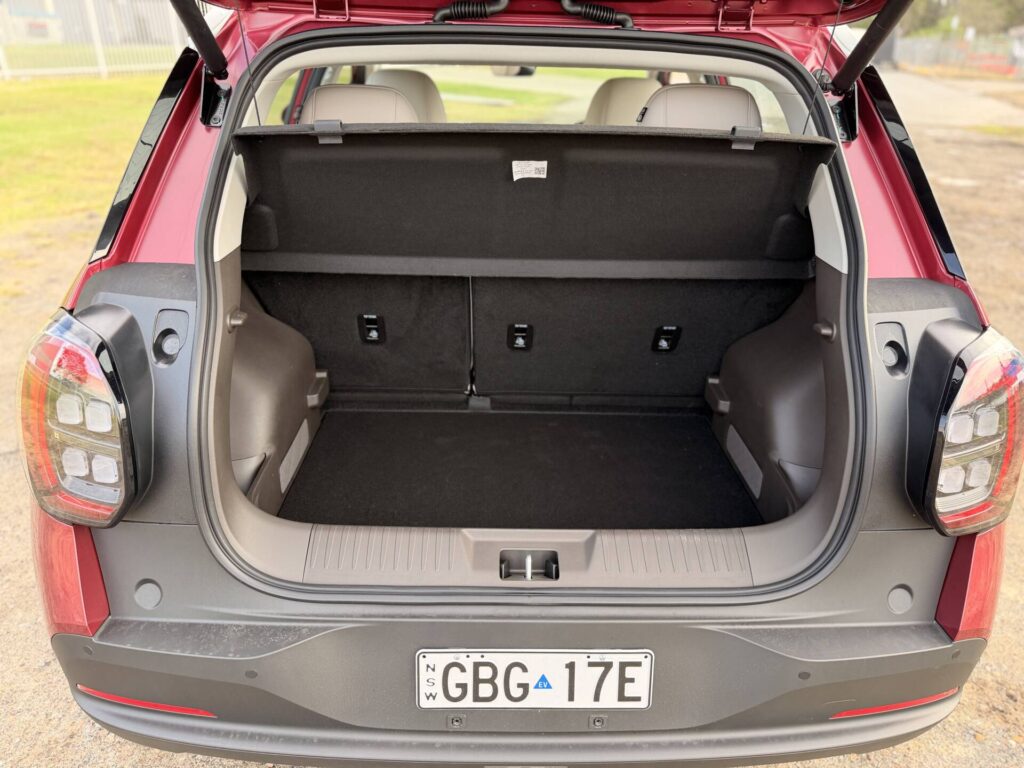
The boot has a moveable floor with a total of 321 litres of space. You can drop the rear seats too in a 60/40 split.
Driveline and chassis
Power: 150kW
Torque: 210Nm
0-100km/h: 7.3 seconds
The single 150kW motor drives the front wheels through a single-speed reduction gearbox but does drop the mic a bit with a 7.3-second 0-100km/h time, probably the quickest thing you’ll see at this price point. BYD and GWM can’t match any of these numbers apart from the torque figure, and even then only on the Ora.
Riding on struts up front and cheap and cheerful torsion beams at the back, the French influence on the exterior (designed in Milan, as it happens, which I know isn’t in France) has extended to the chassis if not the execution.
And it’s going to be a battle to match a French hatch given its rolling on Chaoyang SU138a H/T tyres measuring 215/55R17. Yeah, that’s not looking amazing, is it?
Battery and charging
Battery: 60kWh
Chemistry: Lithium-iron phosphate (LFP)
WLTP range: 430km
Consumption (claimed): 14.6kWh/100km
Consumption (on test): 13.8kWh/100km
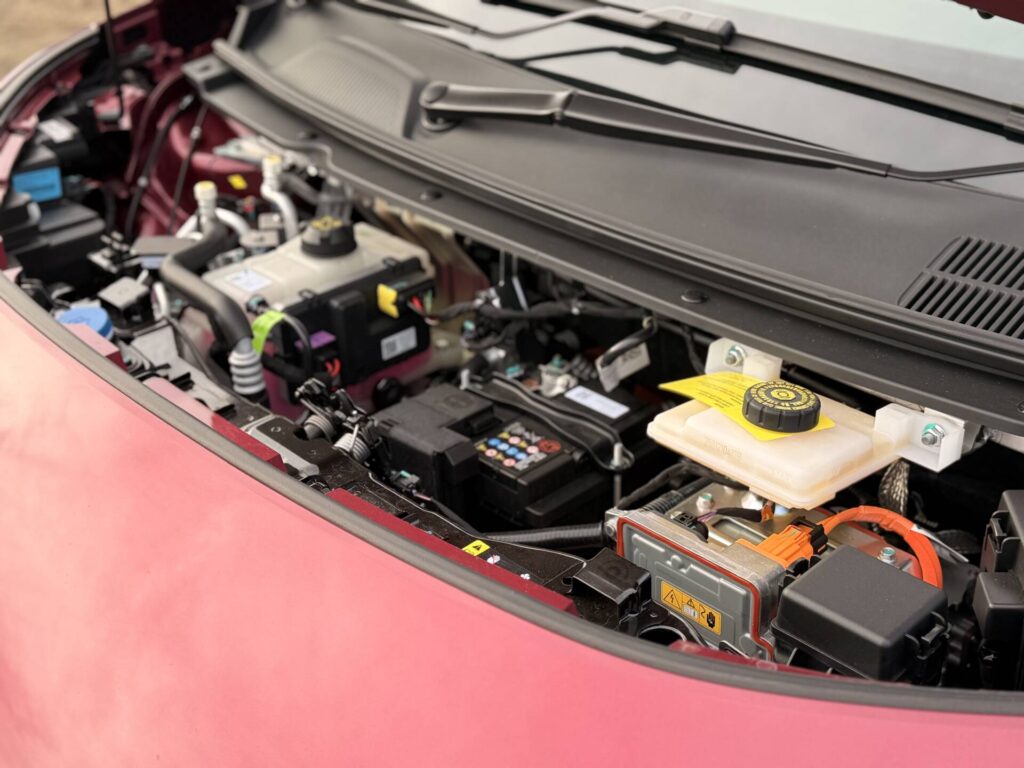
With a 60kWh battery pack, GAC quotes a 430km WLTP driving range at 14.6kWh/100km.
When I got in, the car was showing 510km with a 100 percent full battery and a long-term average of 13.8kWh/100km, which doesn’t quite work, but it soon shook itself out.
Needless to say, over 400km for a city car is plenty if you have easy access to a power plug. We drove it for a week all around the place, including some M4 motorway stuff and didn’t even think about having to charge it.
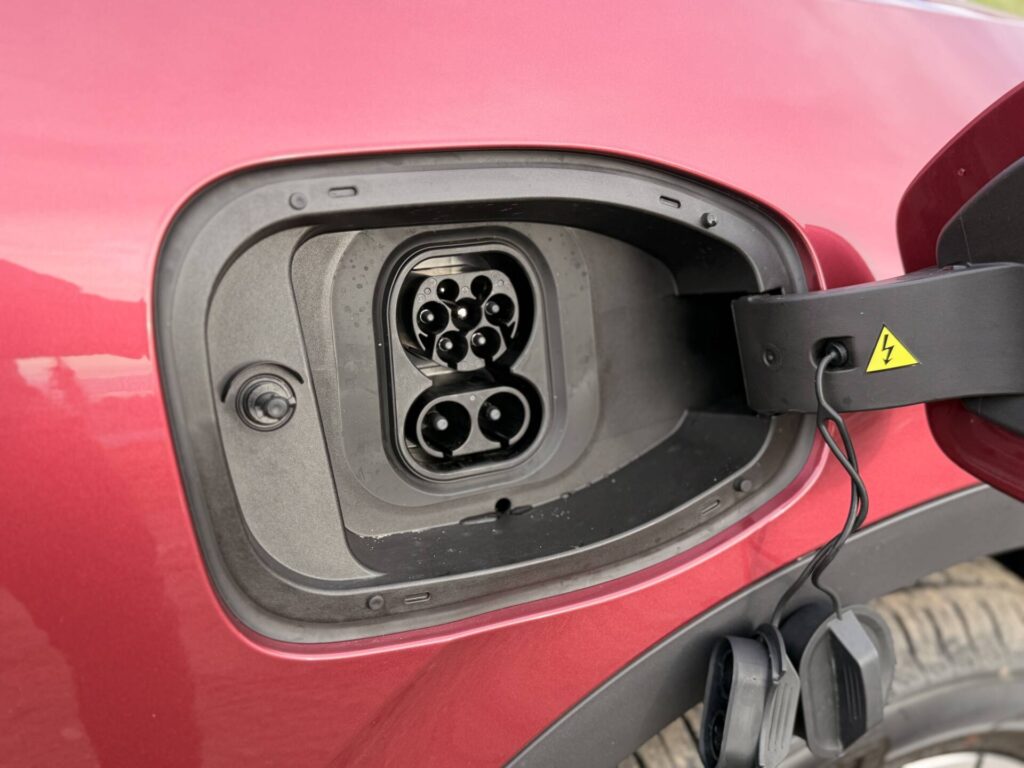
Maximum DC charge rate is 87kW, which seems pretty much perfect given most chargers top out well below that. GAC says you’ll get from 30 to 80 percent in 27 minutes, so around 40 minutes for a 10-80 percent charge.
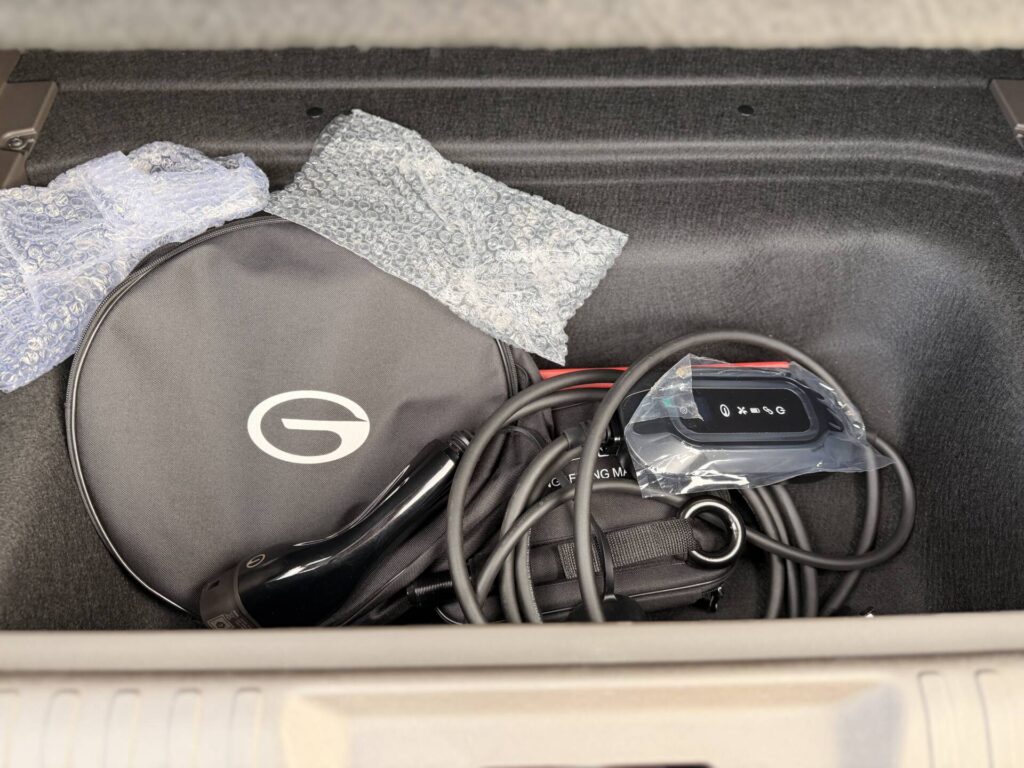
Maximum AC charging without a wallbox runs at 11kW (thought you’re more likely to see 3kW if you don’t have three-phase) and the GAC wallbox is good for 22kW, again with the three-phase power. You should knock over a 10-100 percent charge with the wallbox in a few hours and at the slowest rate, you’ll be going for nearly a full day.
You can power external devices at up to 3.3kW with its domestic power plug supply, which is handy.
Driving
Quite genuinely, there’s a lot to like about the way the UT drives. The electric motor is strong and can easily overwhelm the terrible tyres in Sport mode. I mean, I don’t like that, but it’s very promising given you can replace those with some quality rubber before long.
Those tyres do deliver a pretty plush ride for the most part, too. The UT lopes along, the long wheelbase reducing the impact of speed bumps and road imperfections. If you get a bit too ambitious you’ll get a bit of crash and bash out of the suspension, particularly at the rear, so GAC has some work to do there.
GAC makes no wild claims about Australian suspension tunes and given the company’s ambitions, I reckon that will be sorted soon. At the local launch, GAC’s Chief Technical Officer Katsumata Masato said the company had managed fewer than 4000km of local testing. Some readers will recognise that name, Masato used to work for Toyota Australia…
The brakes are also a bit squishy, with a sometimes awkward shift between regen and physical braking. It’s less awkward than it could be, however, as the energy recovery is pretty lax, although I did clock how to get the best out of it during the week.
As a city car, though, it’s rock solid. The electric go is perfect for tearing around the burbs, finding 60km/h off the lights quickly enough to upset Ranger drivers (which is admittedly not diffcult). You can trust it when you’re being ambitious with a gap.
It’s less convincing on the motorway, with in-gear acceleration falling away over about 80km/h. It’s not super-slow, it’s more Jekyll than Hyde.
The safety systems are a pain in the behind for most of the time, so hopefully there’s some calibration work and a software update on the way for that. Finding various settings while you’re on the move is also irritating, so you’ve got a steep learning curve ahead of you.
But after a week, I had gone from sceptic to fan. I liked being in the UT and looked for excuses to cruise around, its big car ride comfort offering a relaxed drive.
Redline Recommendation
This is a great city car and for the Premium’s $31,990 on the road, someone is going to have to be very convincing to stop me from recommending it to people who aren’t enthusiastic drivers.
It’s cheap, a bit of fun but really comfortable and easy to live with. No, it’s not for me but I can see the 90 percent of people at whom it is aimed being charmed by this and enjoying the experience.
Just bolt on a decent set of tyres when the time comes, yeah?


Leave a Reply