
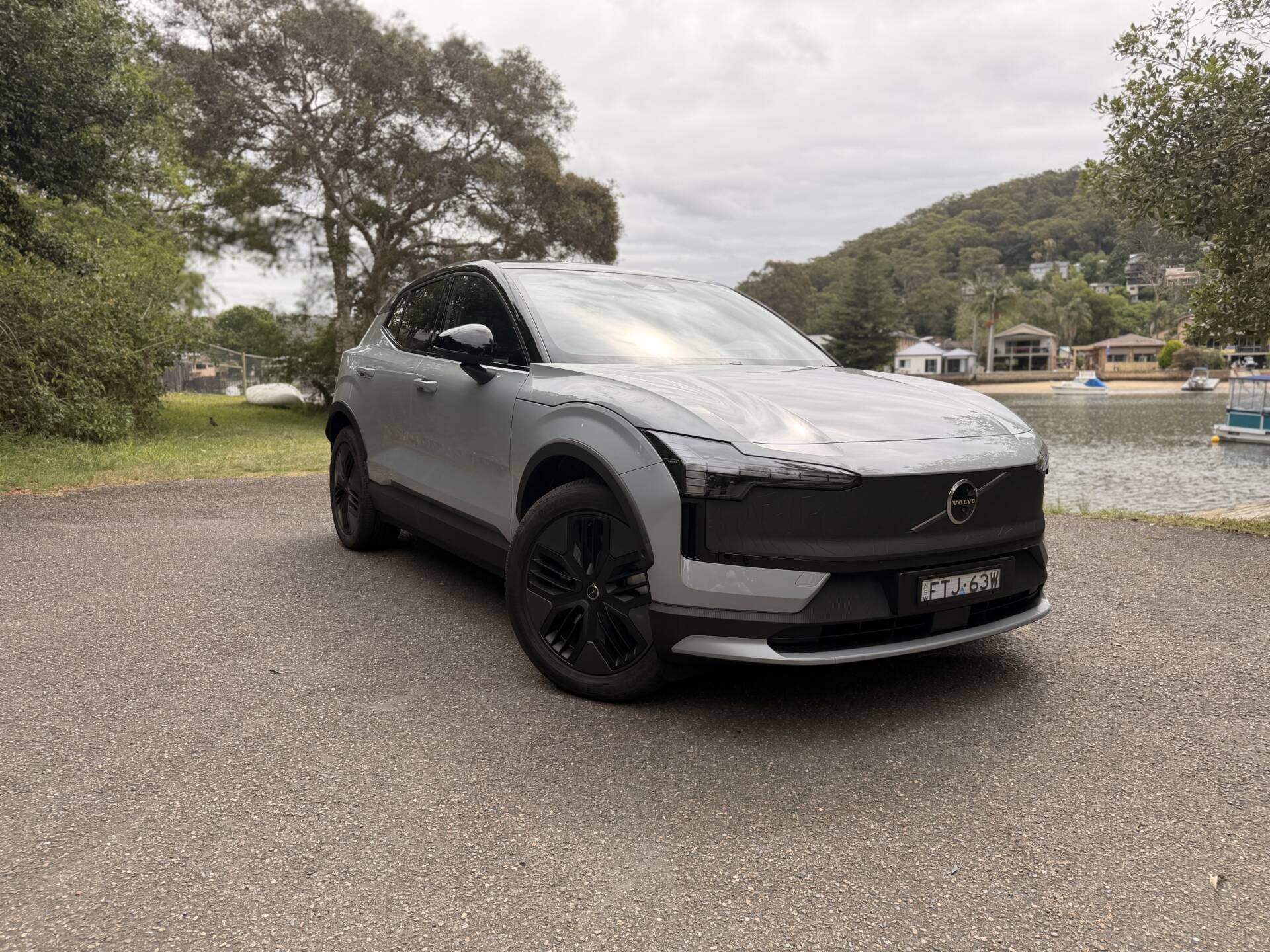
Volvo’s twin-motor small electric SUV has morphed into a soft-roader with a startling 0-100km/h time.
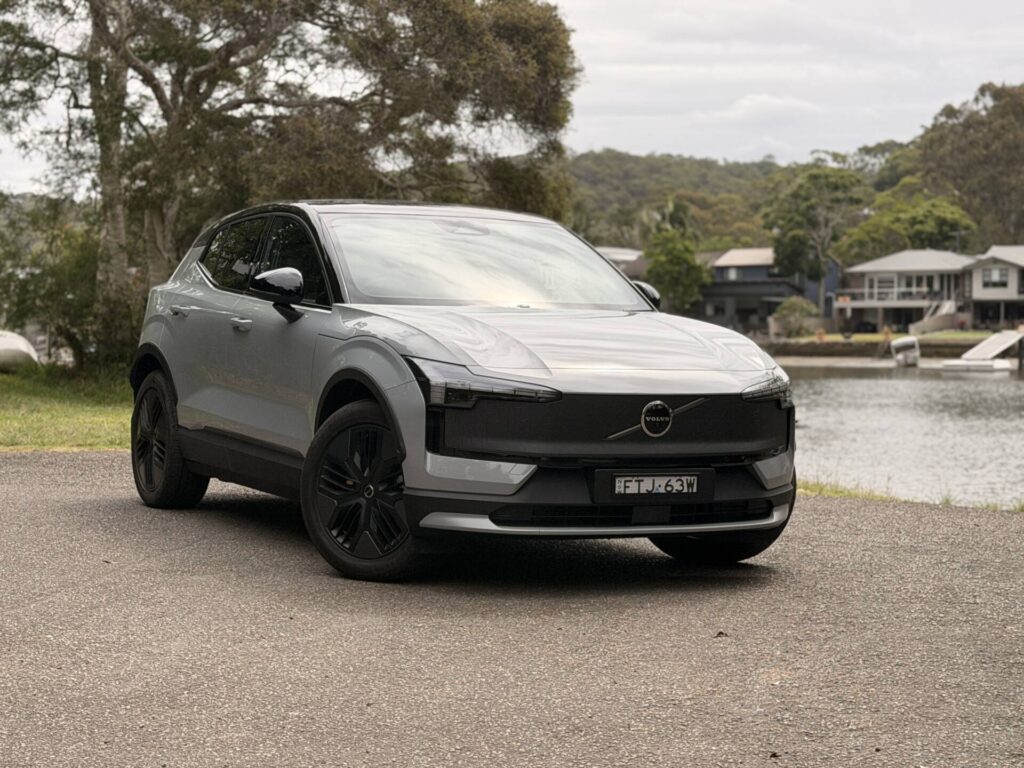
The Volvo EX30 was one of those line-in-the-sand cars from a car company. Every now and again, a manufacturer signals a new direction and then delivers a car as a statement of intent.
Volvo is a modern curiosity in the automotive world. When you look at the age of its cars – the XC40, XC60 and XC90 have absolutely no right to be as competitive as they are. And yet the XC90 recently won Drive Car of the Year in its segment and when I drove it was aghast at just how good it still feels. And looks.
But change is inevitable and while the company has had to walk back an electric-only promise by 2030, it’s clearly committed to electrification.
Sidenote: If I was Volvo’s current CEO, I’d be a bit smug right about now as the war rages on and oil prices continue to climb, the both ways bet is probably going to work out.
Anyway, my drive of the EX30 was long overdue (as ever, my fault). And while I missed the standard height twin motor, I was mildly pleased I’d get to see what Volvo’s fastest ever car was like.
Words and images: Peter Anderson
How much is a Volvo EX30 and what do I get?
Volvo EX30 Extended Range Plus: $52,985 + ORC
Vovlo EX30 Extended Range Ultra: $57,985 + ORC
Volvo EX30 Cross Country: $62990 + ORC
The EX30 is a pleasantly small, slightly lifted hatchback that treads the same line as the Polestar 2 – is it a hatch (in the EX30’s case) or is it a crossover? Who can tell and more to the point, it’s a strategy that works.
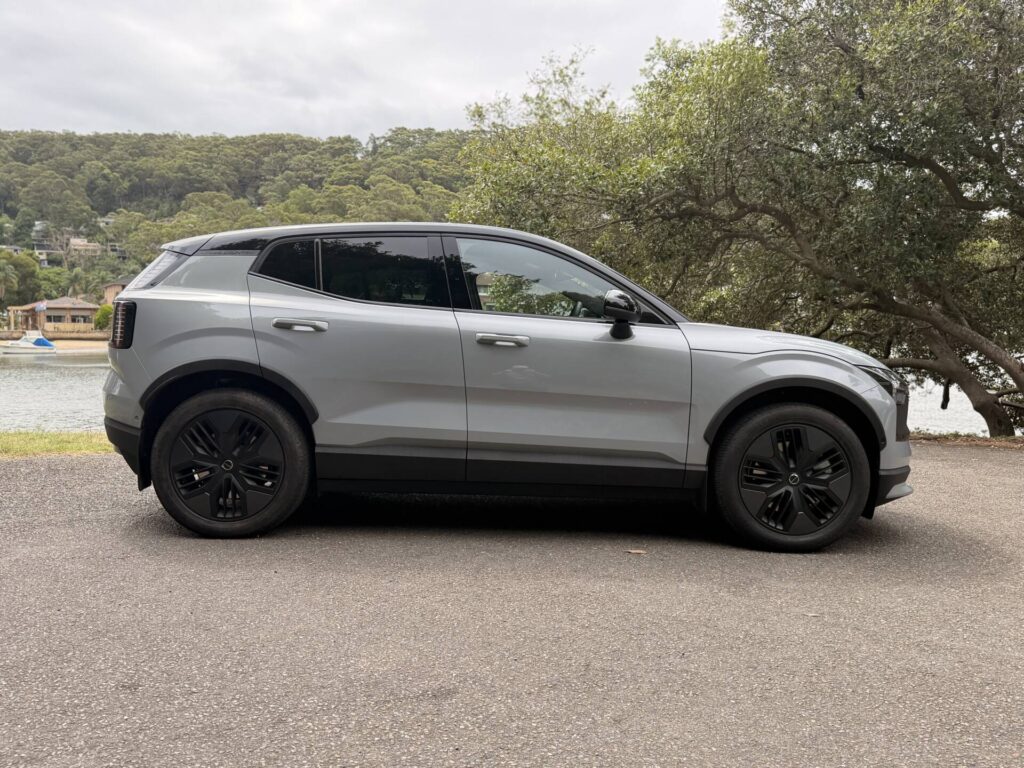
The EX30 Cross Country is a little more overt – it sits higher and has some cladding to suggest it can get muddy.
Your $70,000 on the road Cross Country nets you 19-inch wheels, a single 12.3-inch screen with Volvo’s Android Automotive powered media software, nine Harmon Kardon-branded speakers, satellite navigation, wool blend seat upholstery, powered and heated front seats, auto-dimming mirrors, wireless phone charging, dual-zone climate control, front and rear parking sensors, around-view cameras, auto LED headlights with auto high beam, heated steering wheel, keyless entry and start and various key alternatives such as NFC card or a digital key.
I’d gladly pay less for a car without a panoramic sunroof and have the added bonus of the climate control not having to work so hard. Volvo tells me that there is a cover you can buy to block the sun, but give me a proper roof any day.
Media and entertainment
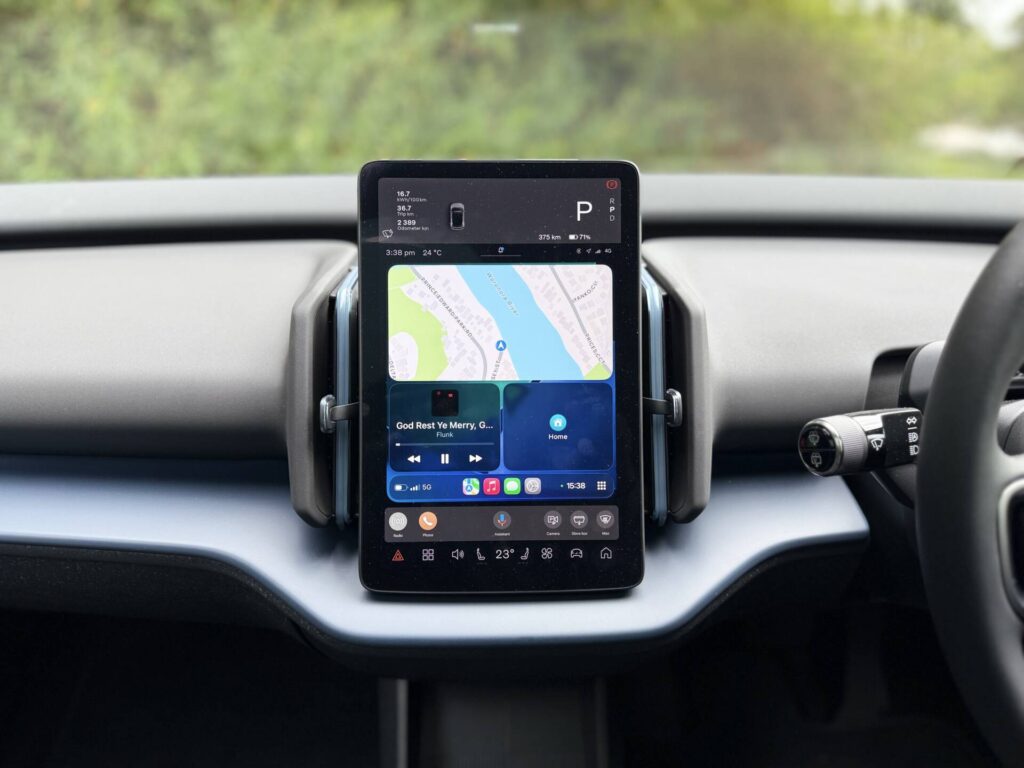
I will say this once and once only – I want a dashboard in front of me. Having the speed and everything else packed into the centre console smacks of cost-cutting and Tesla copying and we all know how well that experiment is going.
So I’m hoping Volvo gets ahead of the hopefully inevitable EuroNCAP ruling that not having a speedo in front of you – either in a HUD or a dashpod – excludes you from a five-star rating, along with the recent edict about physical buttons for commonly-used features.
Rant over.
The Android Automotive setup continues to evolve and has become quite usable. Like so many other cars – and EuroNCAP has had a word – there aren’t enough physical buttons for things like climate control. Again, like so many other cars, the climate controls are pinned to the base of the screen, so they’re always there.
I don’t mind the screen itself, it’s quick and all the functions are easy to find. Well, most of them anyway.
Wireless Apple CarPlay is good and Android Auto is also available and was easy to configure.
For some, the latter isn’t going to be a requirement because as the system is backed by Android Automotive and by extension Google, you can just set up your car to be logged in to your Google account. That means YouTube music, maps and Assistant are all the same as on your phone and you can go without the extra faff, although how you take phone calls is a mystery to me if you don’t hook it up.
One thing I quite liked was the soundbar that stretches across the dash which not only looks great but cleans up the surfaces because there aren’t any speaker grilles.
Safety
ANCAP Rating: 5 stars (2024)
Being a Volvo there is heaps of safety gear, with a full complement of airbags to ensure the five star rating.
- Forward AEB with:
- Pedestrian detection
- Cyclist detection
- Motorcycle detection
- Intersection support
- Front and rear cross-traffic alert with AEB
- Reverse AEB
- Lane-keep assist
- Lane centring assist
- Adaptive cruise control
- Blind-spot monitoring including steering and braking intervention
- Traffic sign recognition
- Exit warning
- Driver monitoring system
Cheeringly, there’s a car icon on the screen which at first press gets you a quick overview and three important shortcut buttons. One to turn off the driver monitor and one to turn off the lane fighting, I mean keeping function. And the middle one activates and deactivates one pedal driving. Superb thinking.
Look and feel
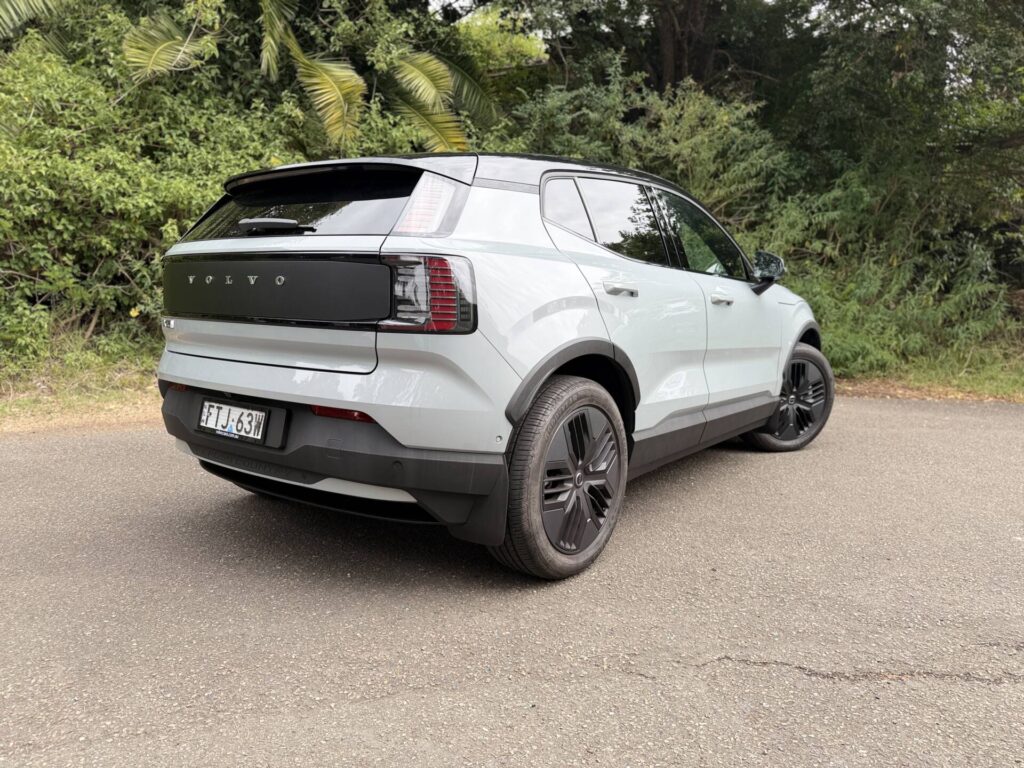
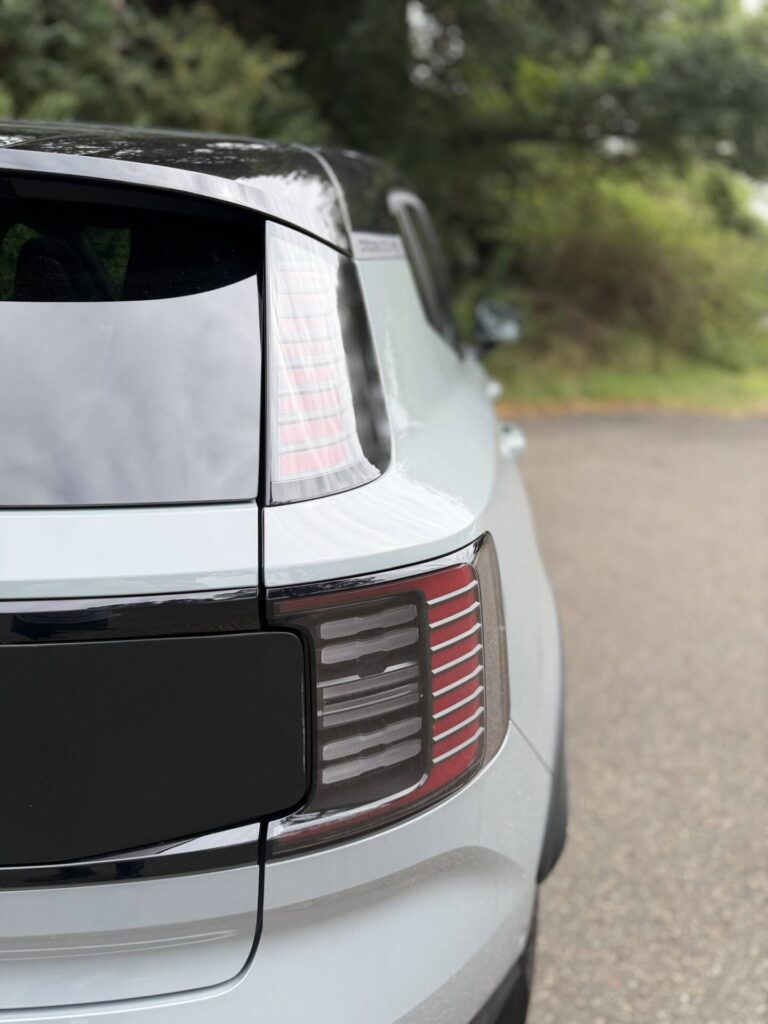
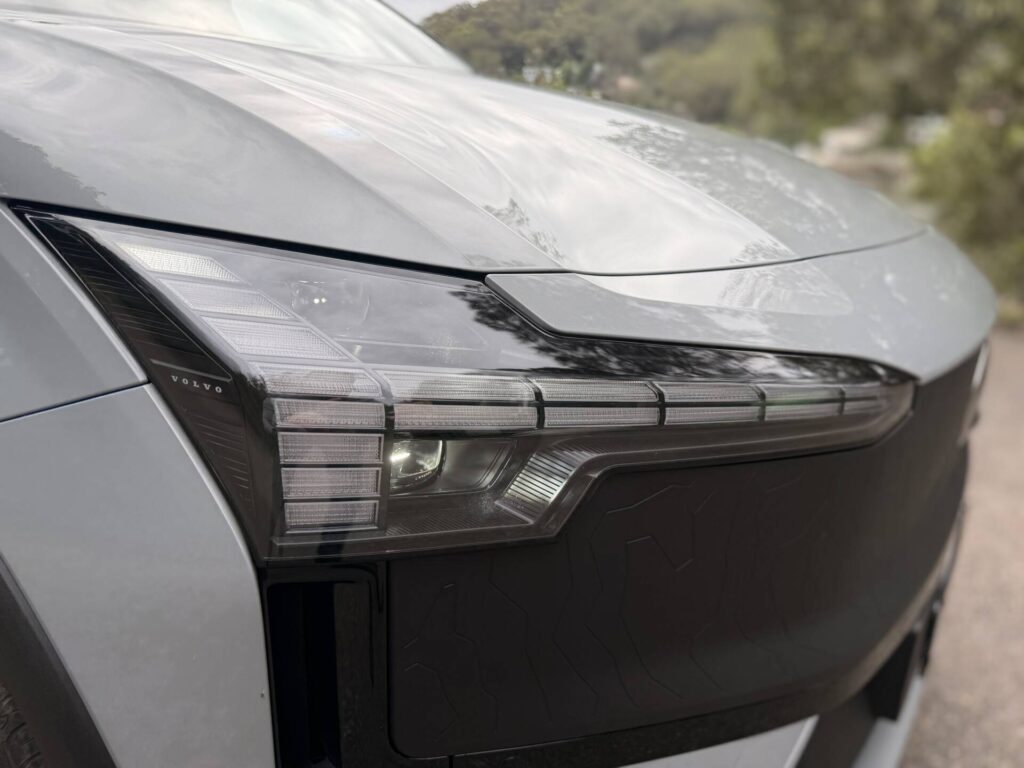
Well it’s a Volvo, innit? There are slight shades of the much-lamented C30 hatch from years ago, a car I still want to own in T5 form before the yoofs ruin the last good ones.
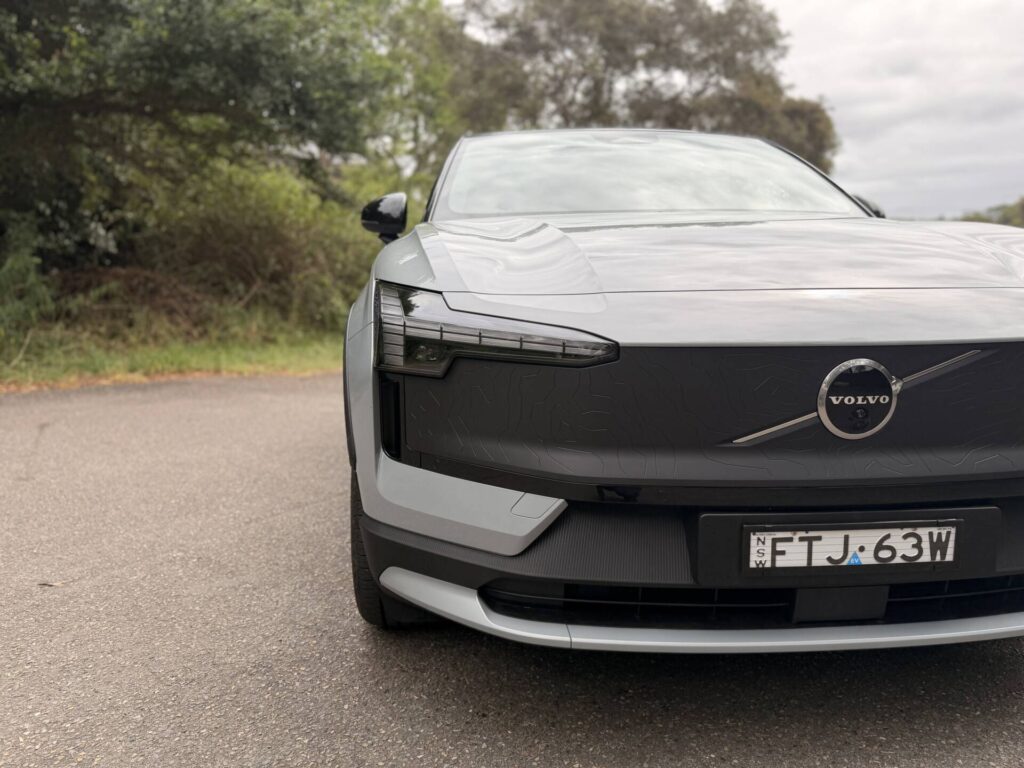
It’s also clearly tied to the rest of the range with the [cue reverb effect] Hammer of Thor [end reverb] daytime running light signature, the blanked out grille and a general sleek elegance only the Nordics can pull off.
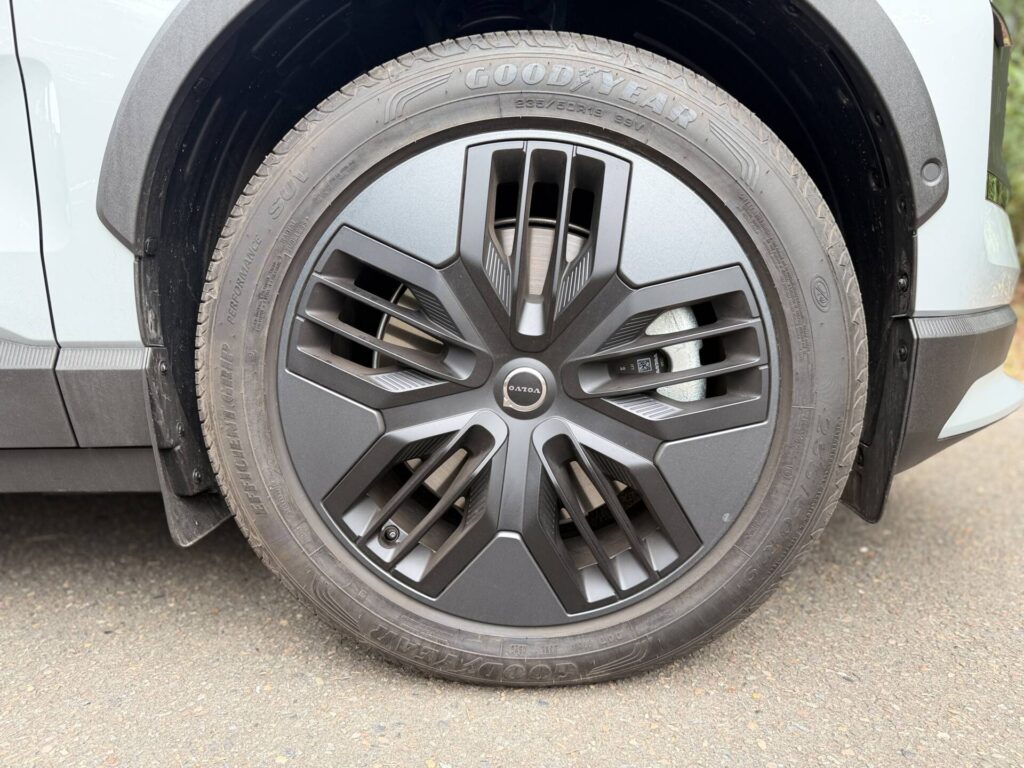
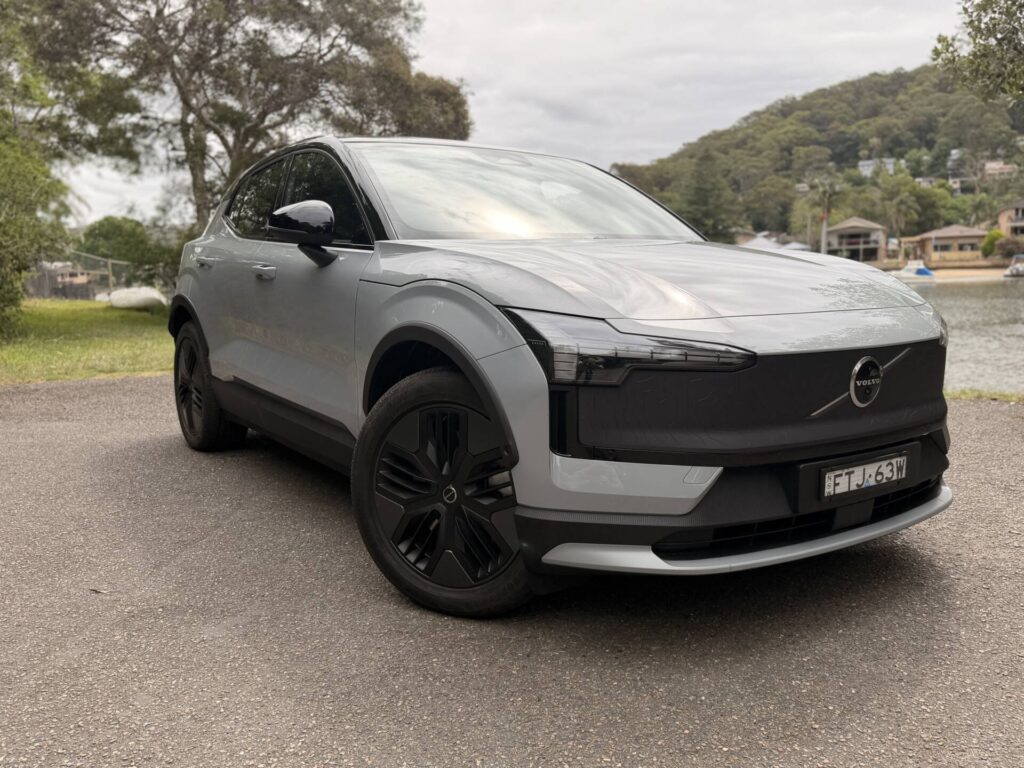
The Cross Country is clearly a lifted EX30 and I’m not sure the extra height does it a lot of favours, nor am I a fan of the wheel design, but the basic look is one of which I am a fan.
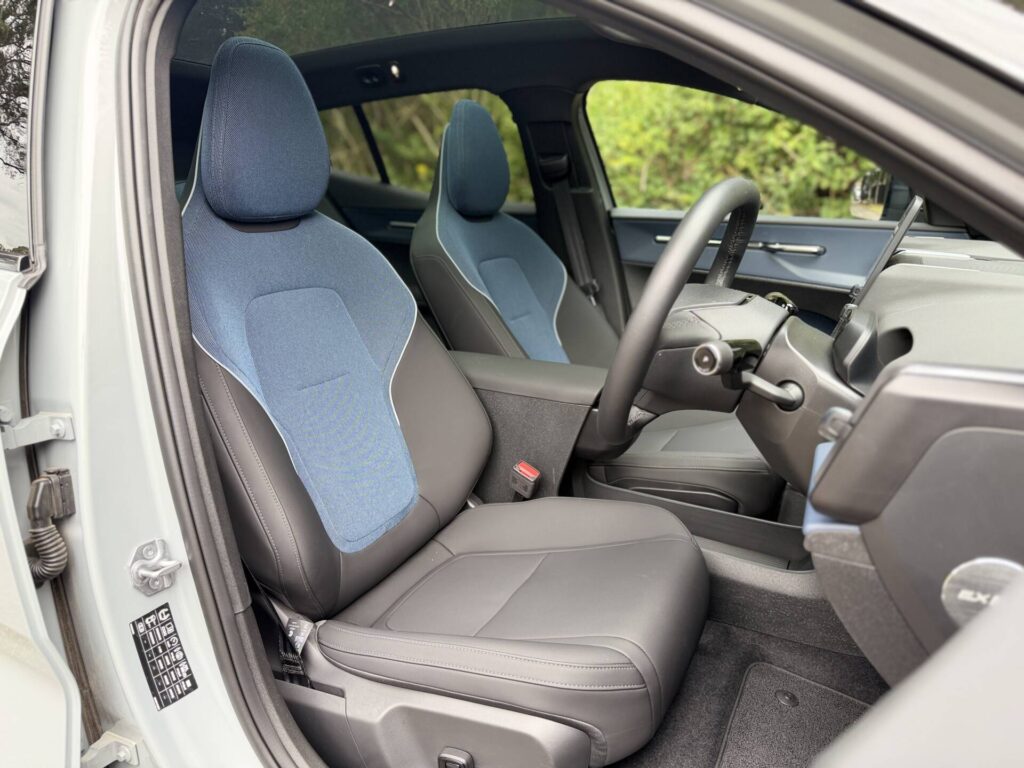
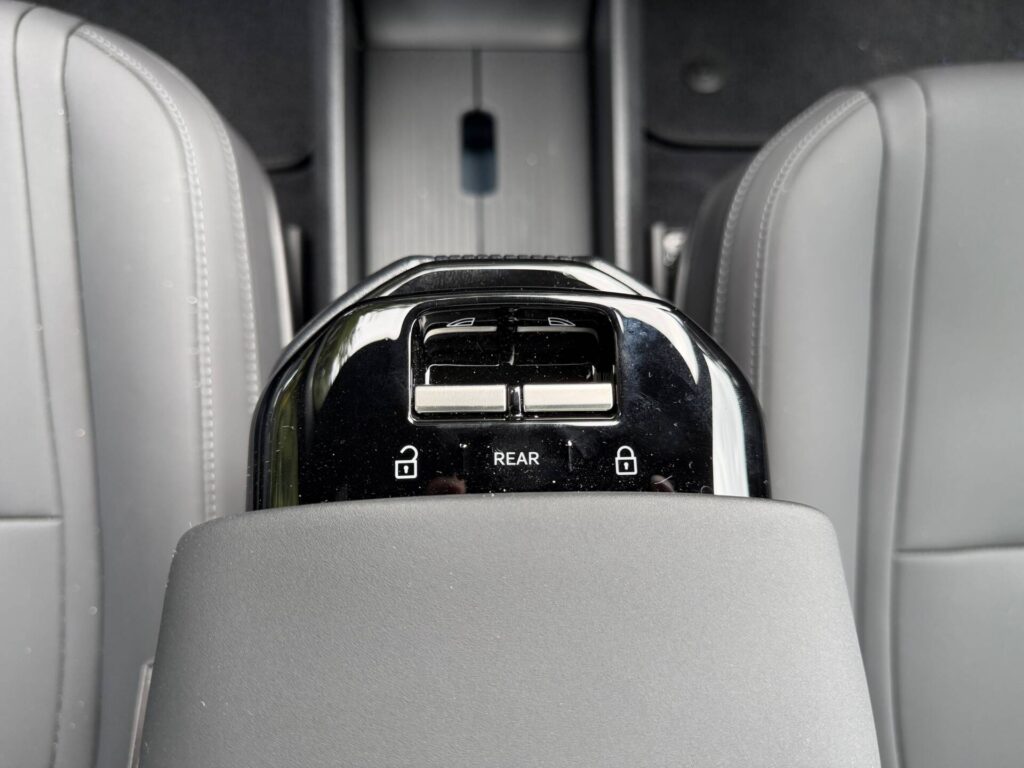
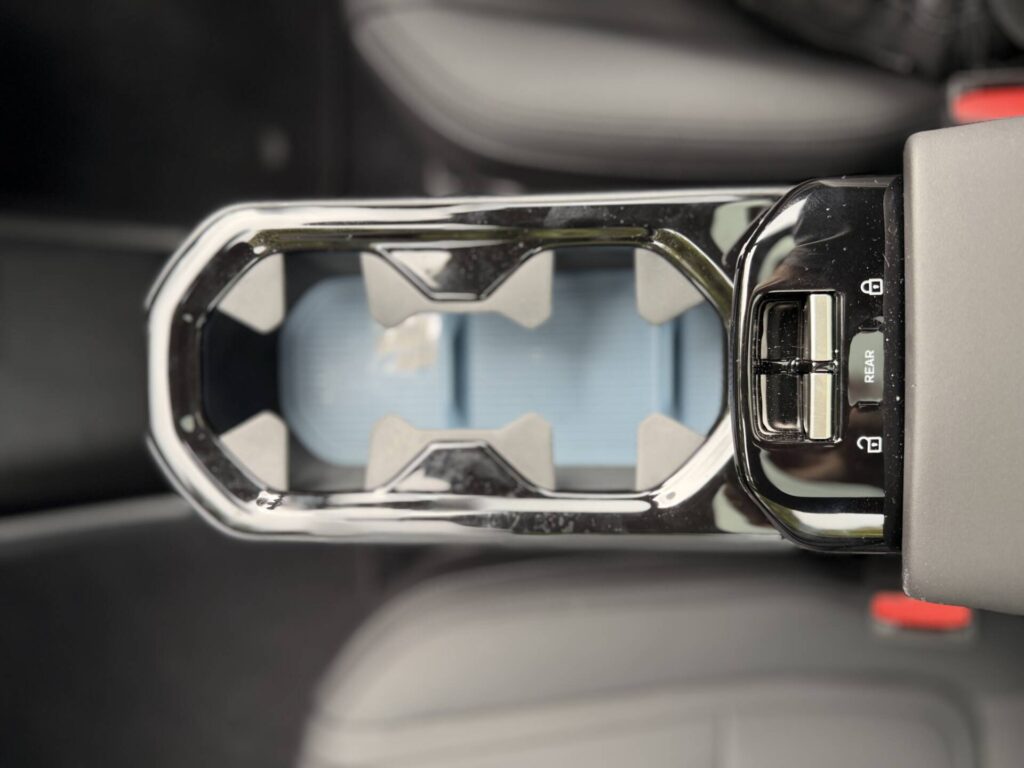
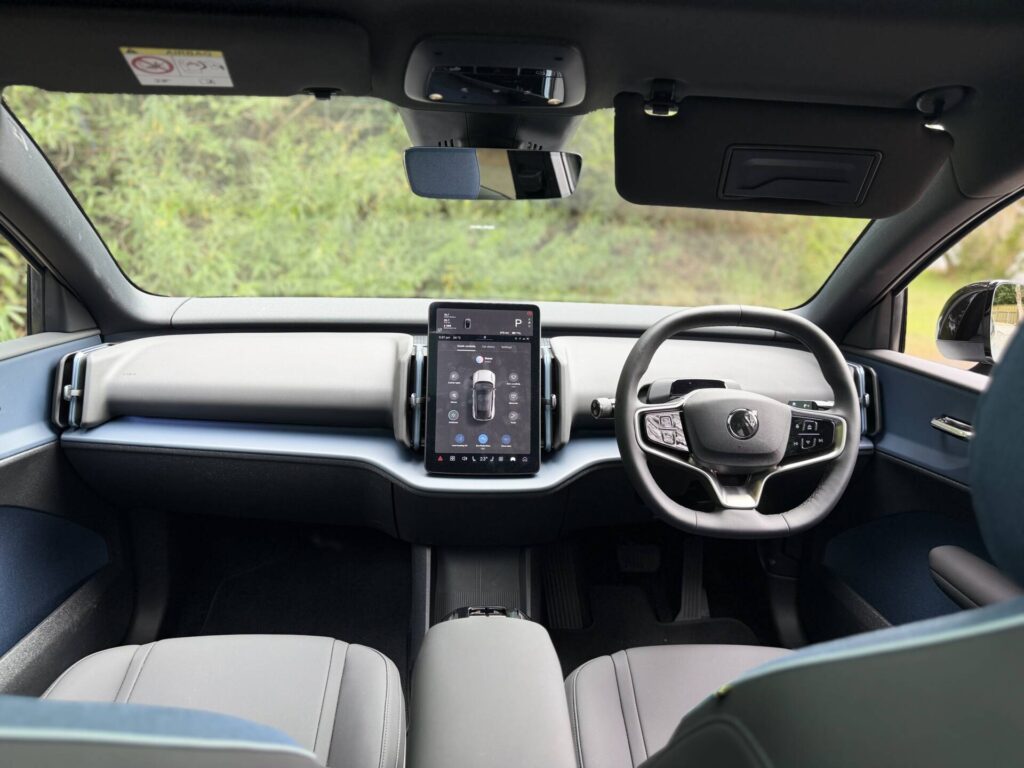
I have complained about the lack of buttons, but you can’t ignore the fact that it looks very cool in here. One of the few good things about Tesla interiors is the minimalism, but this is Minimalism Done Right.
I found the way the stitching on the steering wheel that made it look like it was bulging a little off-putting but the rest of the interior is mint. The wool blend on the seats is lovely and the blue tones repeated across the cabin make this the Little Car of Calm.
I really like the vertical vents, the centrally-located glove box and the configurable mood lighting – I chose Aurora because I am a hopeless Arctic winter fan.
The front seats are really comfortable and supportive, and some of the touch points are exquisite, like the door handles I forgot to get a close up of. They feel like real metal and are substantial.
Minimalism sometimes means compromises, however. The very open storage design means there aren’t a lot of places to secrete your stuff. A long, low centre console does open with a sort of split lid, but it’s quite shallow.
Placing the phone on the wireless charger seems like a great idea until you accelerate and the phone flies down the tunnel created by the armrest over the console, gets stuck and goes into emergency mode. A rare occurrence, yes, but yeah, that was fun.
I liked the partially and fully retractable cupholders, though.
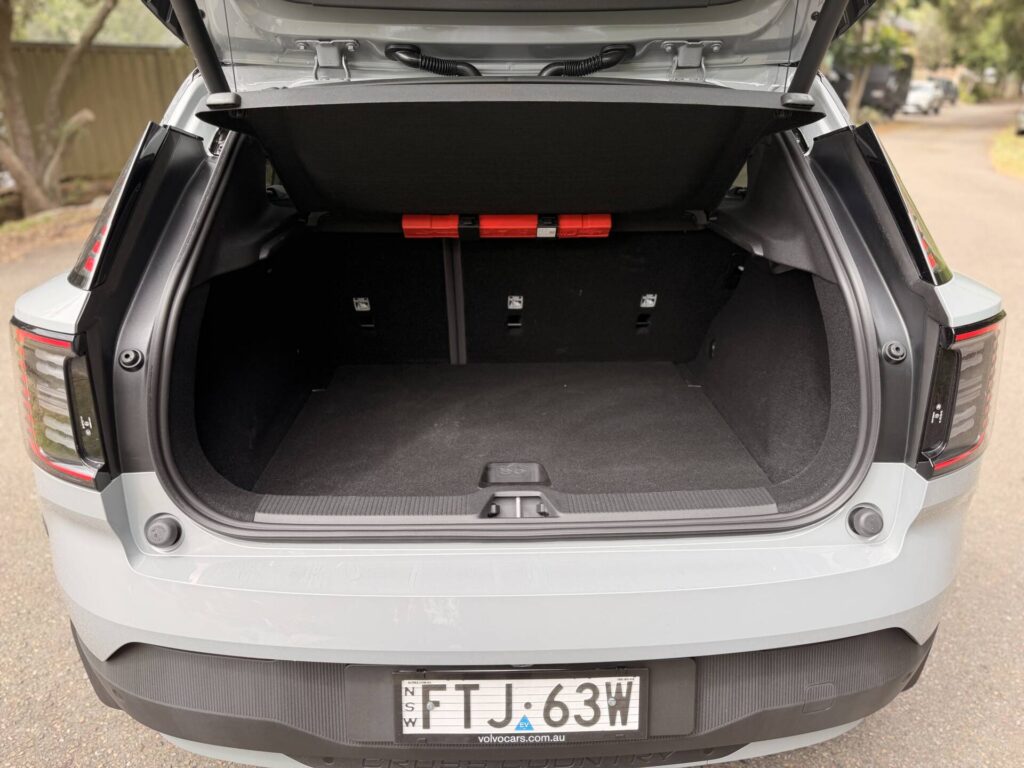
Boot space: 318 litres
Front boot: 7 litres
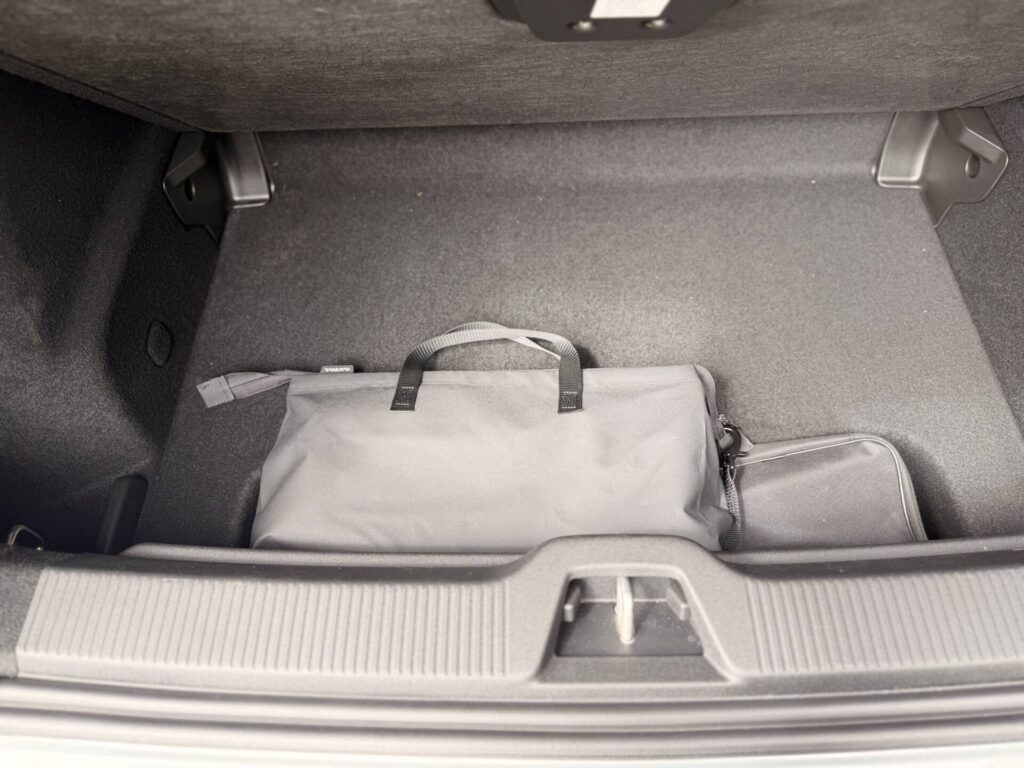
The boot is a good size and accessed via a powered tailgate. There’s no spare but some underfloor storage is always welcome. I think the loading lip is probably fine in a normal EX30, but a bit high in the Cross Country, especially for a car this size.
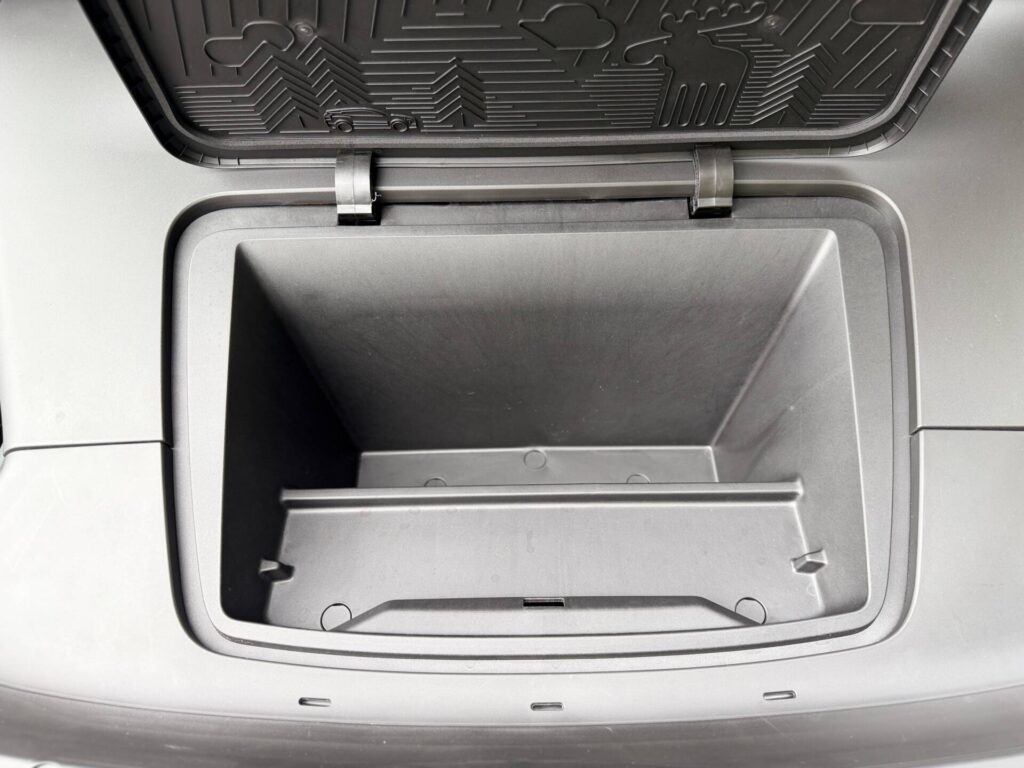
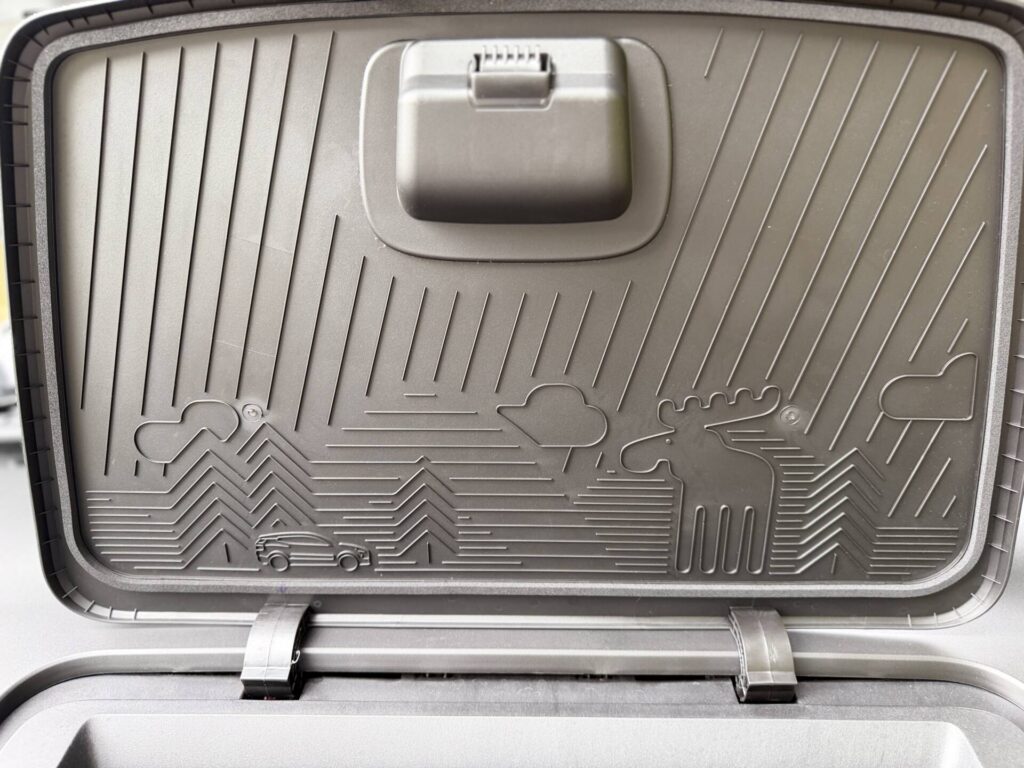
There’s also a small front boot with a Cross Country-specific impression on the underside of the lid. You can fit the charge cables in there or under the boot floor when it’s in its highest position. I’d go with the front boot because the cables won’t slide around. Or go bonk against the tailgate when you floor it.
Drivetrain
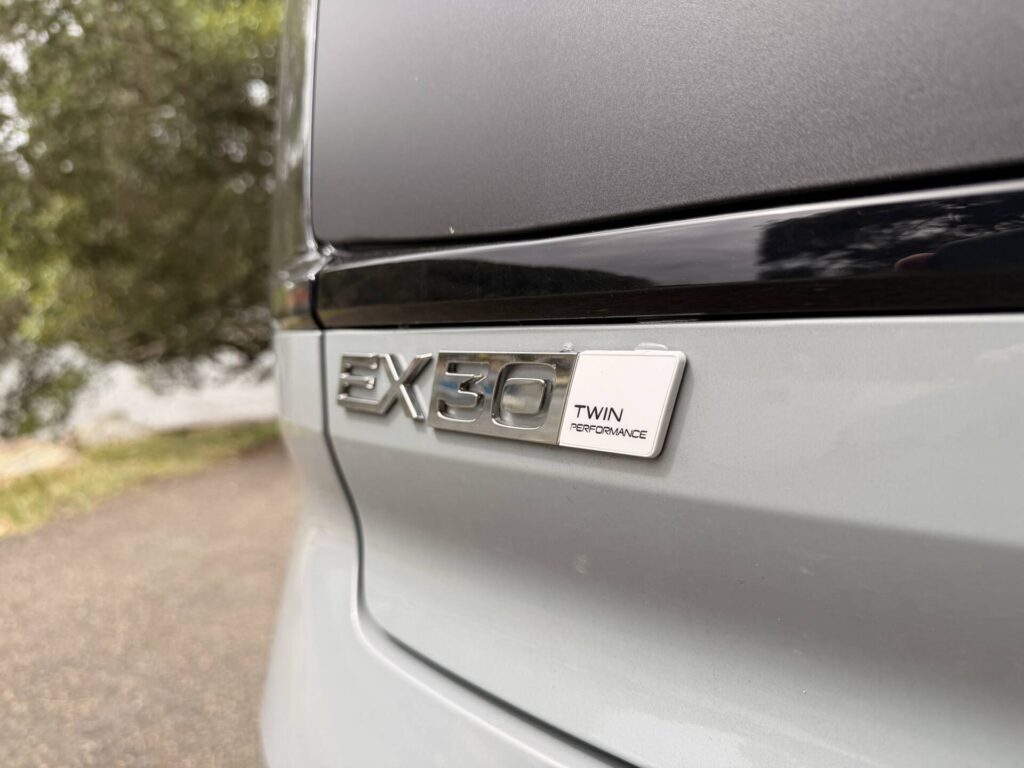
Power: 315kW
Torque: 543Nm
The EX30 Cross Country has two motors, one at the front and one at the rear. This has one main drawback – it absolutely eats range, with a WLTP figure of 417km against the single motor’s 462km, both with the 69kWh battery pack.
Together the two motors knock out 315kW and a whopping 543Nm to shift 1910kg. That’s nearly 430 horses.
The WLTP figure of 417km relies on a consumption rate of 19.1kWh/100km which I didn’t quite make, but I got close at 20.1kWh/100km, giving me a real-world range of 367km. That’s fine around town, obviously, but it’s going to run out a bit quicker on fast highway running.
Battery and charging
Battery: 69kWh/65kWh usable
Max DC charging rate: 158kW
Max AC charging rate: 11kW
The 69kWh battery pack is, as you would expect, underneath the car and is a nickel-manganese cobalt (NMC) type, consistent with the high performance intentions of the driveline.
For some people, a 158kW charging rate is a bit of a disappointment but the edge case of finding a charger that’s actually this fast – or more to the point, faster – is pretty slim in Australia.
At that speed, you’ll get from 10-80 percent in 28 minutes while you’ll be charging for about 12 hours at home on a wall charger at 11kW. It will be almost 24 hours off a domestic plug.
The more common 50kW chargers, if they run at full speed, will take about 90 minutes to do 10-80, another half hour or so to run to full.
Driving
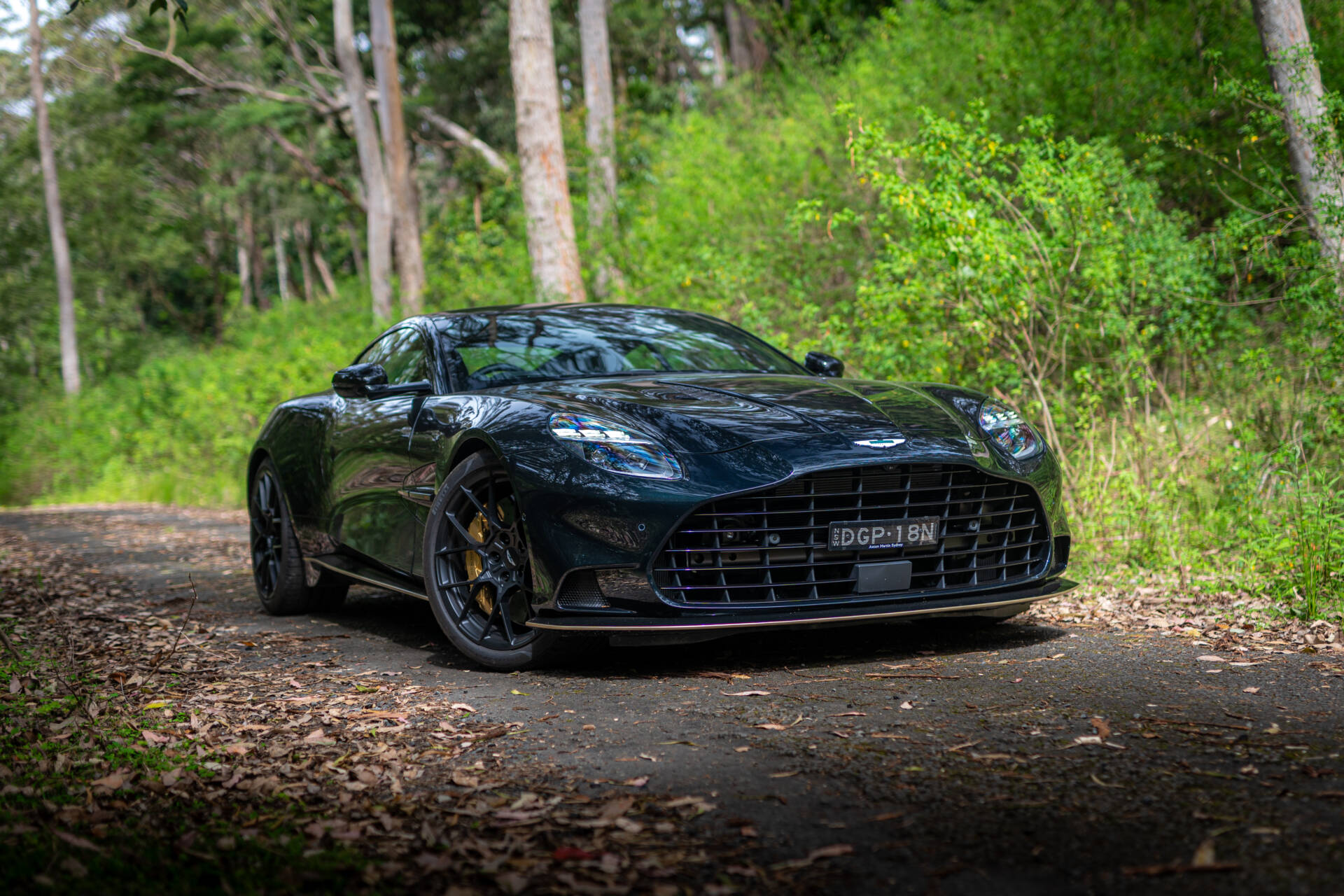
This car is absurdly fast. Like almost Aston Martin Vanquish fast, at least in a straight line. I always scold people for wanting a sub four second 0-100km/h time in a family EV “because it’s easy to get that”, but boy howdy is it fun in the EX30.
Things will fly about the cabin, so you have to make sure everyone and everything is ready for you to hit the firewall with your right foot. Thankfully, this car is a bit more than that.
Unlike most range-focussed modes, Range is actually a good mode to which you should default. It uses the rear wheels a lot more than the fronts (the other EX30s are rear-wheel drive) which makes it feel more balanced and fun to drive. It also dials back the throttle a bit, but it’s always a little on the hyperactive side.
I chose one-pedal driving and stuck with it. It’s the best setup of this type in any car I’ve driven in a long while, as good as the OG BMW i3’s (which may not actually stand up to modern scrutiny, but I always loved it).
Being the Cross Country, the ride is as it should be – reasonably supple and refined but really, it kind of takes the fun out what a small, fast car like this should be. The suspension is very quiet, though, which is commendable at any level in an electric car.
The steering is light and easy to live with but feels really good, with a nice turn-in that belies its height and weight. Performance throws a bit more weight into the calibration.
The upshot? I really liked it. A lot. Just wanted it lower.
Redline Recommendation
This is easily one of the best cars I have driven, EV or not. I love the way it drives, I just want it lower, but it isn’t. Even so, I’d have one.
It looks terrific and I’d quickly fling the wheels for something else and maybe throw a set of the “old” twin motor’s shocks and springs on it the second the warranty is up.
While the range isn’t extraordinary, it did me fine for a week of charging (heh, see what I…) around, including the reasonably hefty commute to pick it up and drop it off. It’s quiet, refined and scorchingly quick.
Ripper of a car.

Leave a Reply