
The Polestar 2 might have a few years on it and it’s on a hybrid ICE/EV platform but it’s still one of the best EVs money can buy.
Words: Peter Anderson
Images: Also Peter Anderson (as if you can’t tell)
When the Polestar 2 first arrived in Australia, we were just beginning to emerge from lockdowns and the early terror of the pandemic. I approached it with a little bit of caution as I had driven a couple of Frankenstein EVs and hadn’t been super-impressed.
We already knew the platform from the Volvo XC40 and looking at the Polestar it looked for all the world that it was originally intended to be a Volvo with the Hammer of Thor headlights. Then we thought it was Volvo’s electric sub-brand but then Volvo said it was going all-electric (now rowed back) and it was all a bit confusing.
It looked great, though, in an appropriately Scandi way, both inside and out. You could choose a pair of front-wheel drive options in Standard and Long Range and then the nutso all-wheel drive Performance.
It was a good car, but the front-wheel drive was a little prone to torque steer and whole range was missing important safety features as standard, which felt a little odd. And there was the problem of the Android Automotive system missing Apple CarPlay.
All of these problems have been fixed. The unaccountable decision to go front-wheel drive was switched to rear-wheel drive, Apple CarPlay is present and correct and the good safety stuff is all there.
And even with the Chinese onslaught (although remember the Polestar 2 is made in China), the pricing is pretty reasonable, with plenty of distance to the Volvo C40/XC40 twins.
How much is a Polestar 2 and what do I get?
Polestar 2 Standard Range: $55,509 (usually $68,499)
Polestar 2 Long Range: $59,709 (usually $72,699)
Polestar 2 Dual Motor: $64,959 (usually $77,949)
Prices current at January 2025
At the time of writing, Polestar 2s are very good value, at least that’s what I reckon. For a tick under $60k and cheaper than a Tesla Model Y by some margin, you’re getting a pretty decent car.
You money gets you 19-inch alloys on Michelin e-Primacy tyres, auto LED headlights with active high beam, auto wipers, 12.3-inch digital dash, 11.2-inch media screen in portrait mode, 8-speaker stereo, heated front seats with power adjustment, dual-zone climate control, cloth trim, reversing camera, adaptive cruise control, park assist, front side and rear parking sensros and a tyre repair kit.
The 11.2-inch centre screen is powered by Android Automotive – as is the dash – and that has come a long way since launch. It’s much easier to use and has both wired Android Auto and Apple CarPlay.
Connected Services (for just a year, sadly) will probably be more appealing to Android OS device owners but includes things like Maps, Google Assistant, Youtube, Spotify and a few other bits and pieces.
Safety
The Polestar 2 ships with eight airbags, the usual traction and stability controls, forward collision warning, lane and road departure warning, lane keep assist, road sign recognition, post impact braking, forward AEB (with intersection assist), rear AEB, reverse cross-traffic alert, three top-tether anchors and two ISOFIX points.
Look and Feel
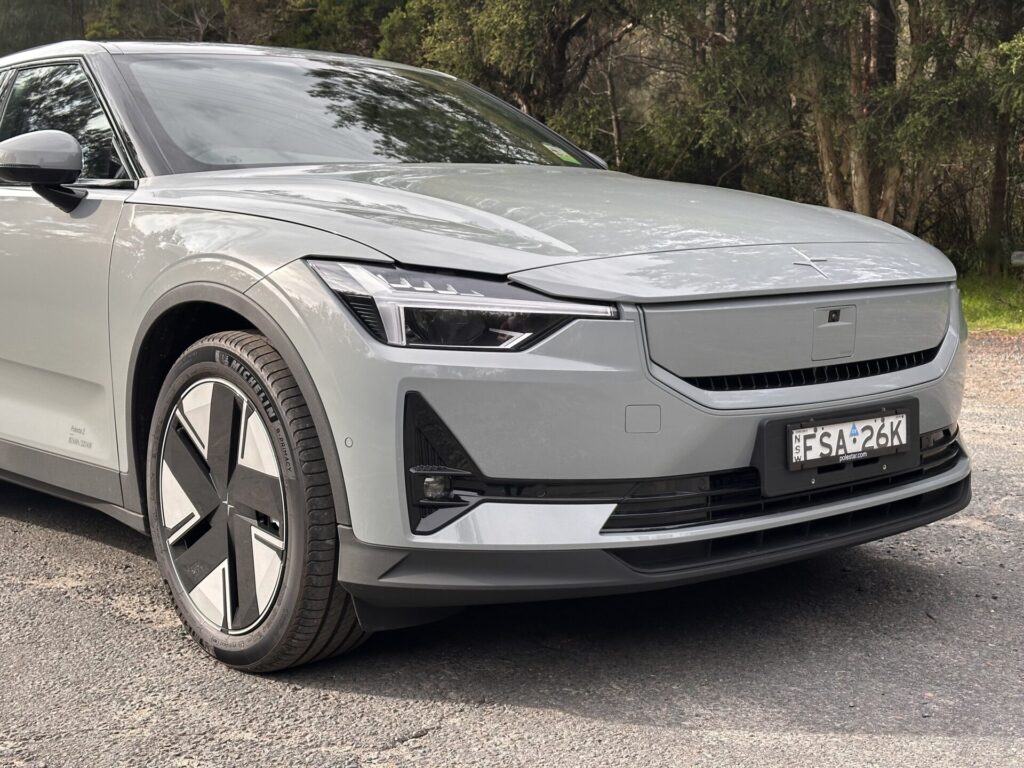
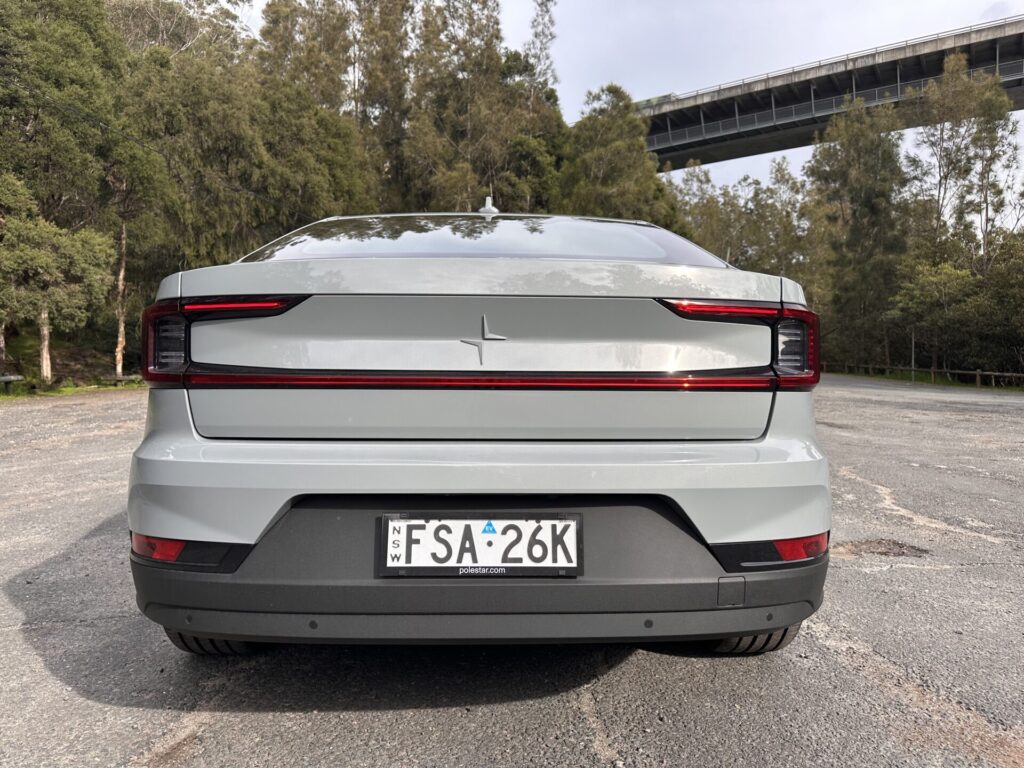
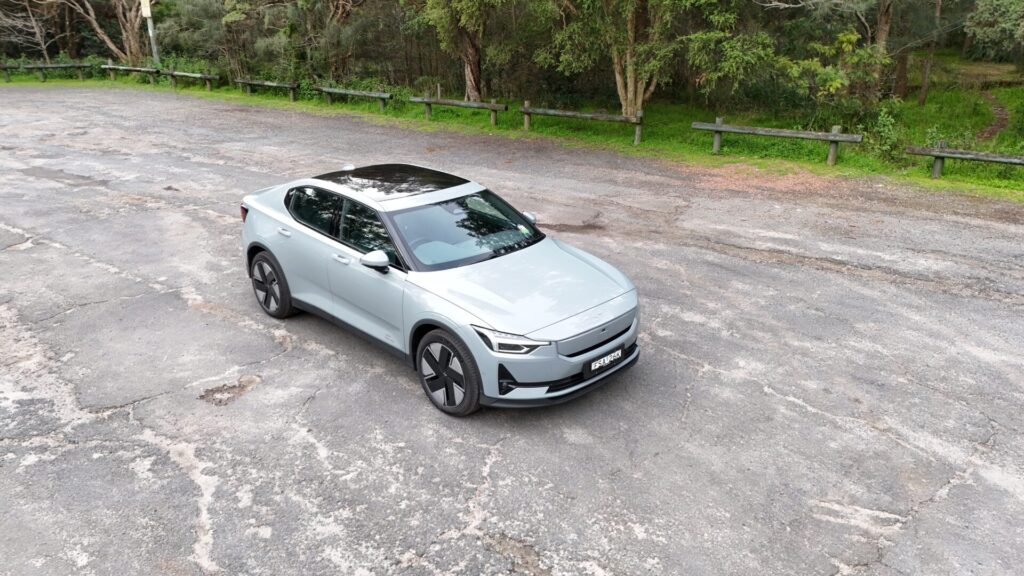
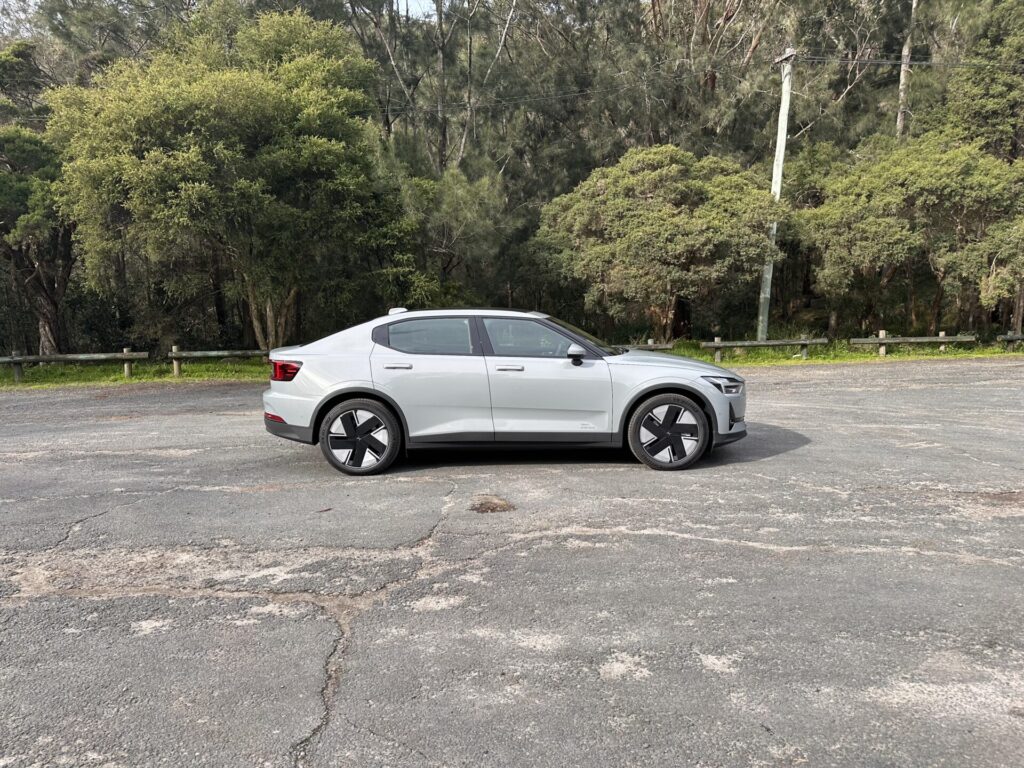
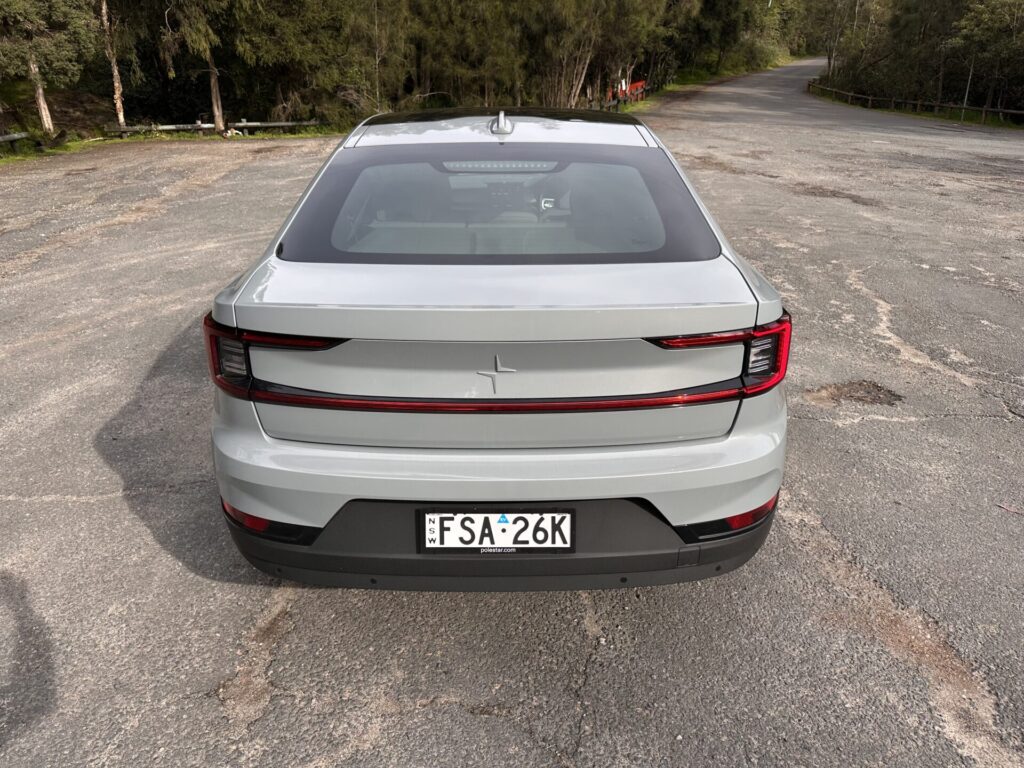
The Polestar 2 was definitely an EV that didn’t look stupid and remains so. I’m a big fan of this design in the sense that it settled into the landscape without drama and just looks great.
I remain puzzled by the visual links to Volvo with the Hammer of Thor headlights, but I’m also not complaining. It’s crisp, visually appealing on the right wheels, almost perfectly proportioned with the exception it rides too high for that.
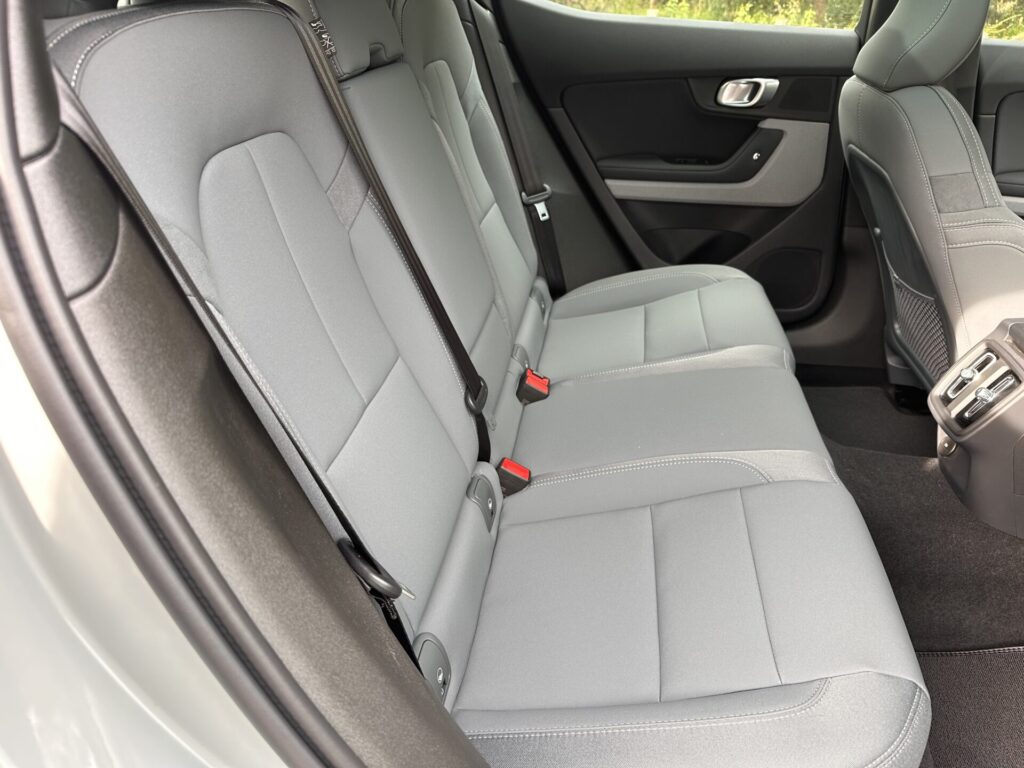
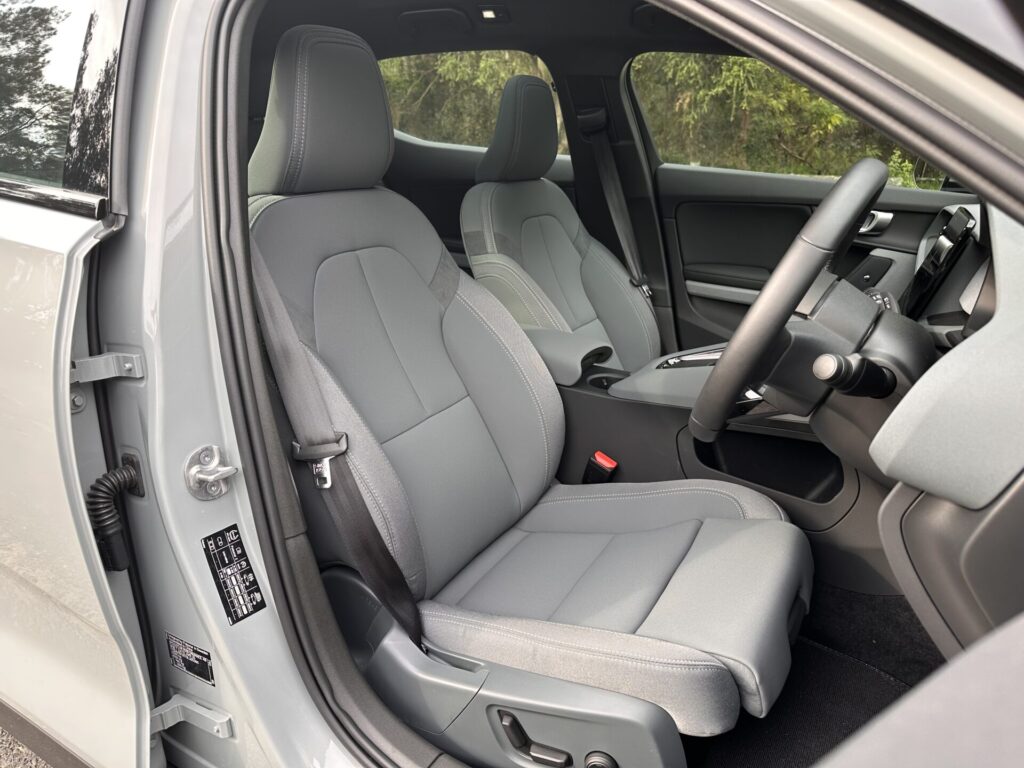
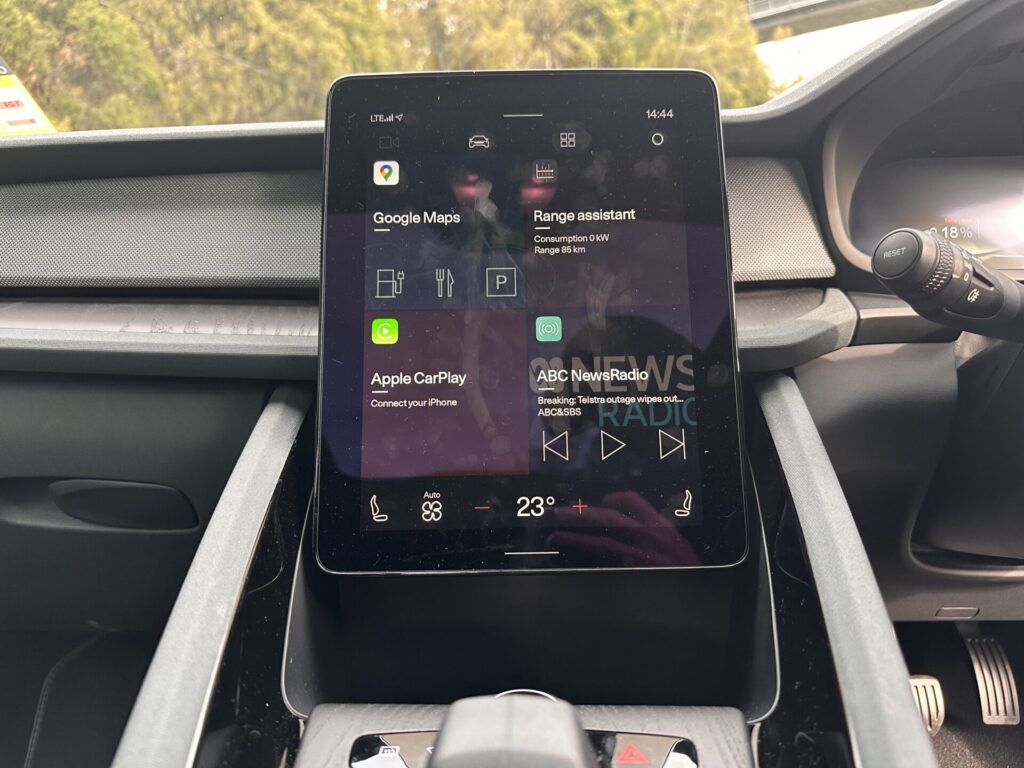
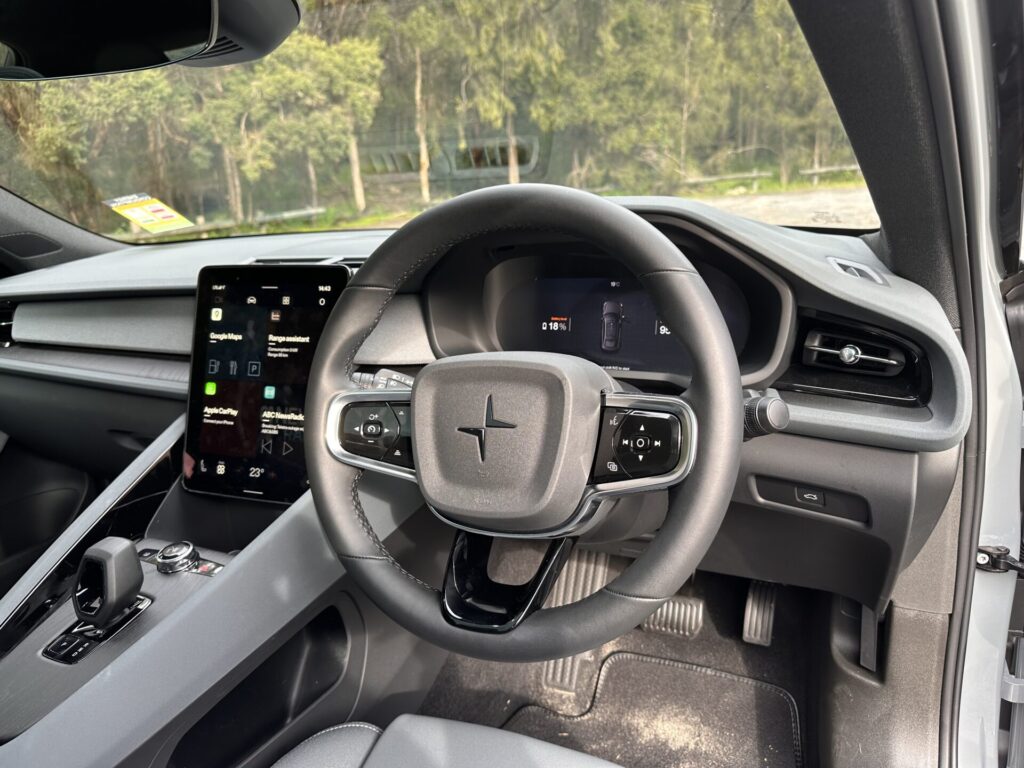
Inside also remains excellent. Little has happened in here over the years, but it’s lovely. Refined looks are hard to come by these days, where low-switch environments tend to look bland, but the 2 is sleek without being bleak.
I love the front seats, they’re incredibly comfortable and easy to live with and getting in and out is pretty straightforward. I like the look of the dash, the portrait screen still looks excellent and the shifter is a particular favourite.
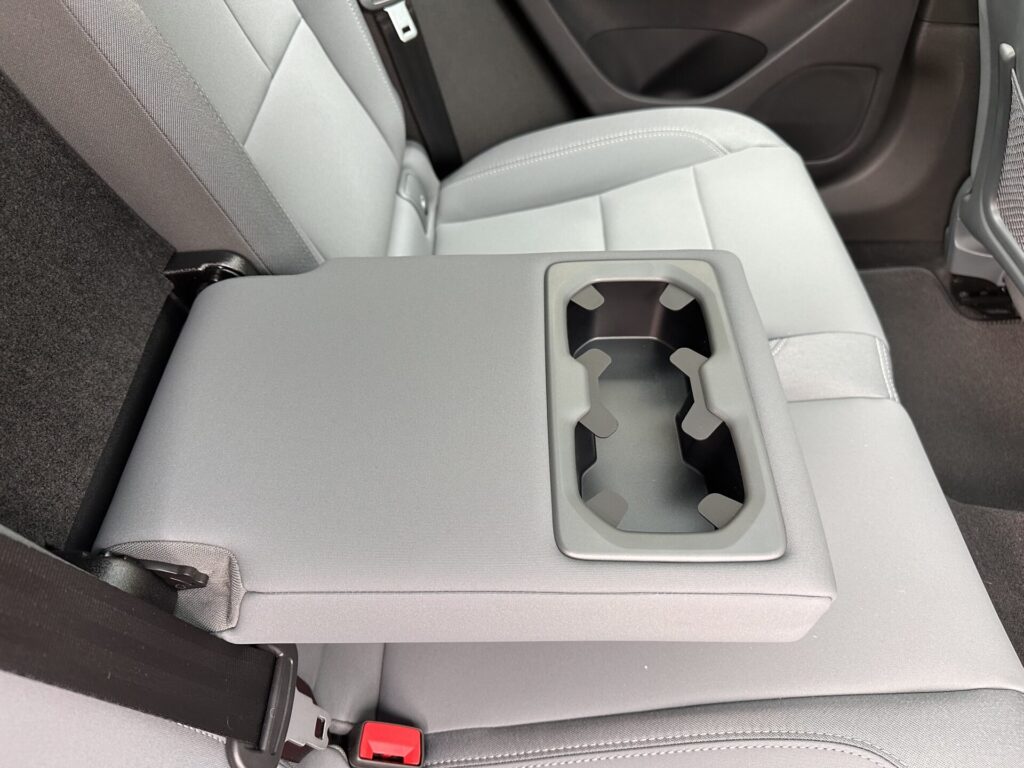
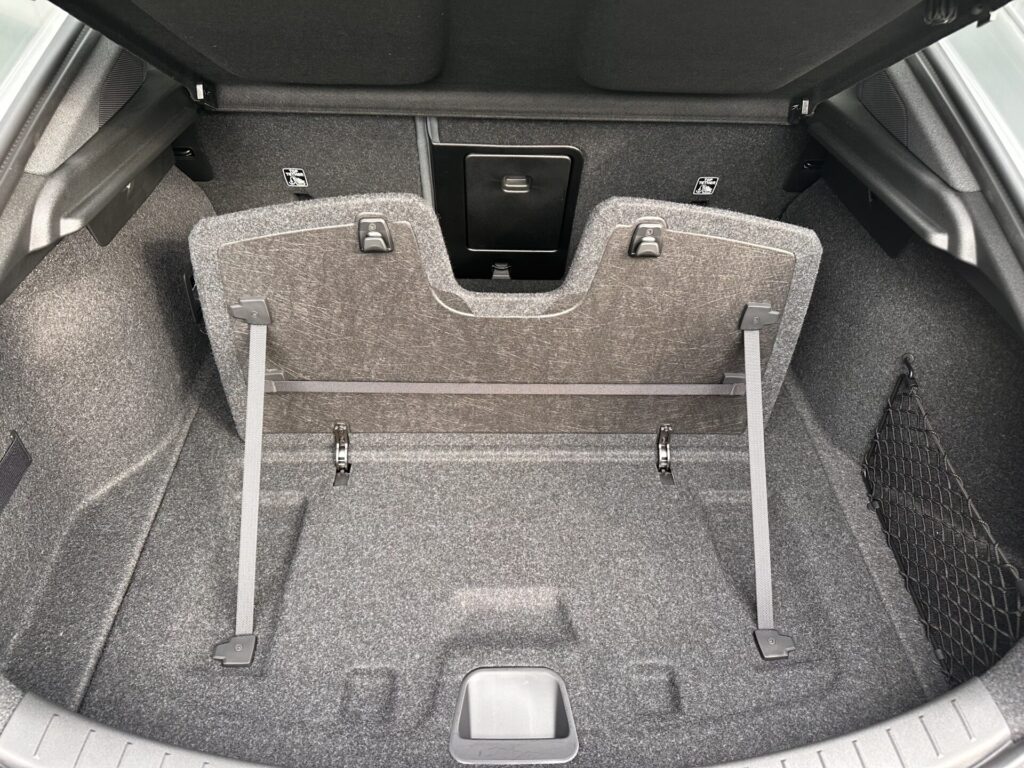
Materials are mostly great, the retractable 1+1 cupholder very clever and storage abounds. I’d like the USB ports somewhere more sensible given the CarPlay isn’t wireless so I’m not managing cables, but this car is hardly on its own there.
Access to the rear seats is a little on the tight side, with a small door aperture and quite a high sill meaning a bit of clambering-in vibe if you’re tall or have bigger feet. The seat is comfortable, however, with acceptable head, knee and leg room for most kids and even adults can be happy back here within reason.
Chassis and drivetrain
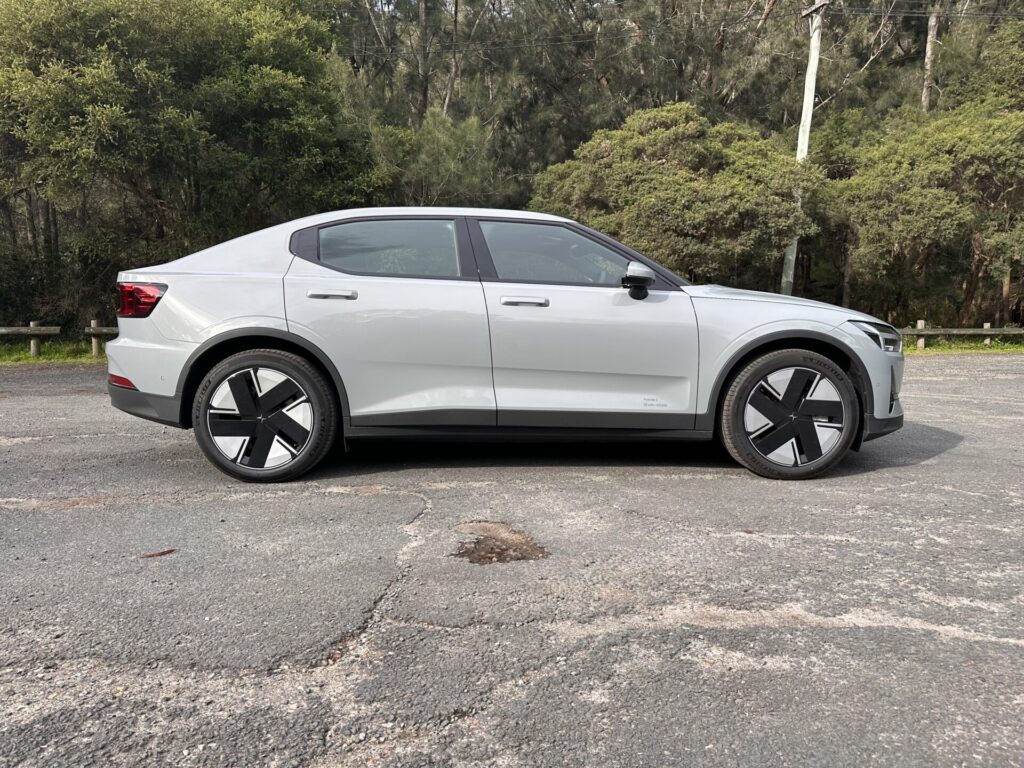
The Polestar 2 rides on Volvo’s CMA platform, a long-lived basis for ICE, hybrid and electric cars. You’ll find it underneath every XC40, the C40 and a couple of Geelys and Lynk&Co cars. It’s been here a while.
For 2025 the 2 scored a better, more efficient motor and an 82kWh battery pack for a claimed range of 659km (WLTP). that’s pretty good going.
The new motor, driving the rear wheels, offers 220kW (20kW more than the smaller-batteried Standard Range) and 490Nm of torque.
Polestar reckons you can get 14.8kW/100km on the combined cycle, too.
Long Range cars run on 19-inch wheels and Michelin e-Primacy tyres sized at 245/45 R19.
Battery and charging
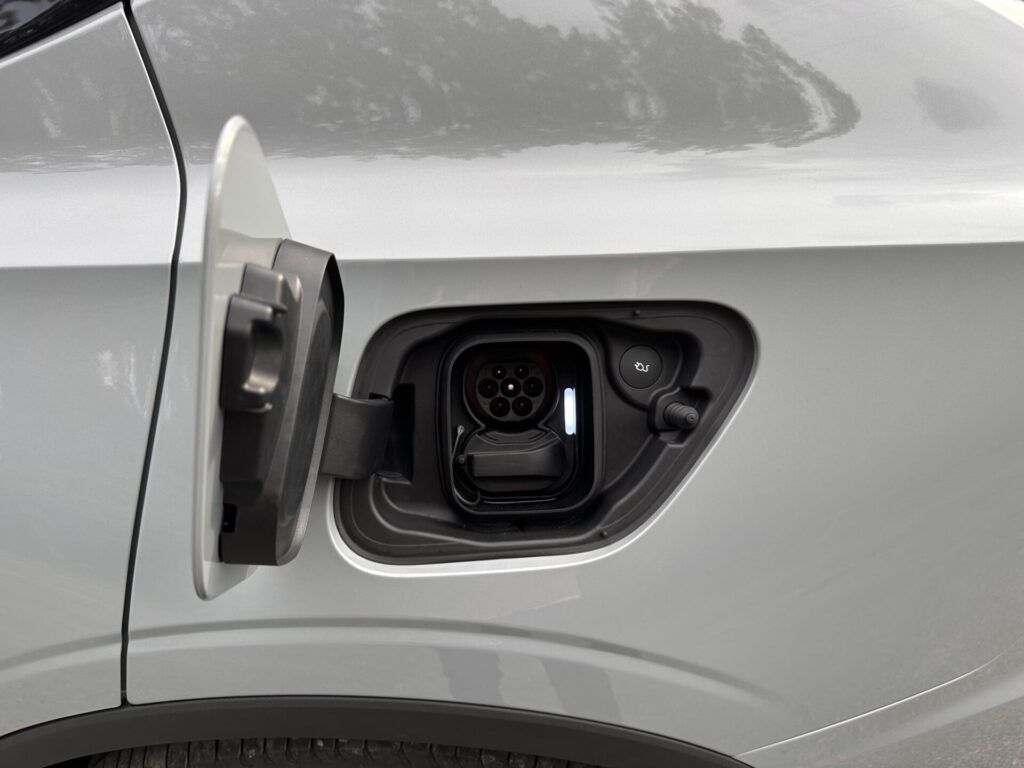
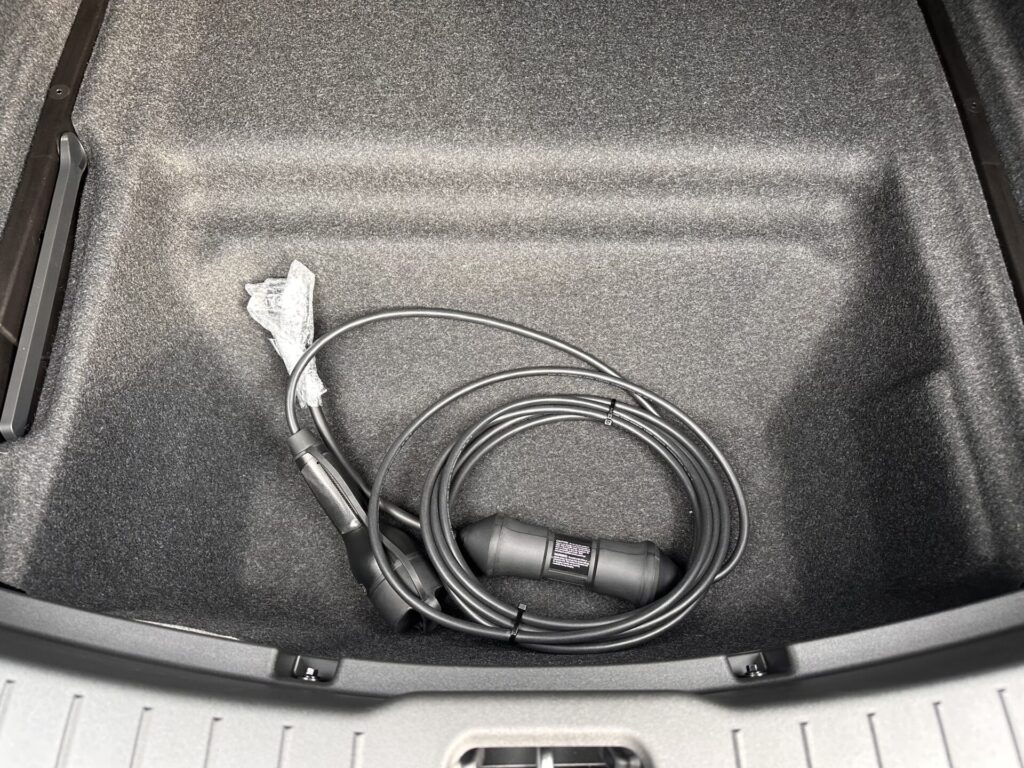
The 82kWh/78kWh usable battery is built on a 400-volt architecture with a maximum recharge rate of 205kW.
I don’t have a 200-plus charger anywhere near me but if I did, Polestar says you can go from 10-80 percent in 28 minutes, which is not bad at all. It drops off considerably after 85 percent and in the real world you can probably expect that 28 minute figure to come closer to 30 minutes.
The MY25 charges faster than the car I first drove in 2022, has a longer range and a bigger battery for a lot less money.
Driving
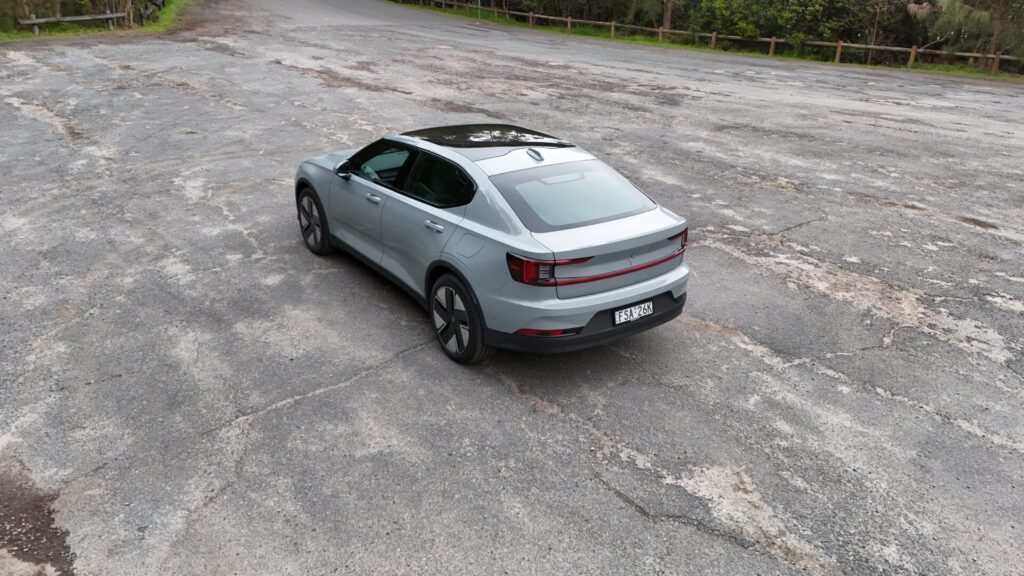
I’ve always been a fan of the Polestar 2, even when it was front-wheel drive.
That’s mainly down to the way it rides and handles but a good portion of the kudos should also go to the power delivery. This is one smooth character, the power rolling in on a long throttle making life for you and passengers rather lovely, particularly in heavy traffic.
With the binary option of on or off for battery regeneration, you will have to learn how to modulate when it’s on, but it seems better than it did the early cars which speaks to a good deal of effort and tweaking to improve things.
While you wouldn’t call the ride cushioney, it’s very comfortable on most surfaces even on the 19-inch wheels (and vastly better than the Ohlins-equipped dual motor). I like to feel that the car means business and this car does, which is more than you can say for a lot of EVs.
I really like stringing together a set of corners in the 2. It’s got a warm hatch vibe to it, even with a two-ton weight penalty. It rewards planning and delicate throttle use but you’ll never get yourself into trouble as its well-tuned stability controls are top-notch and never intrusive.
With the long range capability, too, you don’t have to worry too much on a day trip to the mountains or the Yarra Valley or [insert place near your capital city] and the charging works pretty well, I’ve driven a bunch of Polestar 2s that have always charged as quickly as the charger will allow.
Redline Recommendation
It would come down to two cars for me if I was in the market for an EV. One is the Hyundai Ioniq 5, the other is the Polestar 2.
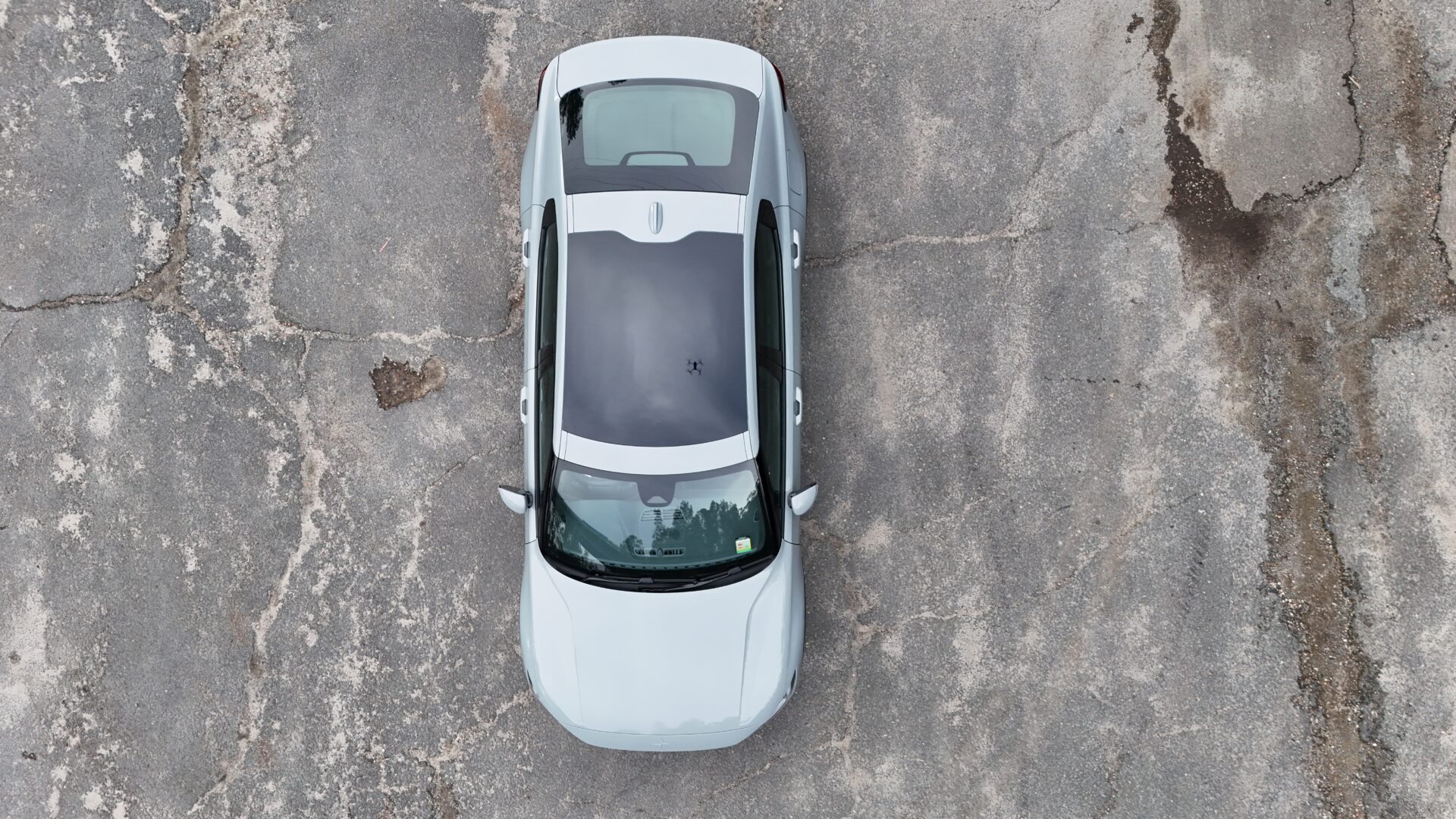
The Polestar appeals to me for a variety of personal reasons and looks great.It’s also got a smaller footprint but does have a lot less interior space. The silly fixed sunroof also annoys me and I wish the cars came with metal roofs.
It would be a coin flip among these two accomplished cars but I’d be gunning for the Polestar.

Leave a Reply